







“With all the dumplings and the high-rises!!”
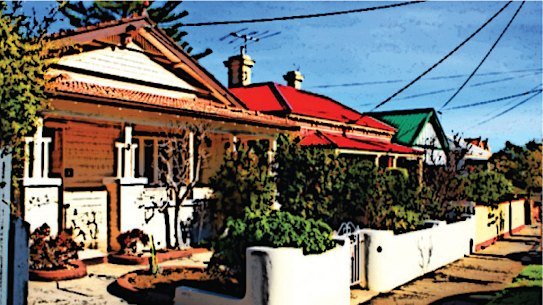
This is usually the response when I tell people I live in Box Hill South. But my suburb, I would argue, is far superior to its rather hectic and better-known cousin. It has the advantage of being near Box Hill without actually being in Box Hill. I can easily access Box Hill’s amazing food and the major transport routes before retreating to my quiet, green and largely residential neighbourhood. What people don’t realise is that Box Hill South is actually an enclave of low-rise living and green space.
I had never heard of Box Hill South before I moved here – and I too made assumptions about high-rises and dumplings. I was looking for a house in another area entirely when someone suggested I consider this pocket of quiet residential streets bordered on three sides – dare I say boxed in? – by major roads (Elgar, Canterbury and Middleborough). At only 3.5 square kilometres and with around 8500 residents, it is easy to miss.
I moved here with my children in 2021. Moving into a new neighbourhood in the middle of a pandemic is like checking into a hotel late at night. There is very little action, you can’t get a restaurant meal and any individuals you encounter keep a decidedly wary distance. Luckily things changed, and I soon realised Box Hill South is incredibly friendly – and it’s still relatively quiet in post-pandemic times.
My suburb is about 14 kilometres east of the CBD, but no one really knows where it is. A friend recently asked me “Where’s Box Hill South?” and I had the audacity to answer “South of Box Hill”. You can imagine the response.
It is a relatively low-density suburb – in part because a fair chunk of it is actually green space, thanks to the Box Hill Golf Club and the Gardiners Creek trail. Runners, walkers and commuting cyclists enjoy this path alongside Gardiners Creek (or Kooyongkoot, its Woi Wurrung name).
The area was famously the site of the Box Hill artists’ camp of the 1880s, where artists including Tom Roberts, Frederick McCubbin and Arthur Streeton produced some of Australia’s best-known paintings, including The Artists’ Camp (Roberts), Lost and Down on His Luck (McCubbin) and Settlers’ Camp (Streeton). This legacy is reflected in the naming of Artists Park and of Roberts McCubbin Primary School, both a short walk from the site of the camp, which is now part of the golf course.
There are other historical curiosities. I’ve always been a little bemused by the military origins of many Box Hill South street names. Haig, Birdwood, Kitchener, Halsey and Jellicoe were all British military officers in World War I (who I rather doubt ever visited the suburb). Their namesake streets are counterbalanced by the rather less martial Peace and Arcadia streets. Closer to Elgar Road, there is a nod to Italy with the parallel Piedmont, Venice, Verona and Naples streets.
Box Hill South is highly multicultural; according to the 2021 census, 42 per cent of households speak a language other than English at home, and 63 per cent of residents have at least one parent who was born outside Australia. The proximity of Deakin University attracts residents from all over the world to the area. There are at least 10 different countries of birth among the parents of my younger son’s immediate friend circle, and this diversity enriches the neighbourhood.
I often think of Box Hill South as a little pocket of green with some seriously busy roads as its borders. The eastern border is Middleborough Road with its big box stores, perplexingly high number of mechanics and panel beaters, and miscellaneous retailers. There’s a Bunnings warehouse that was the site of the Crawford TV studios from 1982 to 2005, where scenes were filmed for many classic television shows, including The Flying Doctors. The industrial zone also includes the 14-hectare Sorbent tissue factory, which, rather alarmingly, has experienced four major fires since it was built in 1960.
Luckily – despite the fact it is not Box Hill proper – there are culinary delights to be found on Middleborough Road. Simon’s Peking Duck is a favourite, and Rolf’s Pies caters to families looking for a quick dinner solution as well as tradies wanting a smoko sausage roll. If you fancy dumplings, but not the traffic surrounding Box Hill Central, there is always Aldi or Roaring Bear Asian grocery for frozen ones to cook at home. And Ilza, a Japanese cafe, serves delicious lunches and coffee to exhausted parents and teachers from Roberts McCubbin across the road.
Honestly, nothing much happens in Box Hill South. This is, of course, part of its appeal, particularly to people like me with young children. I know it’s a cliche in the “leafy” eastern suburbs, but it really is a wonderful place for families. The majority send their children to Roberts McCubbin and then on to Box Hill High, which helps kids make life-long friends who live only a street or two away.
Time rolls on in a predictable fashion here. Younger kids play at Artists Park and the bigger kids hit the skate park on Canterbury Road to burn off the sugar from after-school Slurpees. (Box Hill High students must provide at least 95 per cent of the local 7-Eleven’s annual Slurpee revenue).
Once in a while something will happen to shake us out of our suburban complacency. A few years ago it became apparent that squatters were occupying the abandoned buildings of Hays International College. Graffiti, broken windows and dumped rubbish drew regular complaints from neighbours. In 2022, things came to a head when a fire ripped through the site, and the developer finally began building new townhouses in 2024. While several residents objected to the development in a suburb dominated by standalone houses, I suspect most residents would agree this is on balance a preferable outcome.
I’m a relatively new resident compared with many of my neighbours, who have been here for decades, so I’ve still got plenty to learn. But as I chow down on dumplings and wonder whether I’m brave enough to join an amateur art class at Box Hill South Neighbourhood House, I’m looking forward to figuring it out.
Avery Poole is a political scientist and a regular runner along the Kooyongkoot (Gardiners Creek) trail.
Get a weekly wrap of views that will challenge, champion and inform your own. Sign up for our Opinion newsletter.


From our partners
Read the full article here