








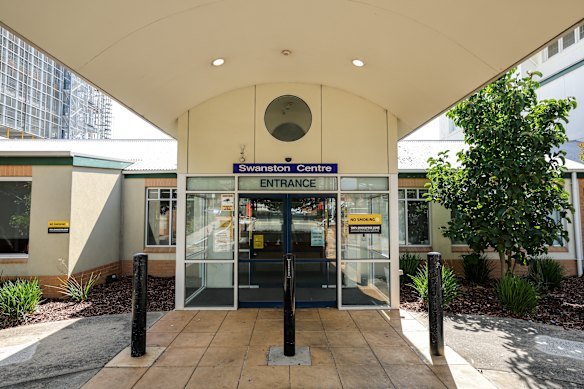
The scene of a violent death inside the patient’s room had not long been scrubbed away when a man arrived to be admitted at the Swanston Centre with his worried family member by his side.
“How do I know he is safe here?” they asked the staff at the psychiatric unit in Geelong.
The family member’s questions weighed heavily on staff, who for more than a decade have sounded the alarm about increasing safety concerns inside the centre overseen by Barwon Health.
“They were right,” a veteran mental health worker told this masthead.
“That’s a genuine fear for them to have – I couldn’t guarantee that he’s going to be safe.”
The family member had every reason to worry.
Sliding doors moment
Days earlier, a 31-year-old Highton man was killed in his room, allegedly by another patient, who was admitted into the room next door.
The two men were sharing a bathroom. In the early hours of February 22, staff found the man on the floor of his room, shards of glass surrounding his body, and the other patient standing over him.
The man who was killed had been admitted to the hospital for relatively minor treatment and placed in one of the Swanston Centre’s “legacy rooms”.
The centre’s dated configuration means two patients must share a bathroom, separated only by a flimsy non-locking saloon-style door, which staff said no longer complied with safe design standards.
Staff were doing their nightly checks when they noticed the patient was missing from his room.
They began a frantic search, but did not have to look far.
The 31-year-old was found on the floor of the bedroom, his body surrounded by glass, his neighbour standing nearby.
Police swarmed the mental health unit and homicide detectives are investigating the man’s death. WorkSafe is also investigating, as is Barwon Health.
Traumatised staff have been left asking the same question: why weren’t their concerns addressed many years ago?
“I think it’s been swept under the rug,” a worker, who often worried about putting patients in the throes of a mental health crisis in rooms where they had to share a bathroom with another person, said.
“Staff are feeling very uneasy about how to do their job. There’s a lot of sadness because someone’s come in for treatment, and he came in for something that could have been done in the community as well. That’s hard to comprehend.”
Barwon Health said it was unable to comment further because the patient’s death was under police investigation.
“All incidents are reviewed through established governance processes to identify, assess and respond to any clinical and operational risks, and to support ongoing quality and safety improvements,” a spokesman said.

‘High-risk’ zone
In June 2019, Barwon Health made a submission to Victoria’s mental health royal commission with a grim admission: conditions in the Swanston Centre were now so dangerous that the University Hospital Geelong had been designated a high-risk public zone by Victoria Police.
The alarming classification was the result of soaring episodes of violence and assaults reported inside the unit. Police were braced to make a rapid response whenever they were called.
Assaults, particularly in inpatient settings, occurred regularly, the submission read.
The reasons were complex and myriad: acute psychiatric illness, people arriving sicker than ever with more complex needs, rising aggression, drug intoxication and withdrawal, overcrowding, restriction of liberties and a dire lack of places to discharge people safely into the community, which was contributing to prolonged admissions in the unit.
Barwon Health’s psychiatric services were also struggling to attract and retain psychiatrists, psychologists, allied health workers, occupational therapists and social workers.
“Increasing levels of violence, especially in inpatient settings, exacerbated by poor early access to services, poor access to intensive supports, and poor infrastructure planning, are significant contributors to poor staff retention,” the submission read.
It also warned workers at the centre were exposed to “significant levels of agitation, distress and violence”.
Code black
Within days of Barwon Health making its submission to the royal commission, a 72-year-old woman was admitted to the Swanston Centre’s 26-bed acute ward to have her medication altered.
She had been there less than a week and was adjusting to her new treatment when a young man was admitted for urgent care.
Rather than being placed in the Swanston Centre’s more secure four-bedroom unit, the man was put into the acute ward overnight on June 22, 2019.
In the grip of a psychotic episode, the man tore the unit apart. Wielding fire extinguishers and anything else he could get his hands on, he smashed the acute centre up and severely assaulted the woman. Under the centre’s code black procedures, overnight staff were forced to shelter in a secure room while the rampage occurred.
Even worse, the “high-risk public zone” designation, which was supposed to trigger a rapid response from police was rendered useless because staff couldn’t even make a phone call.
“From the phones that we carry, we couldn’t call externally, we couldn’t call Triple Zero,” the worker said.
The attack went on for hours. The 72-year-old woman survived the assault, but suffered permanent injuries and filed a writ against Barwon Health in 2023.
“That incident shook people up for a while, and it still does,” a staff member told this masthead.
“If someone is that aggressive, we’re told to retreat and protect ourselves and call for help.
“A lot of the time you feel awful because you’re leaving these other people out there. Obviously, you’re telling them to go to their room or get away from the situation, but some people can just get into people’s rooms.”
The hospital and WorkSafe undertook separate reviews into the security failure and wider the risks that conditions in the Swanston Centre posed to staff and patients.
Barwon Health did not answer questions about the review or its resulting actions. However, sources indicate some of the code black response protocols were improved and the layout of the unit altered to make it safer.
But staff – and the tragic cascade of events after – suggest they have made little difference.
“I feel like there’s been an incident or two every year since then,” one worker said. “So I kind of, unfortunately, expect something to happen every year.
A sudden death
At 8.15am on April 26, 2021, Allison Naomi Eagle was found dead in her room in the Swanston Centre.
The 44-year-old from Leopold was supposed to be discharged later that day following a six-week involuntary admission, her third stay in the unit in a year.
During her final admission, Eagle suffered ongoing respiratory issues including sleep apnoea, to the extent that staff were asked to monitor her breathing overnight and watch her chest rise and fall.
A forensic pathologist noted that schizophrenia, which Eagle was being treated for, carried an increased risk of sudden death.
The antipsychotic medications she was being treated with can also carry a risk of respiratory issues including, in rare cases, fatal arrhythmia.
A Barwon Health clinical review concluded the sedatives Eagle was given were consistent with regular practice and had not caused her issues previously.
But it also highlighted the need to strengthen several of Barwon Health processes, including more regular review of sedatives, clearer policies about providing patients with heart scans, and clearer rules about overnight monitoring.
In his 2024 findings, coroner Paul Lawrie was satisfied Eagle had been provided with appropriate medications at dosages that were within accepted clinical ranges, and found there were no suspicious circumstances associated with her death.
“I cannot say with sufficient certainty whether the medications administered to Ms Eagle contributed to her death,” the coroner found.
“Whilst the issues identified in the Barwon Health review are not causative, the consequent recommendations are properly directed toward the improvement of clinical practices.
“I am also satisfied that appropriate steps have been taken to address the issues identified in the review.”
Investigations probe more deaths
In December 2022, another patient took her own life while undergoing treatment in the acute psychiatric unit, though investigations into the incident are continuing and few details have been released.
In April 2024, another coronial investigation was launched after another patient – a 54-year-old woman – was found dead in the Swanston Centre. This, too, is ongoing.
A WorkSafe investigation into the death in January 2025 resulted in Barwon Health facing two charges of failing to ensure people, other than employees, were not exposed to health and safety risks. The case, which is before the courts, continues.
A mother’s heartbreak
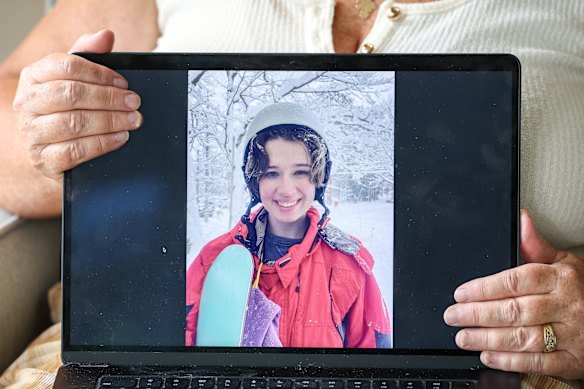
The Swanston Centre was supposed to be a place of safety for Lee Johnson’s child Bellamy Nieto, 22, who was suicidal when they arrived at the unit.

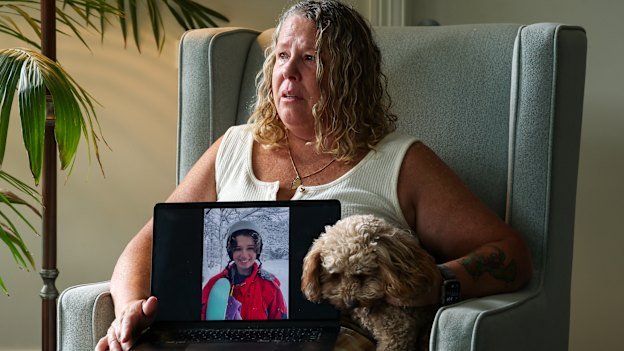
But Nieto, a biological woman who identified as non-binary, was found dead in their room in June 2024, days after attempting to end their life in the same ward.
The family are suing Barwon Health for negligence.
When she learnt homicide detectives were investigating the death of a patient, allegedly killed at the hands of another patient last month, Johnson said she and her family were shattered.
“It is absolutely devastating,” she said. “I had hoped after Bellamy things would change. The lack of supervision there, and the lack of resolution when there’s conflict within that place is directly related to both deaths.”
It is alleged that Nieto was transferred from a high-observation room near the nurse’s station to a more isolated room of the unit the evening before they died, after being allegedly robbed, harassed and attacked by another patient.
Johnson said she had repeatedly asked that this patient be moved into another ward or kept away from her child.
She alleged the patient verbally attacked Nieto several times in front of her. It is also alleged they broke into their room, stole their belongings, including an art journal, and destroyed a handmade card their sister had given them.
“It broke Bellamy. They were heartbroken … they couldn’t take any more,” Johnson said.
The family also allege observation times were changed from 15 minutes to hourly in the hours before Nieto died. They said this meant Nieto was allegedly left alone for an extended period while she was suicidal.
“I thought Bellamy was safe. I thought they would protect them,” Johnson said. “I wouldn’t have ever walked out that door at closing time. I would have stayed. I would have been with them if I knew they weren’t checking on them.”
Johnson said Bellamy was an “incredible, loving, generous person”.
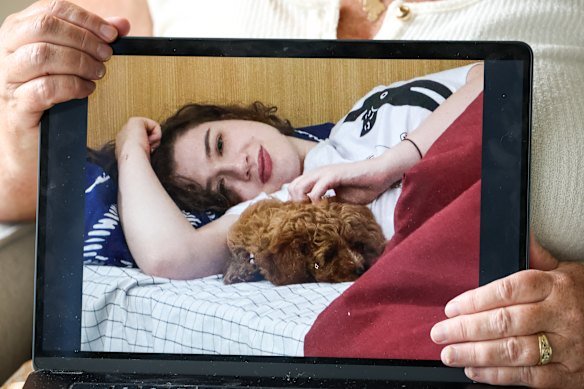
Johnson said she was speaking out because she never wants another family to experience what she has at Swanston Centre.
“I hold them directly responsible,” she said. “I want people to know what happened there and to follow their gut if they have somebody they love in there and say, ‘No, that is not good enough.’”
‘It’s a hellhole’
Another Geelong woman, whose brother was frequently admitted to the Swanston Centre for mental health issues over several years, said she had repeatedly raised security and privacy concerns with staff.
The woman, who asked not to be identified for privacy reasons and to protect her brother, said she was alarmed when she observed staff did not always undertake bag checks of visitors.
“I just felt like there was just a real lack of safety and leadership there,” she said.
She also alleges that sensitive patient and visitor information was left exposed on the front counter.
This masthead has seen documentation of the woman’s concerns about safety and privacy at the centre, including a written complaint addressed to the Victorian Health Complaints Commissioner from 2023.
She said the final straw for her family came when her brother, who she described as “completely paranoid” and grappling with a severe mental health episode, was discharged and put in a taxi without the family’s knowledge.
Wider issues
Forensic psychiatrist Dr Rajan Darjee, who is not personally involved in the Geelong homicide case, said the issues faced by Swanston Centre patients begin well before the acute ward’s rooms.
Alarmed by a rise in the number of homicide cases for which he was being called to provide expert evidence, Darjee last year contacted fellow forensic psychiatrists to see if they were having the same experience of under-treated patients involved in preventable deaths.
Their harrowing feedback was overwhelming. It has now led to a more formalised research project to analyse the number of people going through Victoria’s courts with a psychiatric disorder who have been charged with murder.
The work is ongoing, but in its preliminary stages, nine of the state’s leading forensic psychologists revealed they had been asked to evaluate 39 individuals with psychiatric illness as part of murder defences in 2024 and 2025 alone.
Darjee said the cases show a clear trend, with most homicides involving people who had known and long-standing conditions, but who did not get timely or sufficient treatment from overstretched health systems and hospitals.
“I’m sure there were problems in the hospital in Geelong, but even with those problems, this probably wouldn’t be happening if we didn’t have systemic failures that mean we have lots of untreated people who are not getting the care they require,” Darjee said.
“Then, when they are in hospital, they are very, very unwell and in services that struggle to contain them. These problems occur in a system that is totally unfit for purpose. It’s just going to happen again somewhere else.”
Associate Professor Simon Stafrace, chair of the Victorian branch of the Royal Australian and New Zealand College of Psychiatrists, described the homicide as a “devastating, distressing and an extremely rare event”.
“It’s about the worst thing that can possibly happen to have somebody lost in care,” he said.
“My thoughts are with the family of the person who has died and, indeed, with the family of the person who is accused of perpetrating a crime.”
Stafrace said that while Victoria had striven to improve care for people with mental health issues in recent years, tragedies such as these highlighted there was still a way to go.
“One of the most unhelpful conclusions that you can make is that mental health reform is done,” he said.
“When an incident like this happens, we find ourselves asking questions about what could we do better? How do we prevent this from happening again? What does it say about all levels of our system?”
Police are yet to lay criminal charges over the man’s death.
The patient accused of killing the 31-year-old man is understood to be too unwell to be interviewed by police.
He has been relocated to a secure psychiatric unit at a Melbourne hospital.
Swanston Centre staff say the issues impacting mental health patients and services across the state were being magnified within their wards.
One mental health worker told this masthead: “It’s become harder with the new Mental Health Act as well because we are trying to be less and less restrictive, but it puts other people in danger.
“We try and nurse those [aggressive] people in the high-care area for a bit, but there comes a point where they have to go onto the ward, and you can never fully say that they’re safe around other people.”
They said staffing shortages and more complex needs of patients were also adding pressure.
A spokesman said the government was unable to comment on individual cases and matters under investigation by Victoria Police.
“This is a deeply distressing incident,” the government spokesman said.
“We send our deepest condolences to the person’s loved ones and staff at the centre.”
But for staff at the Swanston Centre, the devastation and tragedy of what happened in the early hours of February 22 remain raw.
Speaking via the Health and Community Services Union, staff who knew the victim say they had been kept in the dark about what happened, compounding their grief.
“Its like not knowing what happened to a friend and how they died,” they said.
“We get bits of information from other colleagues, and we are left putting pieces together. There is no closure and I believe why it’s hard to move forward from.”
Lifeline 131 114
Start the day with a summary of the day’s most important and interesting stories, analysis and insights. Sign up for our Morning Edition newsletter.
Read the full article here