






Support payments for allied health students struggling to feed themselves during mandatory unpaid practical placements would cost less than $300 million over the next four years, exclusive modelling from the Parliamentary Budget Office has found.
Less than a year since nursing, midwifery, teaching and social work students were offered government support during unpaid placements, independent politicians and students in graduate-stretched professions such as psychology and pharmacy are demanding subsidies to complete their studies.
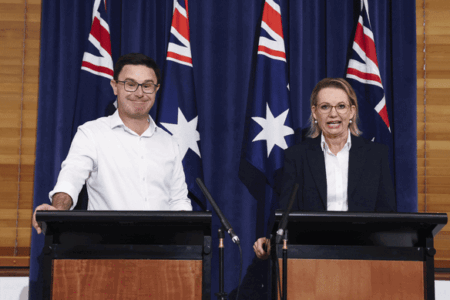
Modelling commissioned by independent MP Helen Haines found an extension of prac payments to health and medical students – including psychologists, paramedics and physiotherapists – would cost an additional $290.4 million through to the 2028-29 financial year.
The current program – budgeted at $505.3 million over the same period – offers students $338.60 a week while undertaking mandatory placements during the study of a bachelor’s or master’s degree.
“Students in my electorate tell me they are working all-night shifts, borrowing money from friends and family, delaying subjects, and making hard choices between their financial security and their future careers, just to complete their placement,” Haines said.
“At a time of severe health workforce shortages, particularly in rural and regional areas, the government can’t afford to let unpaid clinical placements become the barrier that stops students from completing their degrees.”
Laura Day, a 23-year-old pharmacy student at the University of Canberra who works three jobs to support herself through university, said her degree’s multiple unpaid two-week placements were increasingly unworkable.
“I don’t earn enough to have any sort of savings. It’s not like I can just put away for when I’m on placement. I’m living pay cheque to pay cheque,” Day said. “If I’m picking up extra shifts. It impacts my study. Sometimes, if I’m picking up extra hours, I don’t have the same amount of time to actually do the work that I’m meant to.”
A survey of pharmacy students by the Health Student Alliance found that 86 per cent suffered financial hardship during placements, and 56 per cent skipped meals due to financial strain.
The Parliamentary Budget Office said its modelling was “inherently uncertain” because data on the number of eligible students was unavailable. Estimated costs are based on new workforce entrants, rather than student numbers, and they predict how many students would qualify for the means-tested program.
Independent senator David Pocock, who supports the payment extension, said: “Over the longer term, it will cost the federal government more if they fail to support the pipeline of medical and allied health students Australians right around the country rely on.”
Allied Health Professions Australia CEO Bronwyn Morris-Donovan said extending practicum payments to allied health students was “not optional. It’s essential”.
“Addressing this gap in Commonwealth prac payments is a practical, immediate step the government can take to strengthen the pipeline of allied health professionals Australia urgently needs,” she said.
Cut through the noise of federal politics with news, views and expert analysis. Subscribers can sign up to our weekly Inside Politics newsletter.


From our partners
Read the full article here