





As humanity returns to the moon, Australia’s ability to contribute to the new space race has been dealt a hammer blow after the government cut astronomers’ access to the world’s most powerful telescopes.
Australian scientists have built and harnessed cutting-edge instruments to explore the beginning of the universe and detect oxygen on nearby Earth-like planets under a decade-long partnership with the European Southern Observatory.
That arrangement is set to end after the government rejected the astronomy sector’s call to pursue full membership with ESO, one of the world’s pre-imminent astronomy organisations, on the same day Artemis II astronauts launched for the moon.
The decision cuts off Australia’s access to key space observation facilities by 2027 and limits the opportunities for our engineers to build some of the most advanced instruments ever made for ESO and feed knowledge back to local industry.
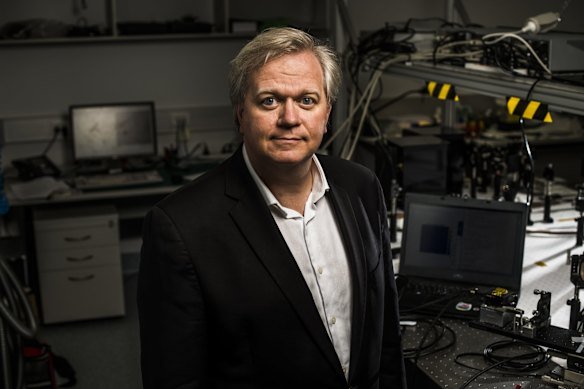
Ending the partnership could hinder Australia’s participation in the modern space race, said Nobel laureate Brian Schmidt.
Australian National University scientists, for instance, are helping NASA test a new laser communication system on the Orion spacecraft as it nears the moon, a key Australian link to the historic Artemis missions.
“That is directly connected to our ability to build these world-class instruments on [ESO’s] telescopes,” Schmidt, an astronomy professor at ANU who won a Nobel Prize in 2011 for discovering the universe’s expansion was accelerating, said.
“If we are no longer able to be part of world-class international facilities, then we’re going to lose those types of capabilities.”

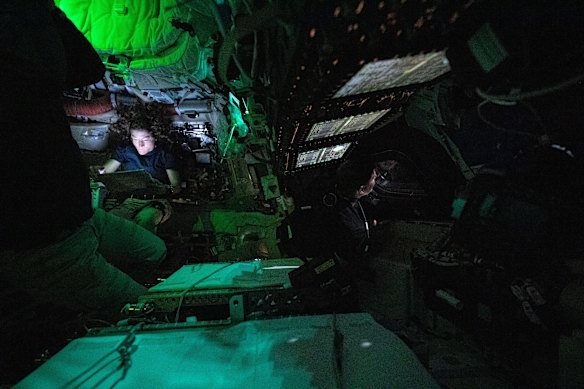
There was a bitter irony in finding out the partnership was over on the same day ANU showed off its NASA laser technology and Artemis II launched, he said. “The only way I can describe it is sad.”
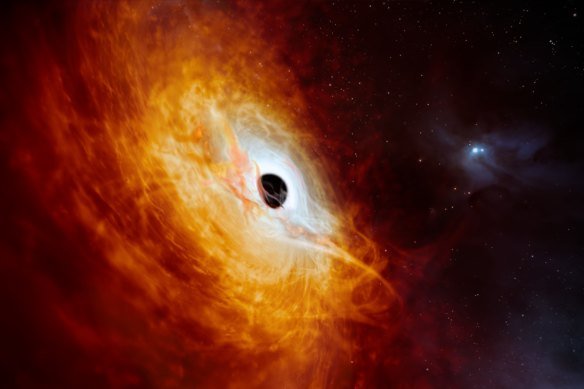
Australian astronomers have contributed to more than a thousand research projects under the ESO partnership. Schmidt has used ESO’s telescopes to help reveal one of the oldest stars in the universe, while other astronomers have found the largest, fastest-growing and closest black holes to Earth using the organisation’s instruments.
The telescopes are also key to the search for oxygen, water and life on other planets.
Size matters in astronomy. The bigger the telescope, the more light you can gather, the more you can see in greater detail. And ESO builds and runs some of the world’s largest telescopes.
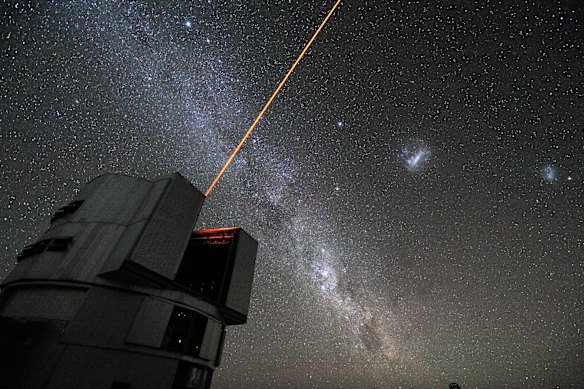
Under the current arrangement, Australians can apply for timeslots to use ESO’s Very Large Telescope, an array of 8-metre wide telescopes in Chile with no local equivalent.
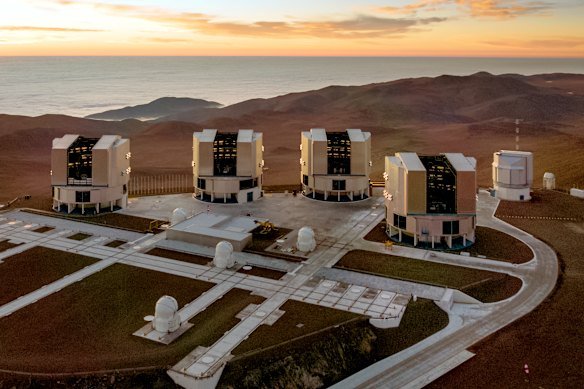
ESO is also building the 39-metre wide Extremely Large Telescope high in the clear air of the Chilean Andes.
When the facility opens in 2029, it will be the world’s largest ever optical telescope and spark a generational leap in space science, allowing humanity to look right to the edge of the visible universe, evaluate the atmospheres of distant exoplanets and study the dawn of galaxies.
Now experts fear Australia will not get access to the telescope.
The ESO partnership has also boosted opportunities for more than 100 specialist engineers working in astronomy.
That includes Australian-led efforts to build a $90 million instrument for the Very Large Telescope called MAVIS, which will capture images three times sharper than Hubble and investigate the birth of the first stars 13 billion years ago.

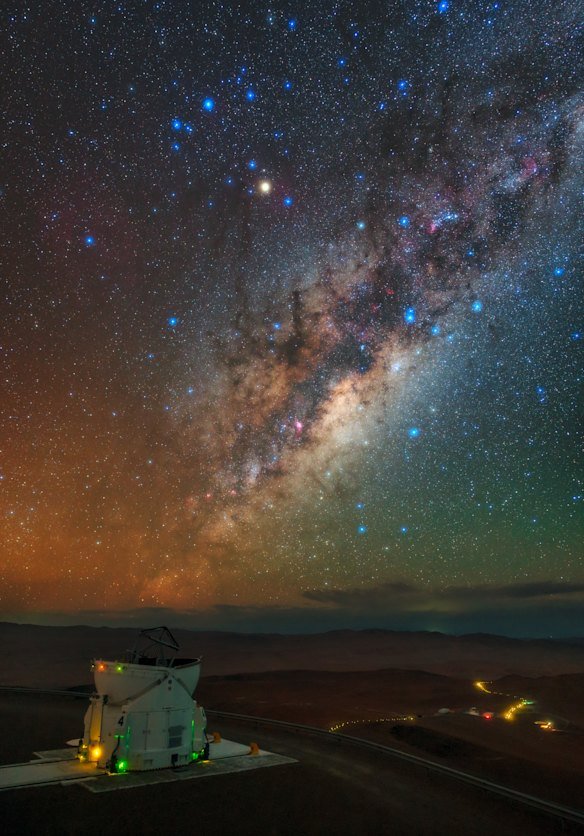
Australian professor Michael Ireland, from ANU, is at the Very Large Telescope in Chile installing a next-generation instrument called Asgard. His team have used it to gather data on a quasar – the luminous core of a galaxy powered by a supermassive black hole – 10 billion light-years away.
“Australia has been a world leader in ground-based optical astronomy for more than 50 years,” he said from ESO’s Paranal Observatory in the Atacama Desert.
“I believe ESO membership was the only realistic way to maintain that leadership into the future.”
Full membership would cost $40 million per year. “It is expensive, there’s no doubt about it,” Schmidt said. “But it’s an investment over half of the OECD is making, and Australia is one of the highest-performing OECD nations in astronomy.”
Schmidt pointed to Wi-Fi as a benefit of looking at the stars; CSIRO radioastronomy research in the 1990s was part of the story that led to modern-day wireless internet.
Scientia Professor Richard Holden, a University of NSW economist, last month weighed up Australia’s outsized contribution to astronomy and valued it at $330 million per year.
“Research expands the global stock of knowledge,” Holden said upon the publication of the resulting report, which found investing in the ESO would boost our capabilities in electric vehicles, renewable energy, defence, 5C, satellite communications, AI and quantum computing.
“History shows that countries that contribute to that knowledge tend to grow faster and become more prosperous,” he said.
Astronomy Australia warned the decision risks bleeding science and engineering talent overseas. The organisation is also concerned NSW’s Anglo-Australian Telescope (AAT) near Coonabarabran could be shut down if its federal government funding isn’t extended next year.
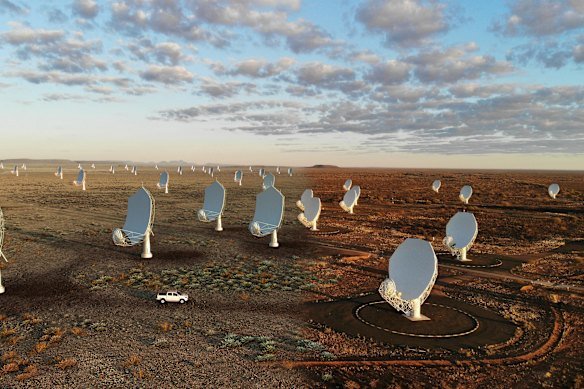
The Morrison government invested $387 million in 2021 to build the Square Kilometre Array (SKA) radio telescope in Western Australia and the Albanese government tipped in another $48 million in 2025. But Astronomy Australia said SKA was supposed to complement rather than replace ESO’s telescopes. SKA detects radio signals while ESO’s telescopes detect optical light.
The Australian Academy of Science condemned the government’s decision. Full ESO membership was a key recommendation of the academy’s plan to support astronomy between 2026 and 2035.
“When baseline funding is already thin, withdrawing from shared global infrastructure reduces access to data, talent, and opportunity without solving the underlying problem. You cannot build world-class science in isolation”, said Professor Margaret Sheil, policy secretary at the academy.
A spokesperson for Industry and Science Minister Tim Ayres did not say whether the government would work to find alternative access to large international telescopes for Australian astronomers, or whether it planned to fund AAT beyond 2027.
The spokesperson said the government was working to associate with the $155 billion Horizon Europe research fund. According to Astronomy Australia, that partnership would not include access to research infrastructure.
The Examine newsletter explains and analyses science with a rigorous focus on the evidence. Sign up to get it each week.
Read the full article here