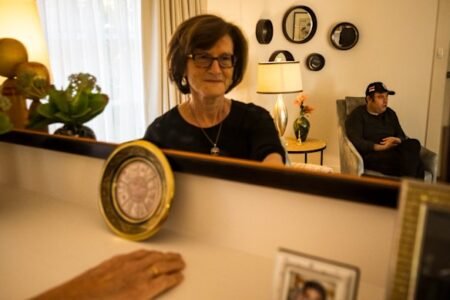









Residents from country towns across NSW have told harrowing stories of being terrorised in their homes by gangs of children. Windows smashed, front doors kicked in as balaclava-clad kids carrying machetes or knives break into their homes and stand over them in their beds as they demand car keys. They then film their violent crimes for “notoriety” as they drive at speed in these stolen cars before dumping and burning them.
Jordan Baker and photographer Louise Kennerley visited and spoke to residents of Armidale, Moree and South West Rocks. Resident Tania Van Stekelenburg told of her trauma and anger after the latest violent break-in at her South West Rocks home: the fifth attempt and the second car theft.
The Nationals member for Oxley on the Mid-North Coast, Michael Kemp, is furious. His Kempsey office has been inundated with people whose houses have been broken into five or more times by out-of-control kids, only to see the perpetrators strike again while on bail. The government says crime rates are either stable or falling, but for fearful residents it doesn’t feel that way.
Youth crime is a particularly complex and sensitive issue. All levels of government over decades have tried and failed to address the family breakdown and social disadvantage that’s at the root of this violence. It’s worse in regional communities, and – particularly among First Nations people – is often the result of generational poverty and trauma.
A child’s strongest protection against criminality is a secure, supportive childhood, and, in their teen years, a community that gives them boundaries, security and a sense of belonging. If they don’t feel that belonging at home or school, they’ll seek it elsewhere.
It is a serious problem, with children as young as 10 being enlisted by older offenders to break the law. The younger the child, the easier it is for them to get through doggy doors or small windows. Child expert Professor Mark Dadds said there was “generally one or two children who are the most severe … who are pushing the group to ever-more drastic behaviour”.
Statistics show that contact with the juvenile justice system also worsens a child’s outcomes. Of the 10- to 13-year-olds who had a finalised court appearance in 2023, 90 per cent had been identified to child protection services as at risk of serious harm, 68 per cent had been the subject of more than 10 child protection reports, and almost three-quarters had appeared in police reports as a victim of crime.
So dire can their lives be that some children regard “juvie” not as a punishment but as a welcome respite from their daily hardship.
The NSW government in November committed $23 million for programs targeting at-risk country youth and an $8.75 million bail accommodation service for Moree. The final report by an inquiry into community safety in rural areas is due next month. Bail laws have been toughened and there are calls for a new court-directed therapeutic intervention pathway for children aged between 10 and 13 to ensure they can get the necessary support before they enter the prison system.
Youth crime needs a bipartisan government and non-government response. And when it comes to supporting at-risk children, it must be community-led.
BackTrack is a prime example of how community-led programs can work. The initiative has been helping to divert Armidale youth from trouble for 20 years. Led by the inspirational Bernie Shakeshaft and volunteers, it teaches at-risk kids job and life skills. It is a holistic approach that is majority privately funded. It has the trust and respect of the community, and more importantly the kids, and it is turning young lives around.
Many senior politicians have visited BackTrack, including Premier Chris Minns and One Nation’s Barnaby Joyce. They all talk of replicating it. Some think its success is due to Shakeshaft, its founder. He doesn’t think so. “There are Bernies in every state, territory, town and city,” he says. “When you find those people and wrap the right model around them, that’s where the success comes from.”
Shakeshaft has found the right model. It’s time to replicate it.
Get a weekly wrap of views that will challenge, champion and inform your own. Sign up for our Opinion newsletter.


From our partners
Read the full article here