









Not that he’s psychic, but seven years ago Jesse Matheson predicted he’d be sitting opposite me for a profile interview exactly like this.
Gearing up at the time to run for election to NSW parliament’s upper house in the lockout law protest party Keep Sydney Open, he was hitting the phones to journalists. I had to dash off our call to finish a profile of another person of note. “One day, you could be doing one of those profiles on me,” the then 26-year-old said before we hung up.
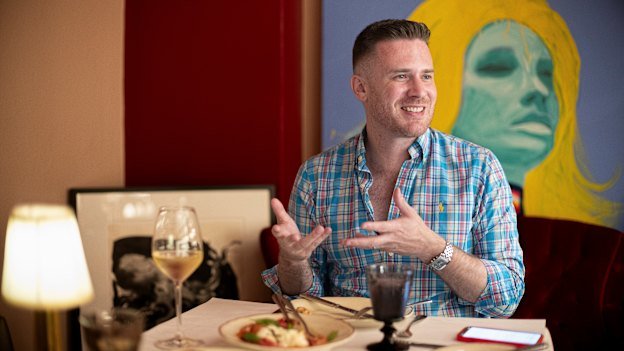
Today, he sits opposite me not (yet) a politician (he didn’t win the seat) – though that’s something he counts in his future ambitions – but as the youngest ever chief executive of Sydney Gay and Lesbian Mardi Gras. “Mum’s always stunned,” he says. “When I told her I’m the new CEO, she said, ‘how?’” he says, laughing. “But my drive comes from wanting to make her proud after the sacrifices she, my nan and aunts made for me.”
He’s still 33 – he’ll turn 34 during the festival, so he had a premature birthday the week before our sit-down, before things get crazy busy. It was partially his husband’s idea. “He takes my phone off me, so I’m not on work emails,” Matheson says. They celebrated in a “restaurant similarly lovely as this”, he says, admiring his surroundings.
It’s fitting, then, that as we take a seat in La Riviera’s private dining room, doubling as a wine room, news has broken days earlier that the last of inner-Sydney’s controversial lockout laws – the 3.30am “last drinks” rule – has been lifted, at last. “I didn’t get in, but Keep Sydney Open campaigned hard for that,” he says. “We saw it as partially our victory when the 1.30am lockout law was lifted within months of the 2019 NSW election. Really, we started a movement – our policy platform has influenced issues like pill testing, police strip searches at festivals and sniffer dogs.”
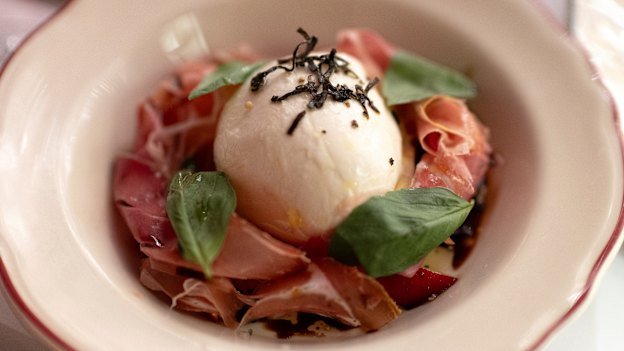
As we sip on Rocca Pinot Grigio, we agree that 3.30am is early to call last drinks on any big night in a major city. The irony isn’t lost on him that he was, until very recently, trumpeting a new earlier 3am finish for the world-renowned Mardi Gras Party. As we nibble on a buffalo mozzarella entree – “prod it and it’ll explode, watch” he says of the cheese, as it oozes onto the accompanying San Daniele prosciutto – he leaves teasers that’ll appear in the apologetic comments he makes in a statement in the days following our lunch.
The Mardi Gras Party has been cancelled for 2026 due to its sheer expense (the parade and all other events will still take place).
“This whole Mardi Gras season has been about survival,” says Matheson, “which involves rethinking things we’ve done repeatedly for 48 years.”
The festival almost went bankrupt twice in the last two years, and he stresses how financial sustainability is his biggest challenge and priority coming into the role. “Even Sydney’s World Pride party made a loss,” he says.

Another reason for cancelling is that two potential headliners – which have previously included Cher and George Michael – pulled out. “We can’t have a big headliner in the old model,” he says, citing that, due to the loss of one of its huge main venues – the Royal Hall of Industries – fewer revellers can view the party’s headline act, and many get locked out of the Hordern.
It’s been a bumpy first six months in the new role.
Last year, 13 of 15 Mardi Gras staff signed a letter to the board urging them not to appoint Matheson as CEO. When he was confirmed in the role, a third resigned. Some cited a 2012 column he wrote for The Star Observer titled “I’m a sexual racist”, in which he claimed racial preferences in sexual attraction weren’t discriminatory. He was 19 at the time. He has since apologised and said those views don’t represent him today.
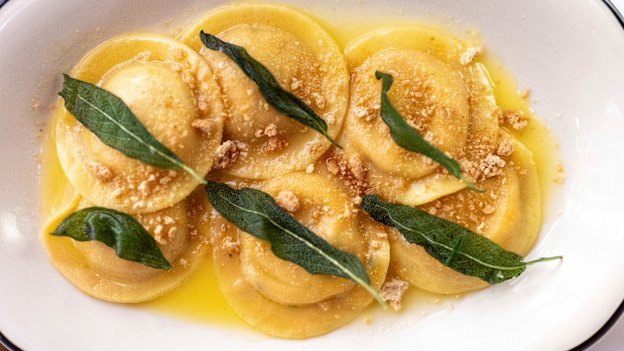
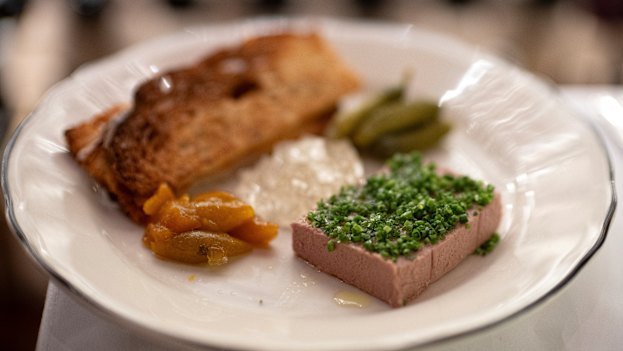
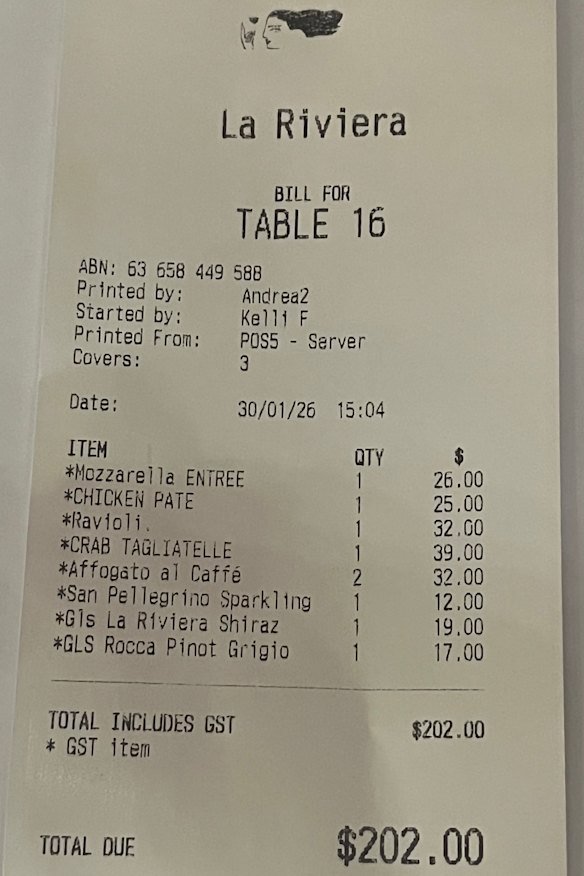
When I briefly turn off my transcriber so Matheson can have a mini break and peacefully eat his butternut pumpkin ravioli before it gets cold – the attentive staff have checked three times if we’re ready for dessert and my crab tagliatelle disappeared long ago – our photographer asks where to go for the best opportunities for stories and pictures over the Mardi Gras festival.
“It has to be the incredible Sissy Ball,” Matheson says, and the ease and authentic passion with which he describes the Vogue Ball, aimed at LGBTQI people of colour – shows his maturity since that column that has come back to haunt him.
“I knew that if I met with the staff, told them why I’m here, and that I want to support them rather than say ‘get out of here’ and change everything, I’d change some of their minds,” he says.
He adds that the team had navigated extraordinary challenges – from COVID to Fair Day being cancelled in 2024 due to asbestos contamination.
Since then, there’s been a raft of board internal politics and squabbling – from how much Mardi Gras should specifically promote trans issues to whether uniformed police should march (they will, with Matheson’s support) – which may sound familiar to those who’ve worked in LGBTQI community organising.
He stresses that any policing should be “measured and appropriate” and that he’d be reluctant to ban them from marching because the majority are from the NSW police’s LGBTQI network group, and crucial allies in the common cause.
It’s times like this that he takes a step back to remember why he gives so much to this organisation for which he has volunteered, becoming at 24 (in 2016) the youngest person elected to the board, then serving as co-chair and, now, running it.

And the reason starts with trauma. Attending a Catholic school (“always challenging for a queer young person”, he says) in Byron Bay, aged 14, he confided in a friend that he was gay. By recess, it was around the whole school. “Everyone was just staring at me,” he says. The homophobic bullying started with name-calling and being pushed around.
“I was regularly called a ‘faggot’,” he says. It escalated to being bashed, and an awful incident on the school bus.
“Word went across town that I was gay,” he says. “Boys at a nearby school would bang on the bus window, hurling homophobic abuse at me, trying to get me to come out of the bus to further humiliate me by beating me up.”
One day, deciding he’d had enough, he got off the bus to front up to them. “I remember vividly being grabbed and thrown on the ground, and this one person just punching my head repeatedly, and me tilting my head to the side,” he says. Homophobic insults too graphic to be printed here were spat at him as he lay protecting his head. It didn’t stop until his female friend pulled a knife on them, and they scarpered. She was expelled for the knife. Matheson got detention for “causing trouble”. There were no repercussions for his attackers.
“The life of a young queer person,” he says, sighing. “Byron Bay wasn’t the diverse hippie haven it is now – it was a country town. Nobody was gay. Little did I know Tropical Fruits (Lismore’s popular LGBTQI New Year’s festival) was down the road,” he adds, which is why Mardi Gras is so important to him: a very visible festival where people like him could be themselves safely – even joyously.
Does he attribute the drive he has today to the early bullying and being constantly told he was inferior because he’s gay? “I don’t want to say it’s because of that,” he says. “I’ve always pushed myself. I don’t think we’re always shaped by these negative forces early in our lives.”
While he insists that he wasn’t the overachiever at school or university, he now feels “some impatience” to “get my hands dirty and jump in”.
And if there were a future political tilt – which party? “Independent,” he says. “In NSW you can be independent and have significant influence. Just look at everything [NSW Independent MP] Alex Greenwich has achieved.”
His mum, who had Matheson when she was 16, lived in Sydney when Matheson was a teen being cared for by his grandma and four aunties in the Northern Rivers. She took his coming out slightly harder worrying about the challenges he’d face in life, but eventually when Matheson moved to Sydney to be with her, she marched in Mardi Gras with him and the youth group that helped him through the bullying, Twenty10. “It was so affirming and so needed after all the homophobic abuse [at school],” he says.
Mum had hoped for grandkids and a wedding from her firstborn. As it turns out, she may yet get both. “I’d always wanted to marry and have kids – earlier in life, it saddened me that being gay would make that harder,” he says.
He met his husband, Andrew Moore, at Palms nightclub on Sydney’s Oxford Street. “I was dancing to the Cher megamix,” he says. “Our eyes met, I approached him and said: ‘will you buy me a drink?’” Moore agreed, charmed by the cheekiness.
The pair campaigned for their right to get married during Australia’s marriage equality postal vote. “We printed some leaflets, got in the car and drove to Bathurst to hand them out,” he says. “We wanted to campaign where it counts – outside of Sydney’s rainbow bubble.”

The couple took advantage of their new legal right to wed in 2023.
It’s time for our digestif, and we accept the waiter’s recommendation of affogato al caffe; Matheson will need the caffeine – he has a Mardi Gras board meeting after this.
Conversation turns to his vision. “I look at other gay prides like Manchester, UK and some regional prides in NSW going bankrupt, and I won’t let that happen to Mardi Gras,” he says.

“I absolutely intend to bring the Mardi Gras Party back next year. I plan for us to have an incredible 50th anniversary in 2028. And I want Mardi Gras to move beyond being a festival, to being a constant presence in the lives of Australia’s LGBTQIA community.”
Although there’s no headliner this year, he stresses that Fair Day on Sunday, February 15 boasts a “fantastic performer” in Janice Robinson. I look at him blankly. “The lead singer of Livin’ Joy,” he clarifies, and unanimously we sing her biggest hit, and the perfect soundtrack to Matheson’s unrelenting ambition: [I’m a] Dreamer.
Sydney Mardi Gras runs from February 13 to March 1 with the main parade taking place on Saturday, February 28.
Start the day with a summary of the day’s most important and interesting stories, analysis and insights. Sign up for our Morning Edition newsletter.
Read the full article here