









Enslaved Africans with dreams of being free found safety in the heart of NYC.
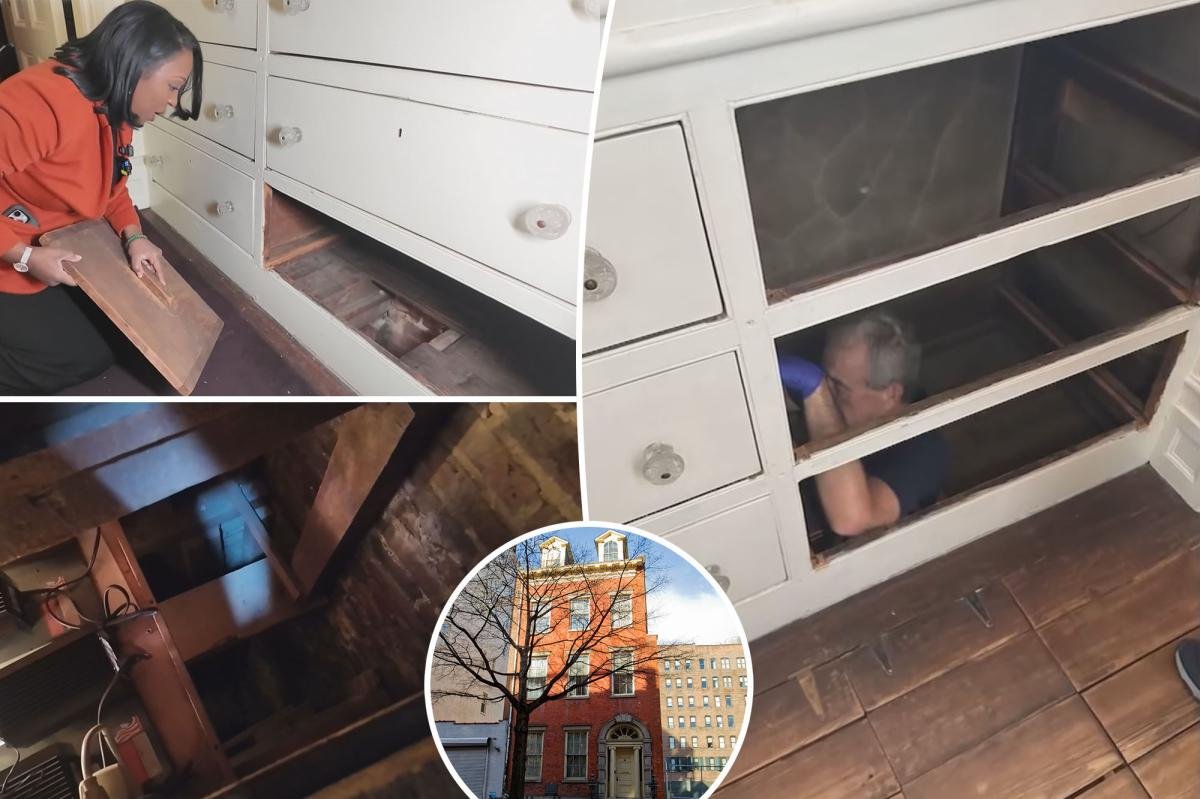
To the naked eye, the 4-story brick row house on East Fourth Street is just another of the 19th-century buildings on a block adorned with dark shutters and time-worn character.
But, to the brave men and women who escaped bondage in the South during the 1800s, that seemingly unremarkable structure served as a “safe house” for runaways of the Underground Railroad.
A secret passageway, hidden beneath the weighty bottom drawer of a dresser that was built into the west wall of the house, is the 2-by-2-foot threshold through which former captives achieved emancipation.
“We knew it was here, but didn’t really know what we were looking at,” Camille Czerkowicz, curator of the property — now revered as the Merchant’s House Museum — told Spectrum News, referring to the recent subsurface discovery.
The groundbreaking find perfectly coincides with Black History Month, an annual celebration of African American culture, torchbearers and global contributions. It, too, spotlights an unsung slice of New York’s legacy that oft goes unacknowledged, says Manhattan Councilman Christopher Marte.
“Many New Yorkers forget that we were part of the abolitionist movement,” said Marte of the Empire State’s push to end slavery. “But this is physical evidence of what happened in the South [during] the Civil War, and what’s happening today.”
Patrick Ciccone, an architectural historian, agreed.
“Being an abolitionist was incredibly rare among white New Yorkers, especially wealthy white New Yorkers,” said Ciccone. “[Joseph Brewster] was the builder of the house, and he was able to make these choices and design it.”
Brewster, a white abolitionist, built the house in 1832. He then sold it to the Tredwell family, upper-middle-class merchants, in 1835. The residence was ultimately transformed into a museum, granting visitors an exclusive glimpse at domestic life during centuries past. It became Manhattan’s first landmarked building in 1965.
However, it’s unknown whether the Tredwells were aware of their home’s significant ties to black history.
Experts have reportedly praised Brewster’s handiwork as “a masterwork in deliberate concealment,” owing to its strategic design — meant to be undetectable to the slave-hunters and city marshals of yore.
Upon removing the heavy bottom dresser drawer, stationed in a bedroom on the second floor of the house, there is a crudely cut rectangular opening in the floorboards. The small hole leads to a 2-by-2-foot enclosed, vertical space. A ladder then leads down to the ground floor.
Brewster’s construction has left architects and preservationists agog.
“I’ve been practicing historical preservation law for 30 years, and this is a generational find,” gushed Michael Hiller, a preservation attorney and professor at Pratt Institute. “This is the most significant find in historic preservation in my career, and it’s very important that we preserve this.”
Manhattan Councilman Harvey Epstein echoed similar sentiments.
“It’s a critical piece of the overall struggle for freedom and justice.”
Read the full article here