Military strikes by the United States and Israel against Iran in a joint effort — followed by retaliatory attacks from Tehran on Gulf energy infrastructure — have triggered a major escalation in tensions, culminating in the almost total closure of the Strait of Hormuz.
The waterway is one of the world’s most critical energy chokepoints, handling roughly a quarter to a third of global oil shipments and around a fifth of liquefied natural gas (LNG).
Its closure has sent shockwaves through global markets. The EU estimates gas prices have risen 70% and oil by 50% resulting in an extra €13 billion bill on fossil fuel imports.
On 30 March, leaders of the G7 — Canada, France, Germany, Italy, Japan, the United Kingdom and the United States — said they stand ready to take “any necessary measures” to safeguard energy stability and global supply.
European energy ministers are meeting today to assess supply risks and consider emergency measures to curb demand, according to a letter seen by Euronews.
What has been the immediate impact of the Hormuz crisis?
The most immediate effect has been a sharp rise in energy prices; driven by a sudden supply shortfall and uncertainty over how long disruptions will last.
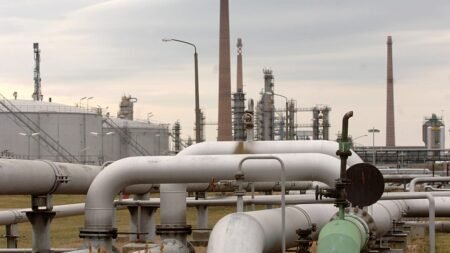
Iran’s strikes on 18 March reportedly damaged between 30% and 40% of Gulf oil refining capacity, removing an estimated 11 million barrels per day from global supply.
This has pushed Brent crude prices to around $119 per barrel, up from roughly $70 before the conflict started. Analysts warn prices could rise significantly further under worst-case scenarios, drawing parallels to the 1970s oil crisis.
Natural gas prices are also climbing, with fears they could return to levels seen during the 2022 energy crisis following Russia’s invasion of Ukraine.
How exposed is Europe to the war in the Middle East?
The European Union’s direct reliance on Middle Eastern crude oil remains relatively limited — about 8% of imports came from Saudi Arabia in 2024.
However, the bloc is more dependent on refined fuels such as diesel and jet fuel from countries including Saudi Arabia and Kuwait, leaving it vulnerable to refinery disruptions.
At the same time, LNG shipments originally bound for Europe are being diverted to Asia, where buyers are willing to pay higher prices.
How long could disruptions last?
The damage to Gulf energy infrastructure is significant.
Analysts estimate that restarting shut-down facilities could take several months, while fully rebuilding damaged sites may take up to three years.
Even if hostilities were to end quickly, European leaders warn that the economic and energy impacts could linger for some time, feeding into inflation and industrial costs.
What measures are being taken to ease prices?
The International Energy Agency coordinated the release of 400 million barrels of oil on 11 March in an effort to stabilise markets, though this has so far proved insufficient.
Saudi Arabia is attempting to boost exports via alternative routes, including the Yanbu pipeline to the Red Sea, which is now operating near capacity.
Diplomatic efforts are also ongoing, with countries such as Pakistan and Turkey acting as intermediaries between Washington and Tehran — but with limited progress so far.
What are the risks?
One major flashpoint is Iran’s Kharg Island, which accounts for around 90% of the country’s crude exports.
Although recent US strikes targeted the site, the energy infrastructure there was spared. Iran has since warned it could retaliate by targeting desalination plants in the Gulf — a move that could threaten water supplies for millions and deepen the crisis.
What contingency measures are set for the EU?
The EU maintains emergency oil reserves equivalent to at least 90 days of consumption, with total European stockpiles estimated at around 100 million tonnes.
Gas storage rules typically require reserves to be filled to 90% by November, though these requirements have been relaxed to 75% to avoid panic buying.
Why is this crisis particularly challenging for Europe?
The energy shock comes at a difficult time for Europe’s economy.
Before the conflict, EU countries were already grappling with high energy costs and declining industrial competitiveness. Energy-intensive sectors such as steel, chemicals and cement have been calling for urgent support.
The current crisis risks further price spikes and potential fuel shortages, exposing underlying vulnerabilities in the bloc’s energy system.
How are individual EU countries responding?
Governments are taking a range of measures to cushion the impact.
Italy is seeking increased gas supplies from Algeria, while Belgium’s transmission operator Fluxys is exploring alternative LNG sources, including the United States and Nigeria.
At the same time, EU countries are rolling out tax cuts, subsidies and market interventions to shield consumers and businesses.
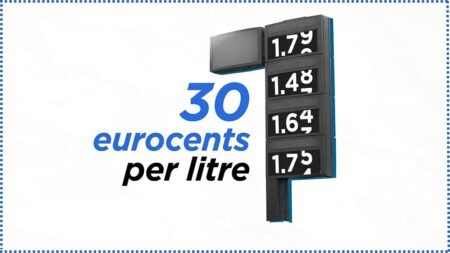
Some are going further: Slovenia has introduced fuel rationing, while Austria has cut fuel taxes and imposed limits on retailer profit margins.
EU finance ministers are also considering broader measures, including oil price caps and windfall taxes on energy companies.
Read the full article here