




Updated ,first published
Ben Roberts-Smith has been arrested in relation to multiple counts of murdering unarmed Afghan civilians and prisoners in what looms as the most significant war crimes prosecution in Australian history.
Roberts-Smith is expected to be charged on Tuesday with five counts of war crime – murder following a joint investigation between the Office of Special Investigator and the Australian Federal Police. The maximum penalty for the offence of war crime – murder is life imprisonment.
“It will be alleged the victims were not taking part in hostilities at the time of their alleged murder in Afghanistan,” AFP Commissioner Krissy Barrett told media on Tuesday in Sydney.
“It will be alleged the victims were detained, unarmed and were under the control of ADF members when they were killed.”
The arrest of the decorated former special forces soldier comes after a five-year investigation secured the co-operation of SAS eyewitnesses who are expected to allege that Roberts-Smith himself executed, and directed junior soldiers to execute, at least half a dozen defenceless detainees during his time in Afghanistan between 2006 and 2012.
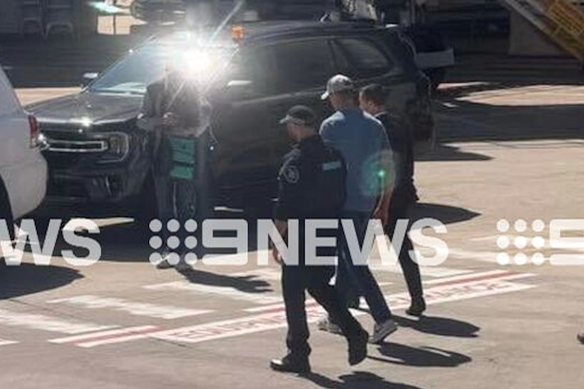
The 47-year-old was arrested at Sydney Airport after arriving on a flight from Brisbane on Tuesday morning. AFP officers were seen waiting at the arrivals gate for QF515 when it arrived just after 11am.
Addressing a press conference at Parliament House in Canberra, Prime Minister Anthony Albanese refused to answer repeated questioning on Roberts-Smith’s arrest.
“I have no intention of commenting on a matter that’s clearly before the courts,” Albanese said, later adding that his commentary may prejudice the case.
“I’m not going to confirm anything to do with the legal matter. That is a matter that is very important, that there not be political engagement in what is a matter that is now the subject of legal proceedings.”
The investigation into Roberts-Smith focused on claims, strongly disputed by him, involving allegations he:
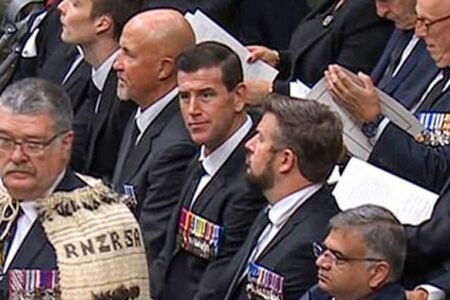
When Roberts-Smith allegedly ordered that 2012 execution, he was the most decorated Commonwealth soldier to serve in Afghanistan. If proved, the allegations the Victoria Cross recipient faces may mean he is stripped of his medals and jailed for life.
Barrett said it had been a “complex” five-year investigation into a small cohort of the ADF and their conduct fighting on behalf of Australia.
“The alleged conduct related to these charges is confined to a very small section of our trusted and respected ADF, which helps keep this country safe,” she said.
“The overwhelming majority of our ADF do our country proud. Today’s charges are not reflective of the majority members who serve under our Australian flag with honour, distinction and with the values of a democratic nation.”
While only a jury can decide Roberts-Smith’s guilt, a prosecution would mark a spectacular fall from grace of a one-time war hero fiercely backed by politicians, including former defence minister and Australian War Memorial chairman Brendan Nelson and One Nation leader Pauline Hanson, as well as billionaire Kerry Stokes.
Roberts-Smith has already unsuccessfully contested claims he committed war crimes, including murders, in a defamation case he fought all the way to the High Court . The High Court in September refused him leave to appeal a full Federal Court decision that, in turn, backed the 2023 judgment of Federal Court judge Anthony Besanko that The Age and Sydney Morning Herald had proved the allegations true to the civil standard.
Roberts-Smith, the son of a former West Australian Supreme Court judge and major general, joined the army in 1996 and became Australia’s most famous modern soldier after he was awarded the VC for his actions in a 2010 battle.
He has always denied any wrongdoing and it is anticipated he would fight criminal charges.
Official sources, speaking anonymously because they are not authorised to comment, said the Commonwealth Director of Public Prosecutions (CDPP) had recently contacted Attorney-General Michelle Rowland seeking authorisation for a prosecution, as required when an alleged war crimes case is deemed worthy of criminal charges.
Over the past five years, a team of experienced state and federal police detectives, recruited from various Australian homicide and other elite squads as part of the highly secretive OSI, quietly built the case against Roberts-Smith.
The OSI was created in early 2021 to investigate the involvement of the SAS regiment in Afghan War crimes.
According to confidential sources, OSI detectives have tapped phones in Australia and offshore, planted listening devices, conducted raids and, most significantly, convinced SASR soldiers who had allegedly witnessed or were implicated in Roberts-Smith’s war crimes to become prosecution witnesses.
The case against Roberts-Smith is sprawling, but not circumstantial: its foundation is in the witness accounts of decorated SAS soldiers and Afghan War veterans.
Told of the looming charges, one SAS eyewitness told this masthead that he and other veterans had decided to assist the OSI because no Australian soldier was above the law, no matter how grim the fallout.
“Well, it’s all about the truth, and I think, honour. And we lost men in Afghanistan, like regular army fellas and the commandos. And how do you honour them? By telling the truth,” he said, speaking anonymously due to confidentiality requirements.
He alleged the war crime he had witnessed involved a defenceless detainee and occurred “after the dust has settled”.
“There’s no fog of war, there’s no bullets flying around … this was completely contrary to our mission, we weren’t there to kill civilians or people who didn’t deserve to die.”
Some of the witness accounts have been aired in the unsuccessful civil defamation action that Roberts-Smith launched in 2018 against this masthead. Their testimony was pivotal to the determination of the Federal Court, upheld by the Full Court of the Federal Court, that Roberts-Smith had murdered unarmed detainees and civilians.
The three senior Full Court judges ruled Roberts-Smith a war criminal to the civil “balance of probabilities” standard. Ruling on the alleged execution of a man with a prosthetic leg, they said: “The problem for [Roberts-Smith] is that, unlike most homicides, there were three eyewitnesses to this murder.”
Roberts-Smith applied for leave to appeal to the High Court. The court refused his application.
The impending criminal charges mark the latest chapter of an extraordinary saga that began when The Age and Sydney Morning Herald began a major investigation into Roberts-Smith in late 2017.
The investigation unearthed many of the alleged war crimes later probed by the OSI. These were detailed in dozens of articles published between 2018 and 2023.
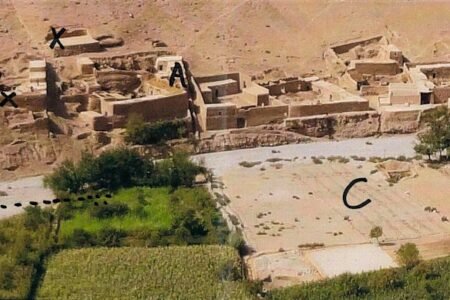
In 2019, this masthead and 60 Minutes interviewed two serving SAS whistleblowers and travelled to Afghanistan to interview the wife of Ali Jan, the Afghan civilian allegedly kicked off a cliff in September 2011 and executed on the orders of the famous soldier shortly after the cliff kick.
In her interview from a hotel in Kabul, wife Bibi Dhorko demanded that the Australian government hold to account the soldier who had allegedly brutalised and murdered her husband.
“He didn’t side with anyone and never had a gun,” she said. “He was living in the mountain and doing his work, only going occasionally to the village if we needed any supplies.”
Roberts-Smith, although unnamed, was also at the heart of a landmark 2016 probe into “rumours” of SAS wrongdoing in Afghanistan, commissioned by then army chief Angus Campbell and led by senior judge Paul Brereton.
When he finished his inquiry in November 2020 and published his redacted report, Brereton revealed he had uncovered credible information that about two dozen SAS soldiers committed 39 alleged executions of civilians and prisoners.
This masthead’s investigations and Brereton’s work prompted then-prime minister Scott Morrison to create the OSI.
Earlier this year, the OSI was told that the CDPP had authorised the brief of evidence against Roberts-Smith.
It ruled the OSI had gathered enough evidence to prosecute Roberts-Smith for war crimes, and about a fortnight ago submitted the brief to Rowland for final approval.
On Tuesday morning, 17 years after he allegedly executed an elderly man with a prosthetic leg in an Easter Sunday operation in southern Afghanistan, and five years after the Taliban’s return to power, Roberts-Smith was handcuffed and taken to a holding cell.
He is expected to appear before a NSW local court judge later today.
Read more on Ben Roberts-Smith’s arrest:
The Morning Edition newsletter is our guide to the day’s most important and interesting stories, analysis and insights. Sign up here.


From our partners
Read the full article here