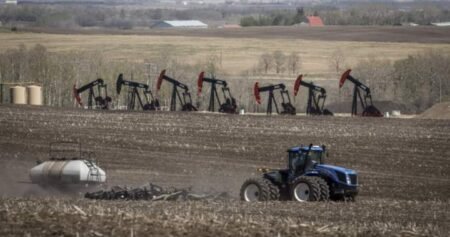






Experts say the war in Iran is having a rippling effect across the world, and B.C. is starting to see some impacts.
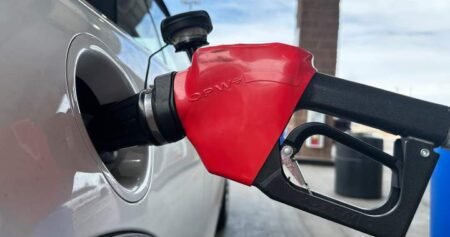
The pressure on oil supplies has pushed the price of gas in Metro Vancouver to record highs of more than $2 per litre.
“With few exceptions, the price has gone nowhere but up since the beginning of the conflict,” Dan McTeague with gasbuddy.ca and affordableenergy.ca told Global News.
He said oil is up about $30 a barrel, with gasoline up about 24 cents a litre.
“Just at the beginning of this, we were in the $1.67 to $1.70 range, so we’ve seen a pretty dramatic increase, especially on the diesel side, where diesel prices have gone up as much as 45 to 52 cents a litre, and that, of course, will leave a bit of an impact as it comes to all of the products that are made or serviced or, you know, part of the supply chain,” McTeague said.
He added that they expect to see fuel surcharges to reflect the higher costs of transportation across the board — including trucks, trains and jet fuel.
“All forms of energy have taken a pretty substantial hit from the high energy prices,” McTeague said.
He said that the longer the conflict goes on, the greater the impact on prices being driven even higher for everyone.
“When it comes to carriers and transport and distribution, it’s much more impactful because they have nowhere to go but to increase, pass those increases on the longer they go,” he said.
“What does that cost an average truck, depending on what they’re pulling, depending on what they’re hauling?”
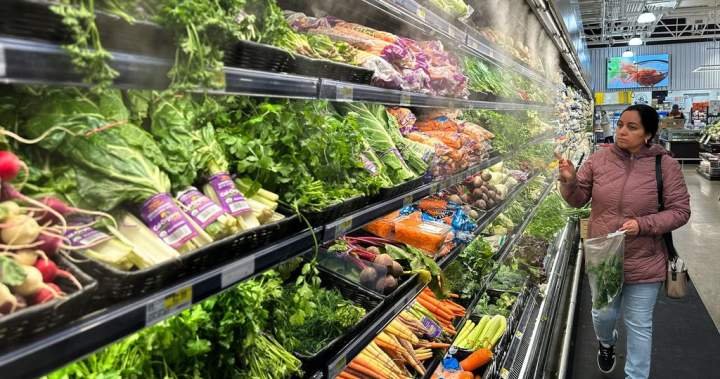
But shoppers can expect to see higher prices at the grocery store.
“There’s a lot of pressure on energy costs, obviously, diesel, gas prices, and the food supply chain is a very energy-intensive sector,” Dr. Sylvain Charlebois, director of the AgriFood Analytics Lab at Dalhousie University, told Global News.


Get breaking National news
Get breaking Canada news delivered to your inbox as it happens so you won’t miss a trending story.
“I mean, so obviously when you have energy costs go up, it will impact the cost to move things around, to manufacture, to produce food, everything.”
Charlebois said they have seen similar scenarios in 2008 during the financial crisis, where energy costs went up and three months later, food inflation followed.
He said that if oil remains at $90 a barrel, shoppers can expect to see an extra two or three per cent increase across the board.
But any product connected with the coal chain or refrigeration is likely to become more expensive, Charlebois said, saying prices for meat, dairy and produce are expected to climb.
“Obviously, everything will be impacted, but those are the categories that are probably going to be more impacted,” he said.
“As far as food inflation goes, we did see in the numbers this morning that food inflation did drop to 5.4 per cent. We were expecting that drop to continue into March and April, but now it’s highly unlikely because of attacks in Iran.”
Charlebois advised shoppers that if they see something on sale, grab it.
“The thing about 2026 is that I do feel that Canadians are much more strategic about grocery shopping than just four years ago,” he added.
“Four years ago, food inflation came violently into our lives and I actually think that most Canadians weren’t ready for it. Now they’re much more ready, they’re more informed, they go to different grocery stores as well, they understand how much things cost now.”
Travel is also expected to get more expensive.
Some airlines have already started adding fuel charges to tickets.
“I think what you’re seeing happening now is a volatility in jet fuel that hasn’t been seen in years,” John Gradek, a former Air Canada executive and McGill University faculty lecturer in aviation management, told Global News last week.
BC Ferries also told Global News in a statement that fuel is one of its most significant and unpredictable operating costs.
“To help minimize fare volatility and protect customers from sudden swings, BC Ferries operates under a fuel deferral mechanism approved by the BC Ferries Commissioner,” the organization said in a statement.
“As part of each performance term, the Commissioner establishes a set fuel price for the system. If market prices move above or below that level, the difference is tracked through the fuel deferral account rather than immediately impacting fares.”
BC Ferries said it will continue to monitor fuel markets closely.
Read the full article here