



 Markets
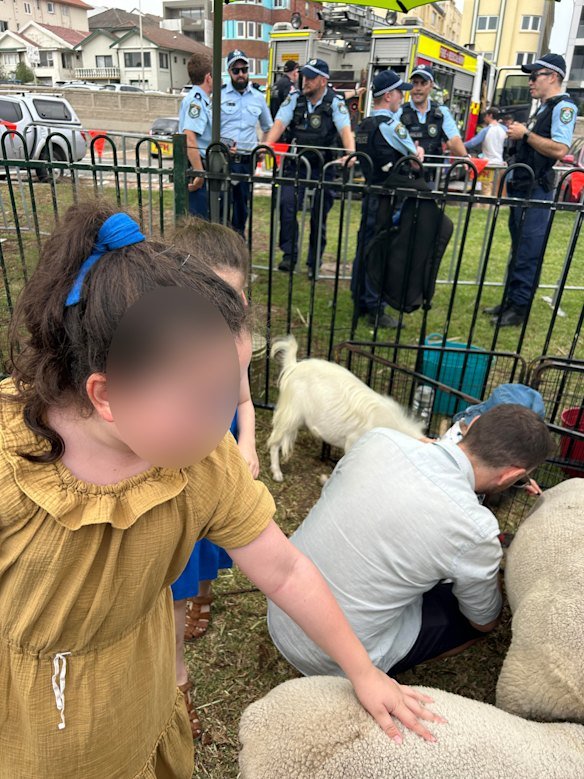
The decision to send just three police officers to safeguard the Jewish festival at Bondi Beach where alleged Islamic State radicals shot dead 15 people and the failure of intelligence agencies to detect the terrorist plot will be the focus of the royal commission’s second tranche of hearings this week.
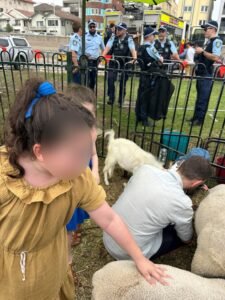
The calculations of Australia’s security and law enforcement agencies, which will be ventilated from Monday, have been thrown into focus by images of the same event two years earlier, which show many more police standing guard over a little girl at an animal petting zoo.
Former High Court judge Virginia Bell will reconvene the Royal Commission on Antisemitism and Social Cohesion on Monday to examine a series of issues in the lead-up to the shooting at Bondi Beach, allegedly carried out by father and son Sajid and Naveed Akram, on December 14, 2025.
The first witness to be called will be ASIO boss Mike Burgess, who has described the escalation of antisemitism as a “threat to life” and one of the spy agency’s highest priorities.
Australian Federal Police assistant commissioner Stephen Nutt will also give evidence, as will Leanne McCusker, the assistant commissioner of the NSW Police who has responsibility for counter-terrorism and special tactics.
Two representatives from the Community Security Group – the volunteer-led Jewish organisation that arranges security for synagogues, religious schools and community events – will appear under pseudonyms.
The second block of hearings will focus on the terrorism threat level, which was “probable”, and security environment before the attack.
Bell will also examine what intelligence agencies knew about the Akrams; security arrangements for the Chanukah By The Sea festival; and counter-terror resourcing, powers and systems.
This masthead has obtained images of children playing at Chanukah By The Sea in December 2023, two months after Palestinian militant group Hamas carried out its deadly terrorist attack on Israel on October 7.
The images, which show a young girl playing with animals at a petting zoo, are notable for the six police posted at the perimeter.
That is twice as many officers as would be sent to the same event two years later.
The person who took the image said there were “dozens” more police, out of frame, at the 2023 and 2024 events.
But, for 2025, the number of police dropped dramatically.
“The Eastern Suburbs Police Area Command operations inspector asked the two inspectors rostered on 14 December to attend the Chanukah by the Sea event, take a car crew or two and provide a high visibility policing presence, noting that there was no need to stay the entire duration,” the commission’s interim report notes.
“NSW Police stated that three general duties officers and one supervisor attended the event and that the commander of the Eastern Suburbs PAC attended the event at various times.”
When Sajid Akram and his son opened fire on the crowd, the few police at the scene bravely exposed themselves to danger to return fire and protect civilians. More officers raced to the beach to stop the killing.
NSW Police officer Detective Senior Constable Cesar Barraza is believed to have shot dead Sajid from a distance of 40 metres.
Naveed, 24, was also injured by police gunfire and is facing trial for murder and terrorism.
Two police officers were shot by the alleged terrorists: Probationary Constable Jack Hibbert, who had been in the job for only a few months, and Constable Scott Dyson. Both survived but were badly injured.
Jewish security group CSG had warned police before the event that its terror rating was “high” and it suspected a terrorist attack against the NSW Jewish community was “likely and there is a high level of antisemitic vilification”.
NSW Police had a calendar of 15 Jewish events over the eight-day Chanukah period in the city’s east, including another at Dover Heights on December 14.
Police said they needed to consider “competing operational demands” within the command on the day.
Security groups, including spy agency ASIO and the Joint Counter Terror Teams, which includes the Australian Federal Police, will also be examined by the royal commission because they had known about Naveed Akram for years but had discounted him as a threat.
The younger Akram had, in 2019, come onto the radar of intelligence agencies as they investigated a group of young men who would later be exposed as an Islamic State cell in Sydney’s west.
This masthead revealed this month CSG had emailed NSW Police naming Akram as a “close associate” of a group of radical young men who were clustering around a street-preaching group in Bankstown.
Naveed, then 17, was interviewed by security agencies and NSW Police but was never arrested or charged, even as many around him were convicted of supporting IS.
Instead, he was placed on a list of individuals who had been of interest to counter-terror authorities about 2020-21.
It was around this time his father resumed his attempts to secure a gun licence.
It was ultimately granted by the NSW Firearms Registry, and he lawfully acquired the firearms used in the attack in December.
The Akrams travelled to a known IS hotspot on a southern island of the Philippines shortly before the attack. But authorities have found no evidence the men visited any training camps or met with IS recruiters.
Shortly before he resigned from the royal commission, former ASIO boss Dennis Richardson questioned whether the country’s intelligence system had fallen short in its handling of the Akrams.
ASIO boss Mike Burgess defended his agency’s handling of the intelligence, calling criticism “baseless”.
Both ASIO and the AFP appointed former insiders to examine their handling of the intelligence on Naveed, both concluding that the agencies had not acted negligently.
Start the day with a summary of the day’s most important and interesting stories, analysis and insights. Sign up for our Morning Edition newsletter.
 Alexandra Smith is a senior writer and former state political editor of The Sydney Morning Herald.Connect via X or email.
From our partners
Read the full article here