









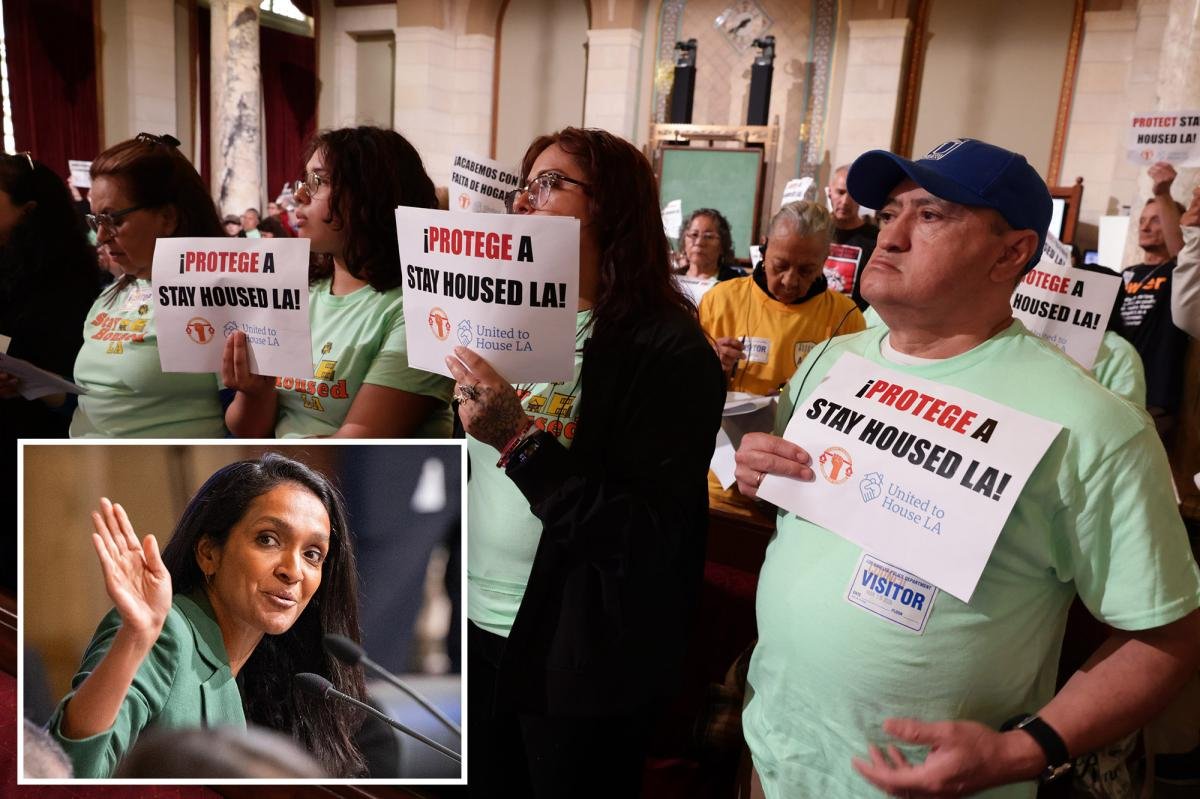
The mystery behind a 90-minute closed-door meeting at Los Angeles City Hall is now coming into focus.
Before approving a $177 million taxpayer windfall for tenant-rights groups, Los Angeles City councilmembers were warned about a problem that has quietly been building inside City Hall for years: missing receipts, weak oversight and unanswered questions about how earlier public funds were spent.
The contracts ultimately passed in a 12–1 vote, with Councilmember John Lee casting the lone dissent.
But the closed session with City Attorney Hydee Feldstein Soto signaled deeper concerns about the way hundreds of millions of dollars tied to the city’s eviction defense system have been administered.
When the council returned to open session, Feldstein Soto made clear the issue was not about whether tenants should receive legal representation.
“There is absolutely no chance that this city’s tenant eviction defense program, or right-to-counsel program, is in any jeopardy,” Feldstein Soto told councilmembers. “The issues raised have nothing to do with that. What is at stake is how it is administered, and whether we are handing $177 million in a block grant to specific providers.”
The funding package sends the largest share, $106.6 million, to the Legal Aid Foundation of Los Angeles (LAFLA) to run eviction defense services.
Another $42.1 million goes to the Southern California Housing Rights Center, while the Liberty Hill Foundation will receive $21.7 million and Strategic Actions for a Just Economy will receive $6.6 million.
The organizations receiving the funds are not just legal service providers. Many are also major players in activism. Attorneys tied to LAFLA have been involved in lawsuits challenging Los Angeles’ enforcement of laws tied to homeless encampments and street property seizures during sanitation operations.
Strategic Actions for a Just Economy has pushed aggressive policy demands including freezing rents, canceling the 2028 Olympics and abolishing the LAPD. The group has also sued the City of Los Angeles over approvals for a luxury hotel project on public land, a case that led to closed-door settlement talks in 2023.
The Liberty Hill Foundation, another recipient of city funding, has also backed advocacy campaigns and legal challenges tied to policing and housing policies, including efforts that limited the Los Angeles Police Department’s ability to enter individuals into gang databases.
But several councilmembers were warned ahead of the vote that earlier contracts tied to the same network of organizations had already raised red flags.
According to officials familiar with the discussions, there were cases where contractors failed to submit receipts, invoices or outcome reports detailing how taxpayer money was spent or what results the programs produced.
Those concerns have been simmering inside City Hall for more than a year.
In 2025, Feldstein Soto refused to sign a long-term extension of a contract with LAFLA tied to the city’s Stay Housed L.A. eviction defense program.
Although the deal had already been approved by the City Council and Mayor Karen Bass, the City Attorney’s Office said the agreement violated procurement rules because it functioned as a sole-source contract, steering tens of millions of dollars to a single provider without competitive bidding and with little ability to track the program’s progress or how the money was being spent.
Feldstein Soto forced the city to reopen the process through a formal request for proposals, expanding the pool of organizations eligible to receive the funding.
Her office also launched an audit to determine whether taxpayer funds already paid through the program were properly spent and whether the services delivered matched what the city had been billed for.
During open session, councilmembers also raised frustration over the lack of receipts and financial documentation, emphasizing that those records must be produced.
Councilmembers attempted to address the concerns before the final vote by rewriting portions of the deal.
Seven amendments were added to the proposal that emerged from Councilmember Nithya Raman’s Housing and Homelessness Committee, many aimed at tightening oversight.
The revisions require contractors to clearly separate administrative expenses from direct program services and direct the Los Angeles Housing Department to provide annual reports to the council detailing how the funds are spent.
During the public debate, Councilmember Monica Rodriguez was blunt about accountability.
“Graffiti contractors are required to provide more documentation just to get paid,” Rodriguez said.
“So when you’re dealing with millions and millions of dollars, if you don’t provide the receipts, we’re not going to pay you.”
Lee said that lack of transparency ultimately drove his decision to oppose the contracts.
“Before the City commits significant resources to outside organizations, the public deserves clear information about how those funds will be managed and what outcomes will be delivered,” Lee said.
Read the full article here