





By Euronews
Published on
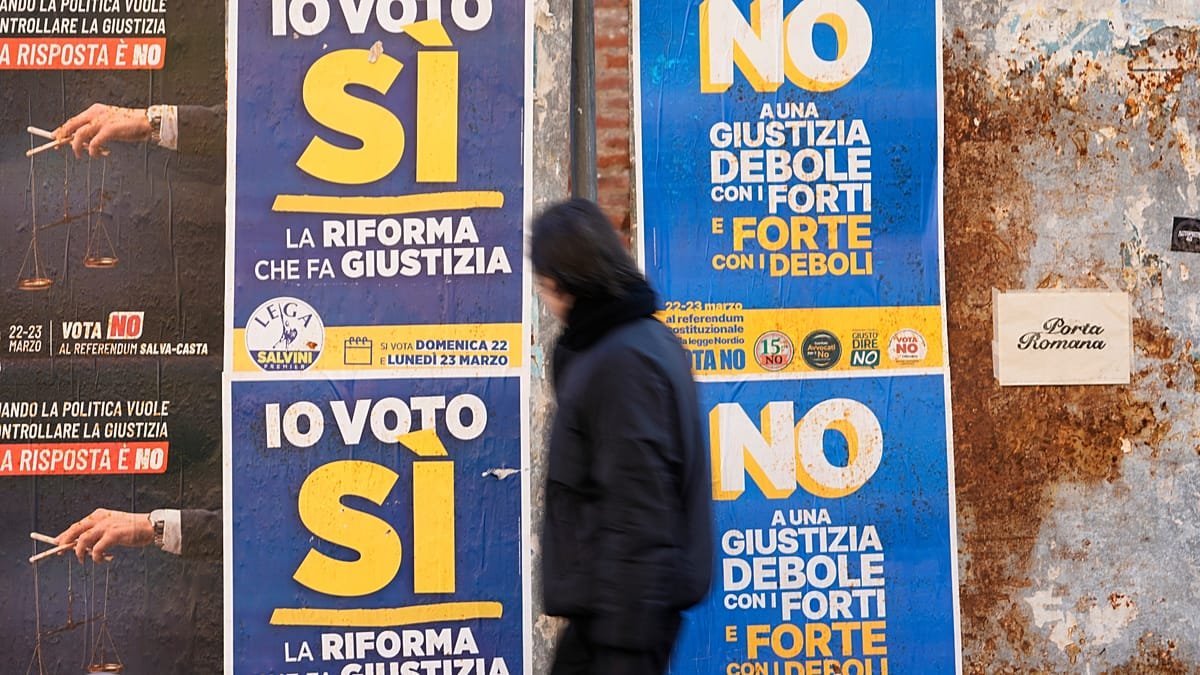
Polling stations across Italy opened on Sunday for a two-day referendum on judicial reform, which would split the career paths of judges and prosecutors, a reform that has sharpened political divisions and unified the centre-left opposition.
At 12:00 PM, according to the Interior Ministry’s Eligendo portal, voter turnout reached 14.88% of eligible voters. This figure is double the turnout recorded at 12:00 PM for the 2025 citizenship referendum and is also the highest for any referendum in the past 23 years.
The reform already passed parliament in October, but failed to secure the two-thirds majority needed to avoid a popular vote, turning it into a key test of Prime Minister Giorgia Meloni’s government one year ahead of national elections.
At the polling station voters will receive a single ballot paper on which they can choose between two options: “Yes” (to confirm the reform) or “No” (to reject the reform).
Recent polls show that the race is too close to call, with the “No” camp gaining late momentum.
Italy currently operates a unified judiciary where judges and prosecutors belong to the same professional body. They take the same entrance exam and can switch between roles during their careers.
The reform would establish distinct career tracks requiring an initial choice at the start of a career. Switching between roles would no longer be permitted.
The Superior Council of the Magistracy, which currently governs both judges and prosecutors, would split into two separate councils – one for judges and one for prosecutors. Both would be chaired by the Italian president.
Each council would comprise one-third lay members and two-thirds magistrates. Members would be selected by lottery rather than by election.
A test for the government ahead of national elections next year
The vote is seen by many commentators as a test for Meloni’s government. The Italian prime minister initially avoided tying her image too closely to the referendum, but a “Yes” win would significantly strengthen her tenure at home, alongside her international standing.
As the vote neared and polls tightened, Meloni shifted strategy and embraced the “Yes” campaign.
“If the reform doesn’t pass this time, we will probably not have another chance,” she said at a campaign event last week.
“We will find ourselves with even more powerful factions, even more negligent judges, even more surreal sentences, immigrants, rapists, pedophiles, drug dealers being freed and putting your security at risk,” Meloni added.
Lorenzo Pregliasco, political analyst and polling expert at YouTrend said a “No” victory “would send a political signal, weakening Meloni’s aura of invincibility, while pushing the center-left opposition to say that there is already an alternative in the country”.
Read the full article here