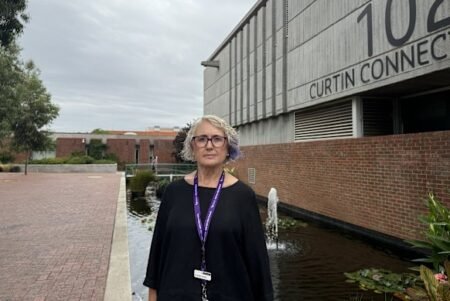








Bronte resident Juliette Arent has a keen nose for mould, the result of living in water-damaged and poorly ventilated Sydney rentals when she was younger that caused full-body rashes, eye infections and years of chronic inflammation.
It’s such a big problem that Arent spent $1 million removing and preventing mould in the 1885 heritage-listed Bronte terrace she bought four years ago.
It had rising damp, poor ventilation, and water running down the hill near and under it that had to be diverted with culverts. Anything water damaged, like walls, floors and ceilings, was replaced.
“Every house we were looking at for sale had mould,” she said.
With 30 per cent of Australians reporting mould in their homes, avoiding it is difficult, particularly for Arent, the co-founder of award-winning interior designers, Arent & Pyke.
At a party late last year, Arent smelled it. But it was too late to avoid getting sick. “I got moulded,” she said.
A new study by the University of Melbourne estimates that eradicating mould in Australian housing would add 4190 healthy days of life per million people in the next 20 years.
Eradicating damp and mould would also save $2.82 billion in health costs and increase productivity by $4.21 billion in the next 20 years. Climate change will likely make mould worse.
The team led by University of Melbourne’s Professor Rebecca Bentley simulated the impact of mould over 20 years on asthma, chronic respiratory disease and lower respiratory tract infections. The World Health Organisation said people who live in damp or mouldy conditions are at increased risk of experiencing these health problems and others.
About 50 per cent of people living in NSW report they have mould in their homes, compared with 35 per cent in Queensland, and 26 per cent in Victoria.
Those renting and in public housing are more vulnerable, with nearly 60 per cent of people in NSW public housing experiencing mould.
Bentley, also director of the Centre of Research Excellence in Healthy Housing, said it was an issue of equity and accessibility.
“A large percentage of the population are immunocompromised or have asthma or have a chronic respiratory health condition,” she said. “For them, these problems are far worse than for average people living in a home who might be able to smell it.”
The paper, which has yet to be peer-reviewed, has been published online. Bentley said it used conservative estimates, and the true impact of mould – caused by excessive moisture – was likely much greater.
The NSW state architect Abbie Galvin said the research showed how the design of homes affected mental and physical wellbeing.
“It is critical that we double down on things that have an impact. And we have to be even more careful now as [housing] is getting denser,” she told a talk at the State Library of NSW last week.
Galvin said there was a degree of control through the National Construction Code, and the NSW apartment guide, but “it was nowhere near enough”.
“People are fighting those controls all the time to try to bend and twist a way around them.”
NSW requires 60 per cent of apartments in a development to be cross-ventilated. The 2022 National Construction Code requires that habitable rooms have natural ventilation provided by openings (windows, doors, or other devices) and requires an aggregate open area of not less than 5 per cent of the floor area of the room.
“I think people think of mould as something they are allergic to … Something that’s not good, but no, it’s dangerous, really dangerous.”
Juliette Arent
Che Wall, an engineer and director of Flux Consultants, said the 5 per cent rule was standard around the world.
Unlike other countries, though, the Australian code redefined what was an open area, such as a window or door.
“The NCC actually chose to redefine that and say, ‘Don’t worry about the open area. Just measure the size of the glass.’ This is nonsense, no other country in the world is so stupid.”
That meant it did not matter whether the window could open 10 per cent or .01 per cent, Wall said.
In the UK, the death of two-year-old Awaab Ishak from respiratory failure caused by mould exposure in social housing resulted in a new law in his name. It forces social landlords to investigate and fix damp, mould, and other serious hazards within strict and binding timeframes.
Burp the house, and other mould prevention tips that won’t cost you a million bucks
Mould needs moisture and nutrients to grow, and minimising damp and improving ventilation helps. To maintain proper ventilation:
- Don’t block ventilation spots in your walls or ceiling
- Turn on exhaust fans when bathing, showering, cooking, doing laundry and drying clothes
- Burp your house: open windows year-round when weather permits, to improve cross ventilation, for a couple of hours daily.
Reduce humidity by limiting:
- The use of humidifiers
- Fish tanks and indoor plants
- Unflued gas heaters
Control moisture and dampness
- Repair water leaks and plumbing problems, for example, burst water pipes, leaking roof or blocked gutters
- If water enters your home, completely clean and dry water-damaged carpets and building materials; discard material that cannot be cleaned and dried completely
Rising and lateral damp: Rising damp is ground moisture rising up a brick or stone wall. Poor subfloor ventilation or moisture in the subfloor area will worsen the problem. Install a new damp course.
Source: NSW Health
To remove mould and minimise the chances of it recurring Sydney’s humid weather, Arent installed mechanical ventilation and industrial-grade dehumidification.
She is integrating mould prevention in her practice; encouraging clients to keep doors and windows open and use dehumidifiers and small heaters called damp-chasers – like a mini bar heater – in areas that attract mould, such as walk-in wardrobes and laundries.
“I think people think of mould as something they are allergic to … Something that’s not good, but it’s dangerous, really dangerous.
“I read all these reports, and ventilation is key, but ventilation in some homes is often sporadic, or doesn’t exist.”
Start the day with a summary of the day’s most important and interesting stories, analysis and insights. Sign up for our Morning Edition newsletter.


From our partners
Read the full article here