





Good morning. I’m Mared Gwyn bringing you this Monday newsletter with our EU correspondent Maïa de La Baume.
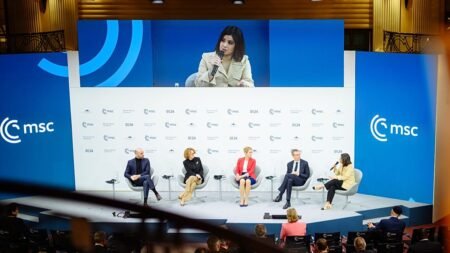
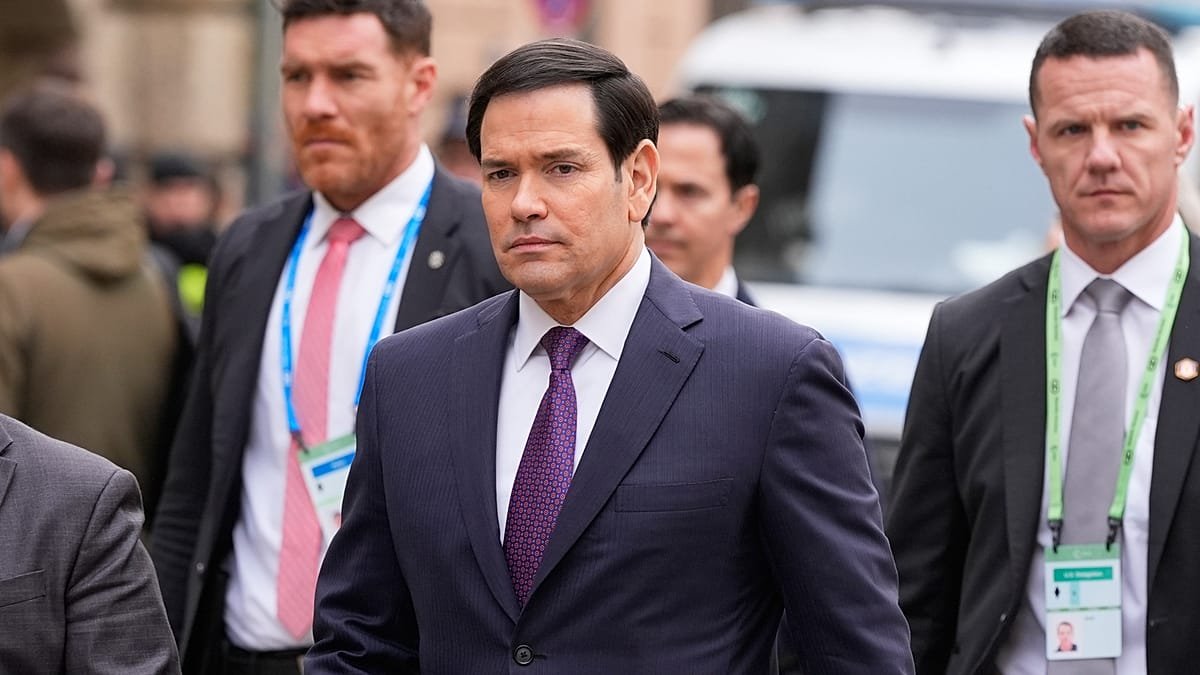
US Secretary of State Marco Rubio’s address to the Munich Security Conference (MSC) seems to have split European into two camps: those who breathed a sigh of relief at his softer tone and talk of an “intertwined destiny” for the US and Europe, and those who still feel the sting of his warning of an impending “civilizational erasure” for the continent.
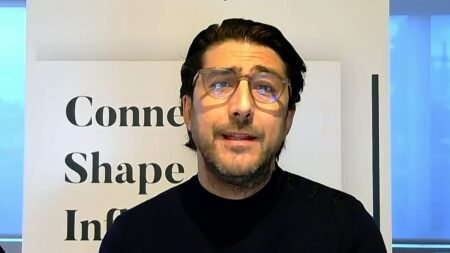
“Rubio cast a tone that was much more friendly” than US vice-president JD vance did at the MSC last year, Fabrice Pothier, the CEO of Rasmussen Global and former Director of Policy Planning for the NATO Alliance told Europe Today. “However nobody was naive in thinking that this is not an olive branch, this is just a way to make the past few months a bit less painful.”
Speaking from Munich on Sunday, the EU’s foreign policy chief Kaja Kallas, struck back: “Contrary to what some may say, woke, decadent Europe is not facing civilisational erasure,” she said, calling out the recent “bashing” of Europe by the US.
Her response was much firmer than that of her boss, Commission chief Ursula von der Leyen, who on Saturday said she was “very much reassured by the speech of the Secretary of State,” describing him as a “good friend.”
In case you were not following the action in Munich this weekend: Rubio drew applause for describing the US as a “child of Europe” and hailing their common destiny. But he also said that the collective West needs renewal after decades of what he described as ill-designed migration, industrial and climate policies.
He also called on European nations to be “proud of their culture and of their heritage” and “willing and able to defend it”, saying his administration has “no interest in being polite and orderly caretakers of the West’s managed decline.”
Also under the spotlight at the conference: the pressing need for Europe to reduce its reliance on the US for its own security.
Von der Leyen called on EU leaders to define their commitments to mutual defence by fleshing out what actions a little-known “mutual defence clause” in the EU Treaties should trigger, amid brewing uncertainty over NATO’s Article 5 and eroding trust in the US.
Momentum was also instilled in talks on a European nuclear umbrella, with German Chancellor Friedrich Merz and French President Emmanuel Macron holding confidential talks on the issue on the margins of the conference.
France is the only EU member state with nuclear capacity, and Macron has previously expressed openness to expanding that deterrence to cover the entire 27-country bloc. He told the Munich conference that Europe will have to redesign its security architecture on its own as it faces an increasingly aggressive Russia, with a focus on nuclear deterrence.
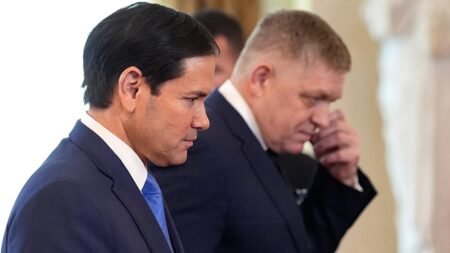
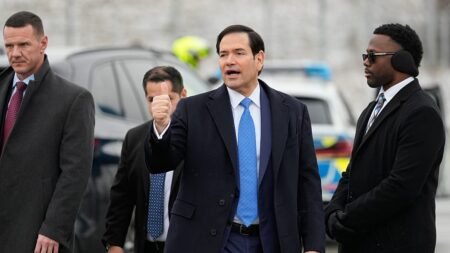
Meanwhile, Rubio visits Hungary today after stopping in Slovakia on Sunday, in a two-stop tour focused on the Trump allies most aligned with the vision pitched by Rubio in Munich. We have more on that visit below.
Russia reinforcing nuclear and Arctic assets near Finnish border, defence minister warn
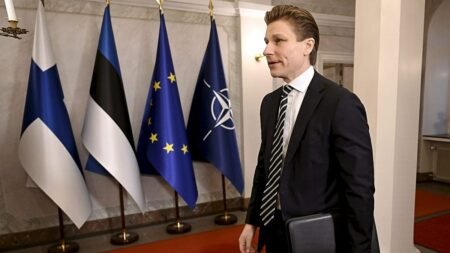
Russia is reinforcing its strategic assets in the Arctic and building up new facilities along the border with Finland, the Scandinavian country’s defence minister told Euronews’ Alice Tidey in an interview in Munich over the weekend.
“Russia has most of their biggest strategic capabilities in nuclear, submarines, long-range bombers in the Kola Peninsula area,” minister Antti Häkkänen told Alice. “They are building new military facilities along our border, the same as (during) the Cold War. It would be wise to watch the Arctic and build Arctic capabilities.”
The Kola Peninsula – a 100,000 square kilometre region in far northwestern Russia – hosts the majority of the country’s sea-based strategic nuclear arsenal such as submarines as well as long-range aviation assets.
Häkkänen, whose country joined NATO in a historic decision after Russia invaded Ukraine, welcomed NATO’s renewed defence planning in the High North, pointing to the launch of the enhanced vigilance activity Arctic Sentry, but suggested the region’s security should have been treated as a priority years ago. “It’s old news.”
He said Finland’s forces are “fully Arctic” and stand ready to share their expertise with allies to better protect the area.
Alice has the full story
US Secretary of State Rubio in Budapest as part of tour to bolster ties with Trump allies Fico and Orbán
US Secretary of State Marco Rubio will meet Prime Minister Viktor Orbán in Budapest later today after holding talks with Slovakian Prime Minister Robert Fico on Sunday as part of his two-stop tour of Central Europe, centred on governments seen as aligned with Trump’s political agenda, our correspondent Sándor Zsiros reports.
Both Fico and Orbán are nationalist leaders whose policies on migration, climate, and Ukraine often align with Trump’s agenda. They are also both fierce critics of the European Union. According to the State Department, the talks with Orbán will focus on “the peace process to resolve global conflicts” and on the US-Hungary energy partnership. Hungary was the first European nation to join Trump’s Board of Peace initiative, which aims to resolve global conflicts.
The US last year gave Hungary a one-year exemption from US secondary tariffs targeting countries importing Russian oil. In December, Hungary signed a deal with the US company Chevron to import 2 billion cubic metres of liquefied natural gas (LNG) from the US.
Rubio is widely expected to further encourage both governments to divest away from Russian energy in favour of American imports.
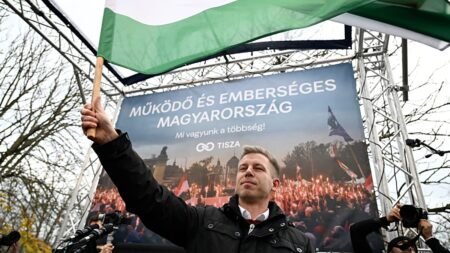
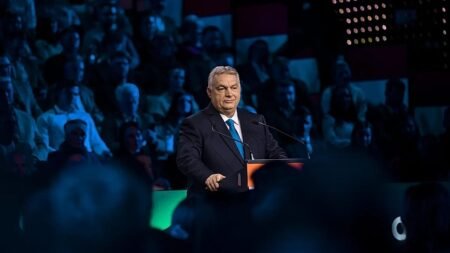
President Trump has already endorsed Orbán ahead of April’s elections, where he faces one of the fiercest challenges to his 15-year uninterrupted stint in power to date. The opposition Tisza Party, led by centre-right Péter Magyar, is leading in opinion polls.
Sándor has more.
More from our newsrooms
Hungary’s opposition leader Magyar calls for privacy protection in latest campaign speech. Péter Magyar held a campaign event in Budapest on Sunday, calling on the government to respect people’s privacy after what he described as blackmail and a honeytrap set up by the government to discredit him. Tamas Fencsik & Sandor Zsiros have the details
Former Ukrainian energy minister Halushchenko detained after attempting to leave the country. The National Anti-Corruption Bureau of Ukraine (NABU) said its forces detained Herman Halushchenko after he tried to cross the border during ongoing legal proceedings following a corruption scandal in the country’s energy sector that rocked Kyiv last year. Alexei Doval has more.
We’re also keeping an eye on
- Eurozone finance ministers gather in Brussels
That’s it for today. Maïa de la Baume, Alice Tidey, Sándor Zsiros and Maria Tadeo contributed to this newsletter. We’ll be back tomorrow.
Read the full article here