








Good morning from Brussels. I’m Mared Gwyn.
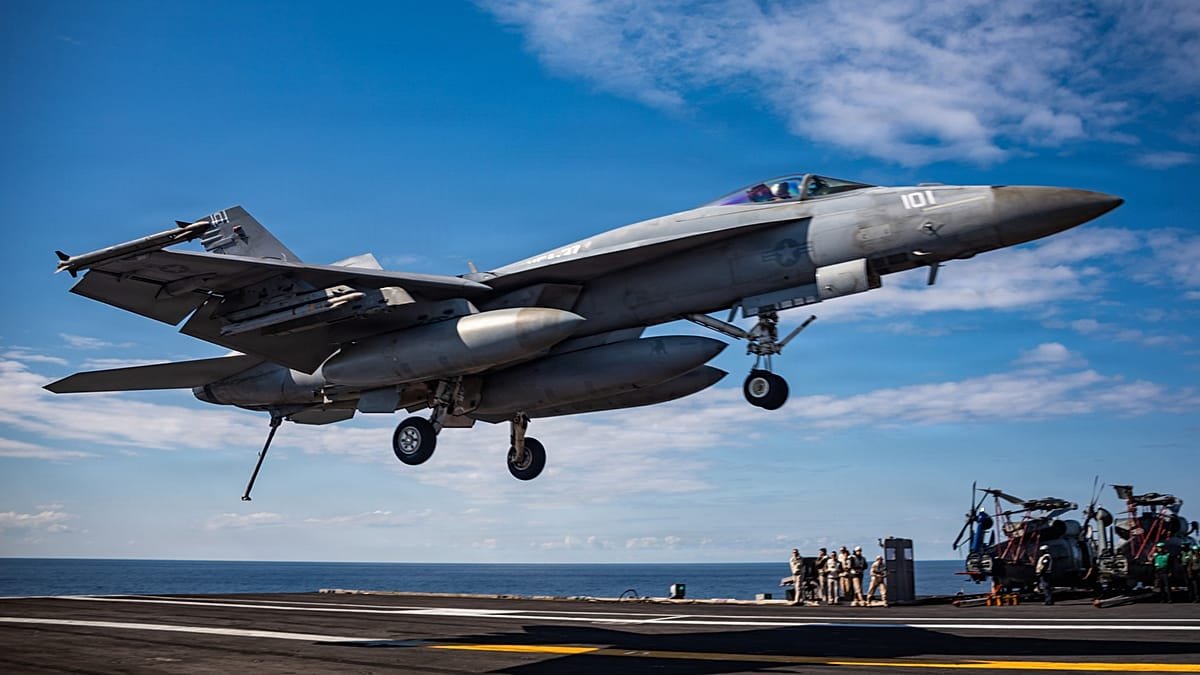
As an escalating conflict grips the Middle East following Saturday’s joint US and Israeli attacks on Iran and the ensuing Iranian retaliation, the EU is scrambling to assert its fading diplomatic clout as it calls for de-escalation and restraint.
Crisis meetings of EU ambassadors and foreign ministers were held on Sunday, with a statement by foreign policy chief Kaja Kallas last night calling for “maximum restraint, protection of civilians and full respect of international law.”
But major European powers simultaneously risk being indirectly dragged into the conflict after initially distancing themselves from any coordination or involvement with the US and Israeli intervention on Saturday.
France confirmed on Sunday that an Iranian strike had damaged its naval base in the UAE, while the UK said it had intercepted two missiles fired in the direction of Cyprus. The Cypriot government later denied that the EU island nation was the intended target. A British Tycoon also intercepted a suspected Iranian drone flying towards Qatari airspace.
Later – hours after the UK Prime Minister confirmed that he had permitted the US to use British bases for “defensive” strikes against Iran – a suspected Iranian drone struck RAF Akrotiri in Cyprus, a UK sovereign base on the EU island state. The Cypriot government is holding an emergency security meeting this morning.
After speaking with Cypriot President Nikos Christodoulides on Monday morning, European Commission President Ursula von der Leyen wrote: “While the Republic of Cyprus was not the target, let me be clear: we stand collectively, firmly and unequivocally with our Member States in the face of any threat.”
In a statement released on Sunday evening that marked a distinctive shift in tone, France, Germany and the UK said they would “take steps to defend our interests and those of our allies in the region, potentially by enabling necessary and proportionate defensive action to destroy Iran’s capability to fire missiles and drones at their source.”
With the region on knife-edge still, the risk of further spillover remains extremely high.
The conflict has also exposed deep fractures in the EU’s foreign policy.
Spain is the only country to have openly condemned the US and Israel’s military intervention, as the Pedro Sánchez-led government emerges as the strongest critic of Trump’s foreign policy in Europe. Sánchez’s counterparts have largely avoided public comment on the intervention, for which no legal assessment has been provided.
Speaking to Europe Today earlier this morning, Spanish Foreign Minister José Manuel Albares said that “the unilateral action from the US and Israel doesn’t have a backing from the UN charter, from international law.”
Albares also condemned what he described as “clearly unjustified” retaliatory attacks from Iran targeting other countries in the region. He described Spain’s voice as the “voice of reason” as it calls for “de-escalation” and a return to the negotiating table.
Meanwhile, European Commission President Ursula von der Leyen has also received sharp criticism for what EU lawmakers say is a major overstepping of her mandate in response to the conflict.
Von der Leyen held a series of calls, including with leaders from Bahrain, Qatar, Saudi Arabia, Qatar and Jordan, over the weekend and on Saturday convened an urgent meeting of her “Security College” for later today.
MEP Nathalie Loiseau wrote on X: “Once again, Ursula Von Der Leyen, this is NOT your business. Enough is enough,” adding that the Commission President has “no competence and no mandate.”
Von der Leyen’s team of Commissioners will gather to discuss the situation under the so-called Security College later today.
Speaking to Europe Today earlier on Monday, Iraqi-born Swedish MEP Abir Al-Sahlani said that “credibility” is the only “strategic capital” that the EU holds, urging the bloc to hold onto its principles and values in its response to the war.
Meanwhile, there is uncertainty over what the killing of Supreme Leader Ayatollah Ali Khamenei means for the future of the Iranian people (Euronews’ Omid Lahabi has this overview of Khamenei’s rise to power and legacy).
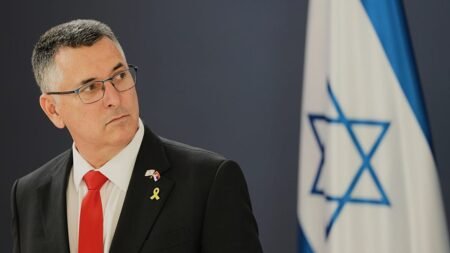
Speaking to Euronews on Sunday, the Israeli Foreign Minister Gideon Sa’ar said the US-Israeli attacks had “significantly weakened” the regime and told the Iranian people that they now “have an opportunity to regain their freedom, which was denied by this murderous regime.” More on that interview in our top story below.
The EU has expressed tacit support for regime change. Von der Leyen has spoken of “renewed hope” for Iranians following his death, while the EU’s foreign policy chief has said there is now an “open path to a different Iran, one that its people may have greater freedom to shape.”
Yet Tehran remains defiant. A three-member interim Leadership Council has been set up, President Masoud Pezeshkian said on Sunday, while the complex process of appointing a new Supreme Leader gets underway.
In response to the escalation, crude prices jumped as much as 13% when trading resumed earlier this morning as the effective closure of the crucial Strait of Hormuz amid the war rattled investors.
About 20% of global oil supplies pass through the strait each year. The Iranian Revolutionary Guard said over the weekend that the passage of ships was effectively prohibited.
Israeli FM says ‘no timeline’ set for Iran attack as he calls on Iranians to ‘seize their fate’
Israeli Foreign Minister Gideon Sa’ar has told Euronews no “timeline” has been set for the military operation alongside the United States, which began on Saturday.
“Naturally, we want the operation to be as short as possible, but no exact end date has been determined,” Sa’ar explained. The Israel Defense Forces (IDF) said Sunday that it would mobilize 100,000 reservists as the strikes on Tehran continue.
Speaking to our EU editor Maria Tadeo on Sunday, Sa’ar also said that neither Israel nor the US “seeks to impose (a new leadership) from the outside” but suggested the strikes, which resulted in the killing of Supreme Leader Ayatollah Ali Khamenei, could create the conditions for the people of Iran to raise against the regime.
“We need to create the conditions and to weaken this repressive regime to such an extent that it will be possible,” Sa’ar said.
“The future leadership of Iran should be determined by the Iranian people through free elections. Our only requirement is that whoever comes to power in Iran must not pursue the destruction of Israel,” Sa’ar also said.
The Iranian Foreign Minister Abbas Araghchi said on Sunday that despite his killing over the weekend, the “path” of Ayatollah Ali Khamenei “will continue”. Araghchi said an interim Leadership Council has been appointed and a new supreme leader may be chosen within days.
Read or watch the interview.
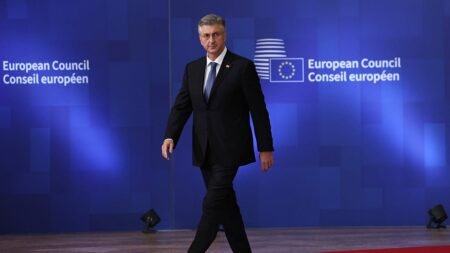
Adria can become “primary” pipeline for Hungary and Slovakia, Croatia’s PM Plenković tells Europe Today
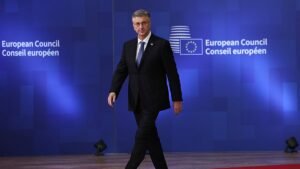
The Adriatic “Adria” pipeline which serves Croatia’s neighbouring countries Hungary, Slovakia and Serbia has “full capacity” to serve not only as an alternative but as the “primary pipeline” for Croatia’s “landlocked neighbours and friends”, Prime Minister Andrej Plenković has told Europe Today.
The Adria pipeline, also known as JANAF, which runs through Croatia, has emerged as the most viable alternative to provide oil to Hungary and Slovakia while the Soviet-era Druzhba pipeline, hit in Ukraine in late January, is being repaired.
Hungary and Slovakia are holding up key EU decisions on support for Ukraine, accusing Kyiv of delaying its reparations in what they described as “energy blackmail.”
JANAF said last week that it has the capacity to meet “the full annual needs” of Hungary (5.75 million tons of oil) and Slovakia (4.66 million tons). Both countries have already tapped into their emergency reserves in reaction to the Druzhba interruption.
But it remains to be seen whether the Adria pipeline could be used to transport Russian crude, which Hungary and Slovakia buy at a discounted price thanks to exemptions on EU sanctions on Russian oil. Hungary’s main energy company, MOL, has asked Croatia to transport Russian crude through Adria, threatening legal action if the request is denied.
Ukraine over the weekend offered two dates for the Slovakian Prime Minister to visit Kyiv – on either 6 or 9 March – to discuss the pipeline-related issues.
Belgium boards tanker part of Russia’s ‘shadow fleet’
The Belgian navy boarded and seized a tanker part of Russia’s sanctions-evading “shadow fleet” in the North Sea over the weekend, in an operation assisted by French naval helicopters, my colleague Sándor Zsiros reports.
Authorities say the vessel was sailing under a false flag and that its ship documents had been falsified. The tanker was identified as the Ethera, registered under the flag of Guinea.
“Belgium may be a small country, but we are among the founding fathers of NATO and the EU, and we take our responsibilities seriously,” Belgian Defence Minister Theo Francken said on social media.
France has taken similar steps to crack down on ageing tankers flying under flags of third countries used to transport Russian oil and gas to evade sanctions imposed by Western nations amid Moscow’s full-scale invasion of Ukraine, boarding two tankers named the Boracay and the Grinch in recent months.
The EU has made constraining the shadow fleet a key part of its efforts to harm Russia’s warchest. A fresh package of sanctions currently under discussion aims, but blocked by Hungary and Slovakia, aims to ban EU companies from providing any services to the sanctions-busting vessels.
Sándor has the story.
More from our newsrooms
After Iran attacks: German cruise passengers stranded in the Persian Gulf. The escalating crisis in the Middle East has left thousands of tourists, including Europeans, stranded on their ships in the Gulf region. Nela Heidnerhas more.
Oil prices rise as escalating Iran conflict spurs energy supply concerns. Crude prices rose in early trade on Monday morning as investors continue to weigh the potential impact of escalating tensions in the Middle East on the supply of energy, Angela Barnes reports.
We’re also keeping an eye on
- European Commission’s Security College meets to discuss Middle East crisis
- European Commission President Ursula von der Leyen to receive Swiss President Guy Parmelin
That’s it for toda. Maria Tadeo and Jorge Liboreiro contributed to this newslette. Remember to sign up to receive Europe Today in your inbox every weekday morning at 08.30.
Read the full article here