




Shaun Carney (“It’s time to shift away from the US”, March 26) clearly spells out why Australia can no longer rely on Trump’s America, but if anyone reading the article still has any doubts, he should turn over a few pages and read Stephen Bartholomeusz’s article (“How to blow $1.3b: Trump kills Biden’s wind-farm deal”, March 26) about how Trump has agreed to pay a French company, TotalEnergies, nearly $US1billion to not build offshore wind farms near New York and North Carolina. This is solely because he hates wind farms, despite the widely cited Lazard’s “Levelised Cost of Energy” report saying that utility scale solar and wind remain the most competitive, lowest cost and fastest to deploy energy generation resources available. Peter Nash, Fairlight
Yes, we do have to start the complex task of stepping back from America, not just shuffling back. We cannot put up with being bullied by Trump or the sycophantic behaviour of previous prime ministers such as Howard and Morrison. Carney had to take a very direct approach. Unfortunately, we are tied up with the complexities of AUKUS. That is where we must combine with the UK to pull back. Handing over of billions more would be of enormous economic detriment to Australia. We must stand firm and remain determined not to join the Iran war started by Trump and his ego. Combining with other moderate, sensible middle powers seems a much better option. There is a level of safety in numbers. Trump is becoming increasingly isolated, and his resources will not last without the middle powers, so opening the door for the alliances with China, Russia, Iran to come to the fore. There will be pain in the process and, as usual, the helpless who have no say in the process ill suffer. The shortcomings of democracy are for another argument. Augusta Monro, Dural
Australia has been tied to the US since World War II. Since then, our defence strategy has relied heavily on this association, but there has been a price to pay. Australian governments have put their hands up to support the US in ill-considered ventures from Vietnam to the Middle East. With the rise of China, our geopolitical position has altered. It is our biggest trading partner, yet the relationship is in constant tension. What would we do if China moved to take back Taiwan, and the US decided to support it? Unfortunately for us, we’re a small fish in a big pool. Ian Adair, Hunters Hill
Shaun Carney has spelled out, finally and loudly, what the vast majority of Australians really think. We have been quiet and annoyingly timid until now, but Trump’s actions since his second coming are the litmus test. Even his vice president clearly disagrees with his actions. And the real problem is that 49.8 per cent of those who voted for Trump believed that he was going to solve their problems. Americans have only ever really looked after themselves or their commercial interests, which are now worse under Trump. Time to dump Trump and his cohort and invest in our own interests. Ian Ferrier, Long Jetty
At last a breath of fresh air from an experienced commentator urging separation and withdrawal from the madness overtaking our supposed big brother partner, Trump’s US. Our stance and policies as a middle power do not single us out as a serious threat to world peace. Why, then, do we need to invest gargantuan sums in defence, and why is being in AUKUS indispensable? If moderate outlays on state-of-the-art defence materiel are warranted, it’s daily becoming clearer that shovelling billions each decade into a bottomless AUKUS pit, with no guarantee of relevance, return or even refund, is like bleeding our country dry of what it needs for sustenance and the future. Frederick Jansohn, Rose Bay
Shaun Carney is correct. Trump’s behaviour is downright dangerous and contemptible. His bullying and bragging is so far removed from the values we hold that we must extricate ourselves from this alliance, quickly and carefully. An alliance with multiple, similar minded, middle powers could be a stable, powerful and democratic alternative. The US version of democracy has shown its true colours and, with or without Trump, an alliance with that nation is no longer fit for purpose. Donald Green, Cobargo
Fuel reserves
Your correspondents (Letters, March 26) are not correct regarding Australia’s fuel reserve. It was kept in the US for about two years from 2020 but was sold, under a direction from Angus Taylor. There were only ever about 1.7 million barrels there anyway. We don’t really have a government-backed fuel reserve, we have that’s called the Minimum Stockholding Obligation whereby the federal government requires importers and refiners to maintain a baseline level of stocks of petrol, diesel and jet fuel as part of Australia’s long-term fuel security. This measure is a legal requirement to maintain domestically pre-defined days’ supplies of various liquid fuels. Angus McLeod, Cremorne (Vic)
Your correspondents refer to “oil reserves in the US”. An agreement with the US can only mean Australia, at then Minister Taylor’s direction, bought a portion of the US government oil reserve to relieve the US taxpayer of that burden. Potentially, all the minister did was authorise his department buy and hold oil on a commercial US exchange. Either way, it can be regarded as a speculation in the US market. Oil and refined fuels are not shipped from the US to Australia. Our only fuel reserves are what we hold in Australia. Peter Egan, Adelaide (SA)
Crude measures


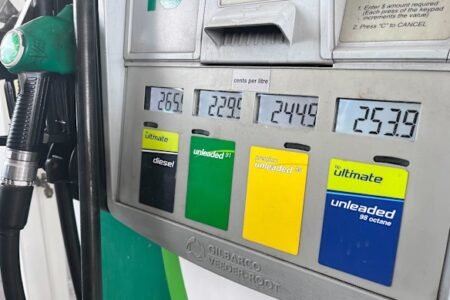
Reductions in crude oil availability have led to higher production costs (“Emergency measures on table as PM tackles crisis”, March 26). Contributing causes in Australia are suppliers seemingly increasing their gross margins by about 25 cents per litre and our conduct as consumers reflected by Economics 101: the supply-demand dichotomy. Available supply and scheduled arrivals through May remain consistent with quantities planned before the Strait of Hormuz blockage. What is also not in dispute is the surge in demand, resulting in temporary gaps and price spikes, panic buying and hoarding. High demand enables higher prices, and even perceived shortages encourage further hikes. If everyone behaved as they normally would, prices would likely be lower and distribution would remain unproblematic. The current volatility may be less about absolute scarcity and more a reflection of our collective reaction that is fuelled by the scaremongering federal Coalition. Carlo Ursida, Kensington (Vic)
Hard times
Treasurer Dr Jim Chalmers, pause and imagine the increased fear of female domestic violence victims when they learn you may cut legal services and other family and relationship services at their expense (“Chalmers may cut legal help over DV”, March 26). With fuel prices soaring, and possible food shortages, stress will rise too, and for some men, tempers and thuggery will escalate. Your job is hard, and keeping women and kids safe is hard. Don’t make it harder. Jennifer Fergus, Croydon
ABC strikers deserve support
I applaud ABC staff for taking strike action in pursuit of fair remuneration (“The big ABC names on strike for higher wages”, March 26). Opposition communications spokeswoman Sarah Henderson labelled the strike “an absolute disgrace” while stressing how essential ABC journalists are in times of crisis. This contradiction is telling: you cannot demand constant public service while dismissing workers’ efforts to secure fair pay and conditions. The ABC is not simply a broadcaster. It is our cultural and educational window to the world, a trusted national voice, and for many in rural Australia a daily companion against isolation. It informs, connects and steadies us in uncertain times. To disparage those who sustain this service is not just unfair — it is an attack on the institution that keeps Australians informed, connected and sane. In solidarity. Vivien Clark- Ferraino, Duckmaloi
Why would we need a properly funded national broadcaster which provides a reliable news service, perceptive and balanced reporting, diverse musical programs, educational materials, emergency services and community support when we can watch narcissists pretend to get married or listen to vile shock jocks abuse each other while earning obscene amounts of money? It’s a no-brainer, isn’t it? Rob Phillips, North Epping


To the amazing ABC. We have missed you while you are on strike. The ABC News, Afternoon Briefing, 7.30 Report, and so much else. You give us so much information, entertainment and perfection. Please know we appreciate everything you do to make our lives informed, happy and fulfilled. Mary Julian, Glebe
While the ABC has been off-air I’ve dipped into the replacement offerings, largely repeats and BBC programs. What has been reinforced for me is that the ABC is our broadcaster speaking in our voices about our interests and concerns, with our attitudes and slant on the news and world events. It’s valuable and irreplaceable, and its funding should reflect its status. Viv Mackenzie, Port Hacking
Can we have more industrial action at the ABC? What a great night of international news we had on Wednesday, instead of the usual half dozen parochial items repeated ad nauseam. Australians are not brainless clods, and we deserve better from our national broadcaster. Thank goodness we at least have SBS. Marion Wood, Mosman
Firearms are not weapons
Your correspondent (Letters, March 26) is wrong to suggest the “gun lobby” can’t come up with reasons why farmers need up to 10 “weapons”. People with knowledge have pointed out repeatedly that firearms are different, just as cars are different, and fulfil different needs. The same applies to hunters and target shooters. Many farms also have suitably licensed employees who need to use these tools. By the way, a “weapon” is intended to harm a person. No licensed firearm owner has a weapon because self-defence is not an acceptable Genuine Reason to own a firearm. Firearms are tools or sporting equipment. As for the criminals with guns, yes they have weapons. While we are following his idea of monitoring the mental wellbeing of farmers, let’s also monitor the mental wellbeing of all users of tools and machinery that can cause harm if used inappropriately. Start with all drivers. Add the owners of chain saws. Add carpenters. Add chefs and home cooks. Or, as debated in parliament on March 26, we could base our regulatory approach on evidence rather than prejudice and ignorance. Bill Irvine, Goulburn
Data centre dilemma
I would like to know how data centres, consuming vast amounts of water and electricity in the US, are different to data centres here (“State of the art: How NSW will use IT hubs to fund clean energy”, March 26). Does the government think the water and electricity problems are going to miraculously disappear? These data centres are being built now and in the short-term future using current technologies that consume enormous amounts of water and electricity. They are being built in major residential areas. They move small business out and replace them with large buildings requiring little human oversight. Living near one means major roadworks that have continued for over 18 months in repeated attempts to modify new water pipes to support such a centre. Can someone explain how the government will make these rivers of gold? We know the tech companies will, they always do, but beyond short-term construction labour and the lollipop people who are now part of our lives, I am not convinced. Once built, they need little human input and no amount of undersea cabling will ease the load for residents. Elizabeth Darton, Lane Cove West
Executor’s nightmare
Being an executor is not a job I would wish on anyone (Letters, March 26). After my father’s death I had to jump through fiery hoops and relive the added grief and trauma for almost a year. Some of the bureaucracy was ridiculous. At customer counters everywhere I had to explain his death and produce the original death certificate. To transfer ownership of a box trailer he had willed to my brother-in-law I was told a copy of his death certificate was not enough. I had to bring back the original, and proof of his home address. Even transferring his beloved dog’s microchip address to mine was no simple task. The pain had to be explained and relived over and over again, making it harder to move on. Viv Munter, Tumbi Umbi
Things is crook in …
No, no, and no again (Letters, March 26). To suggest Tootgarook is an acceptable (or even correct) alternative “version of the expression” instead of Jack O’Hagan’s original Tallarook is to commit an un-Australian travesty. It’s Tallarook. Always was, always will be. Alynn Pratt, Grenfell
Here’s a silver lining
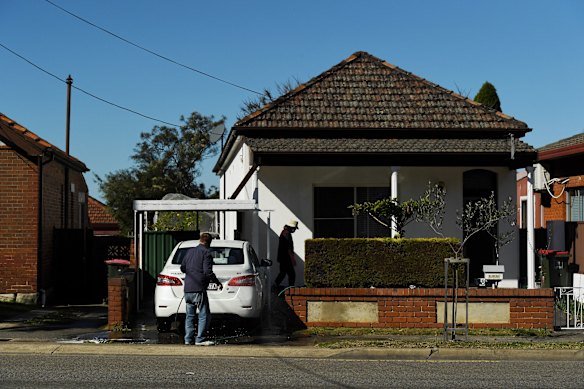
There appear to be few positives out of this oil crisis (“Road trips abandoned amid fuel panic”, March 26). But with my hybrid caravan in for its yearly check-over, diesel scarce and needed elsewhere, my only option appears to walk. At least my specialists may be happy. Janice Creenaune, Austinmer
- To submit a letter to the Sydney Morning Herald, email letters@smh.com.au. Click here for tips on how to submit letters.
- The Opinion newsletter is a weekly wrap of views that will challenge, champion and inform. Sign up here.
Read the full article here