





Australia’s record-breaking 29-year run without a recession came to a halt during the depths of the pandemic.
But it was so short, and offset by an avalanche of money to soften the blow, that many Australians even today forget that in early 2020 the country went through its biggest economic downturn since the Great Depression.
That might explain what happened on Tuesday after Reserve Bank governor Michele Bullock was asked whether the decision to lift official interest rates for a second successive month, on top of oil prices, risked driving the country into a recession.
“We don’t want to have a recession, but if it’s hard to get inflation down, then, you know, we’re going to have to deal with that possibility,” she told her post-meeting press conference.
As measured by Google Trends, searches for “recession” surged just after Bullock’s comments.
The last time there was a spike in searches for recession occurred in April last year, when Donald Trump launched his “liberation day” tariff war on the world (and the penguins of Heard and McDonald islands). Bullock’s comment attracted almost double the interest compared with Trump’s.
It was higher than when there were fears of an economic downturn after the end of the low and middle income tax offset in mid-2023, which hit 9 million Australian workers.
Outside of COVID and the global financial crisis, searches for recession among Australians this past week were at the highest level this century.
Bullock’s comments were made just hours after the ANZ-Roy Morgan weekly measure of consumer confidence was released. That showed the nation’s shoppers were the most pessimistic they have been since March 2020 – when the Australian economy was being shut down and our TV screens were filled with images of makeshift morgues in New York’s Central Park.
That consumers were this downbeat even before being whacked by the Reserve Bank reflects their legitimate fear that the war playing out in the Middle East will mean higher prices for almost everything they buy.
The combination of higher interest rates, the pre-war rise in inflation that largely drove the RBA’s tightening of monetary policy this week, and the surge in the cost of putting petrol in the family car (if your service station had fuel) could not come at a more difficult time for Treasurer Jim Chalmers and Finance Minister Katy Gallagher.
They are seven weeks out from releasing the government’s fifth budget.
Ordinarily, most key elements of a budget would be all but locked in at this point. But, as Chalmers noted this week, the level of uncertainty over the global economy (and its flow-on impact to the Australian economy) is so high that major decisions will be made later than normal.
Chalmers and Gallagher were already under pressure to deliver a reforming budget given the political windfall delivered to the government by Anthony Albanese’s emphatic 2025 election victory.
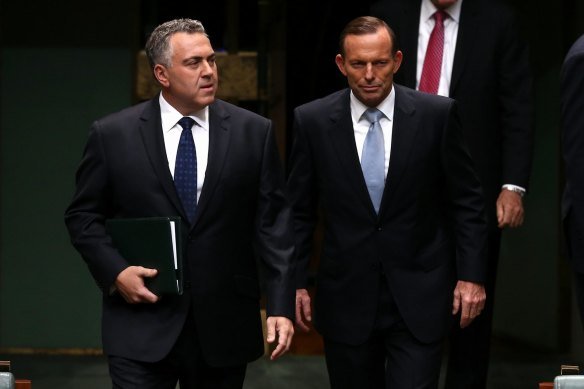
It has been more than a decade since a treasurer sought to use their budget to advance substantial fiscal and economic reform. That was the 2014 budget of Joe Hockey and Mathias Cormann, which is now remembered as one of the worst political documents ever cobbled together by a government.
Chalmers used a speech to a roomful of some of the nation’s brightest economists in Melbourne on Thursday to lean in to the reforming nature of the coming fiscal blueprint.
One of the issues with the 2014 budget was that Hockey, Cormann and then-prime minister Tony Abbott had failed to explain in its lead-up that change was coming. Even within Abbott’s own government there was surprise at some of the ideas that stretched from a Medicare co-payment to lifting the age at which you could access the age pension to 70.
According to Chalmers, the current administration has been more than upfront with the public about the issues facing the economy, the tax system and the budget.
Last August’s economic roundtable resulted in a three-day discussion about the problems, and some of the solutions, on the government’s agenda. In December, the Productivity Commission delivered five separate papers to Chalmers with proposals on everything from business tax reform to health funding.
And in early February, Chalmers began talking more clearly about the government’s intention to deal with “intergenerational issues” such as a property market that to almost every young Australian seems stacked against them.
This week, he confirmed all that discussion – which spread to a one-day meeting with independent economists in the federal Treasury earlier this month – would be distilled into three reform packages in the May 12 budget, covering spending cuts, productivity and tax.
“[The budget] still has got these three big pressing problems that we can’t, as a responsible group of people, ignore,” he said, in answer to a question from the assembled guests.
“I feel like the community, even though it’s under maximum pressure – cost-of-living pressure and other pressures – I feel like there is a level or a layer of understanding in the community that sometimes hard decisions are warranted.”
When treasurers and finance ministers talk in terms of “hard decisions”, the ears of prime ministers prick up. As 2014 (and, to go further back, the 1993 budget of John Dawkins) showed, tough decisions can mean electoral disaster.
Factor in the febrile political landscape, with One Nation – a party that can identify problems like a hound picking up the scent of a wounded rabbit – in the ascendancy against a Coalition that is unsure about its own core beliefs, and a “tough budget” could prove politically problematic for Albanese.
Chalmers – who famously floated changes to the Morrison government’s stage 3 tax cuts in late 2022 before finally getting Albanese to agree more than a year later – does understand the potential blowback from the coming budget.
“We know that the idea that you can make every single person happy with every single decision is an unrealistic and naive objective,” he said.
“What’s not unrealistic or not naive is the idea that I feel like the Australian people are ready for the sorts of issues that we have been raising with them.”
Chalmers and Gallagher will deliver the budget on May 12. A week earlier, the nine members of the Reserve Bank’s monetary policy committee will meet again, with the chance of a third interest rate rise high on the agenda.
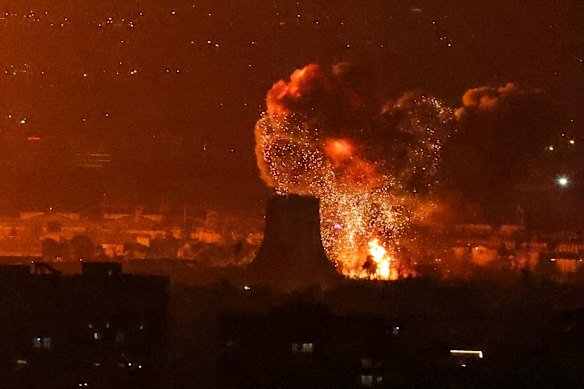
By then, there should be some more clarity over the war against Iran. But that is not a given. This week’s attack on the South Pars gasfield shared by Qatar and Iran, which pushed oil prices towards $US120 ($169) a barrel, was a sign that no one can be confident about how the next few days, let alone the next month, will play out.

That lack of confidence was evident in the RBA’s decision to lift rates on Tuesday, which was made on a 5-4 vote. Bullock went out of her way to argue all members of the board believed higher interest rates were needed – the split was on timing.
As Bullock noted, the bank is worried that high petrol prices on top of an economy with existing inflation problems is a recipe for disaster.
“If we don’t raise interest rates, and we’re going to see second-round effects coming from petrol prices and fuel prices, they’ll get into supply chains. Obviously, it’s going to go into businesses costs and so on,” she said.
“If we don’t bring the excess demand down, then businesses are just going to build that into their costs. So it’s going to be even worse for everyone.”
But if global oil prices surge any further, or remain around $US100 a barrel until May, those concerns expressed by four members of the RBA about the timing of a further rate cut could quickly turn to what actions the bank has to take to avoid a recession.
The Reserve has yet to model the economic fallout from high-priced oil. But Chalmers revealed the federal Treasury had – and the story is, at best, unpleasant.
If oil costs $US100 a barrel for a couple of months before returning to its pre-war level of about $US60 by year’s end, inflation is close to 5 per cent, while economic growth is clipped by 0.2 per cent.
But if oil hangs around $US120 a barrel, inflation is closer to 6 per cent, while economic growth is slashed by 0.6 per cent. The economy doesn’t recover until at least 2027, with serious consequences for unemployment.
Economist Chris Richardson describes the $US100-a-barrel scenario as the “Oh dear” one. The $US120 barrel is “Oh no”.
Treasury is in the process of modelling an even higher oil price. That’s the “Oh my god” scenario.
That would clearly show a domestic economy in recession with high inflation – the worst of all worlds.
Bullock tried to soften the blow of the bank’s decision.
“I do understand that it’s going to be tough for some people, and this hit with the fuel prices and this additional rise in mortgage rates is going to be hard for some people,” she conceded.
Strong jobs growth and solid wage increases have softened the blow for many people over the past two years. But even before this week’s rate rise, there were signs of pressure.
The National Debt Helpline, for instance, had almost 16,000 calls in February. It was the largest number for a February since 2020 and a 9 per cent jump on the same time last year.
Financial counsellors on the helpline are finding a new demographic ringing in for assistance – people who are fully employed but struggling to stay on top of their mortgage and the cost of essential items.
A quarter of people are seeking help to deal with housing stress, which includes the monthly home loan, the weekly rent, council rates and strata fees.
Into March, the helpline is already picking up calls – especially from people in regional areas – about fuel costs.
The past two decades have delivered a string of economic shocks. Starting with the global financial crisis in 2008, they have included the pandemic, the post-pandemic inflation surge (caused in part by supply chain shocks) and then the trade disruption started by Donald Trump and his tariff war.
Trump has now delivered a fifth with a real war against Iran.
But more could be on the way. On Thursday, the Reserve Bank released its six-monthly health check of the financial system.
The report is normally a dry, staid and central bank jargon-filled take on whether there are any emerging risks to the flow of credit across the economy.
But this report was different. The jargon was still there, but the authors expressed concern that the run-up in debt (here and around the world) in equity and property markets, on top of the unfolding disaster in the Middle East, is a clear and present danger.
The amount of debt, with investors dismissing potential risks, now meant there was a growing risk for “the potential for a disorderly repricing of assets in response to further adverse developments”.
In other words, a collapse in property, share and commodity prices that would shake the financial sector to its core.
“The risk of significant operational, cyber and security incidents, which have risen over recent years, is also heightened at present,” it went on.
“The Australian financial system has established a good degree of resilience to navigate through a high-risk international environment, though any of these events, if severe enough, could pose financial stability challenges in Australia.”
Australians may soon be searching for more than just the definition of recession.
Cut through the noise of federal politics with news, views and expert analysis. Subscribers can sign up to our weekly Inside Politics newsletter.
Read the full article here