




Opinion
This one stung. Those who, like me, frequent the LGBTQ venues on Sydney’s famed gay strip on and around Oxford Street, are accustomed to closures. It’s what makes any major city hum and bustle: constant change.
While some changes feel like evolution, others evoke nostalgia, grief – even panic about regression. The closure this week of the Stonewall Hotel, one of Sydney’s longest-running and most iconic queer venues, falls into the latter category.
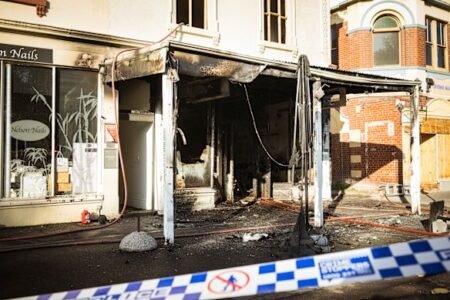
Shockwaves travelled through the LGBTQ community this week. The three-storey bar, the beating heart of Sydney’s rainbow village, suddenly fell into administration, citing lingering pandemic disruption, increasing operating costs, cost-of-living pressures changing consumer behaviour and poor trading conditions in the once-thriving Oxford Street precinct.
Most global cities have a gay village and, whenever I travel, it’s the first place I head. I go there for the safety to be myself, but also for the excitement and connection with community. These places were built by brave battlers; evolving from blacked-out windows, to protect the “discretion” of closeted punters inside, to places like Stonewall, where you’d spy a choreographed drag show through open windows to entice you inside for one (it was never just one) of its infamously lethal Long Island iced teas.
Sydney’s gay village was a big drawcard when I was choosing where to move from London 14 years ago. Even then, the queer people I met in Sydney talked with nostalgia about venues that made me wish for a time-machine: day club sessions at Manacle; drag shows at The Albury.
And now, even as a relative blow-in, I have my own nostalgic stories of the Oxford Street gay village that once was. Inhaling blueberry breeze vape in ARQ’s famed “trash alley”. Making best friends forever with people I’d probably never see again at Dayclub at the Phoenix and blinking with part-pleasure, part-shame as I emerged from its notorious basement at midday following a police sniffer-dog raid. ARQ is now Aura, a mostly straight club, although it has occasional gay nights. The Phoenix looks as grimly derelict as many faded glory Oxford Street venues.
This follows the 2020 closure of the Green Park, another sanctuary of safety and self-expression for the queer community, and more recently the Bookshop Darlinghurst, a unique LGBTQ-specific book retailer.
Stonewall stung, though, not just because of its almost 30-year history, but also its status as our gay village’s most prominent, flagship venue. It’s where you’d often start – and sometimes end – your night. It was one of the few places gay people like me could meet potential lovers through nights such as “male box”, in which admirers exchanged messages. Many drag artists got their start here. I’ll never forget being there, with my community, the evening the “yes” vote to marriage equality was declared in 2017. We spilled out onto Oxford Street. It felt like the centre of the universe that historic, rambunctious night. Many Long Island iced teas were consumed.
Part of the lament for the loss of Stonewall comes from the name – one massively loaded with significant gay history. Its namesake – the Stonewall Inn in New York’s Greenwich Village – became the birthplace of the modern gay rights movement following riots against police harassment in 1969. It remains a global focal point of LGBTQ rights. In the UK in 1989, Stonewall became a campaigning charity. For four years, I managed its media office, always reverent of that dogged name.
And yet, for every death, a rebirth. Stonewall Newtown opened last week. It’s owned by a different business entity with a shared director.
It suggests a queer western drift, to suburbs more financially and footfall-friendly. The same happened in London’s Soho gay village; beloved venues were lost with the building of the Elizabeth line and rising costs. London’s queer venues have mostly shifted east where rents are cheaper and haircuts edgier.
Stonewall’s end reminds me of the closure in October of G-A-Y bar in Soho, the venue of my misspent youth vogueing to Madonna. Its owner, Jeremy Joseph, said Soho’s Old Compton Street had “lost its LGBT identity”.
Of course, some will – justifiably – say rumours of Oxford Street’s gay demise have been greatly exaggerated. LGBTQ venues still thriving there include Universal, Palms, The Oxford, Kinsellas, The Colombian, two gay saunas, the world’s largest queer museum (Qtopia) and new venues Tribe at 231 and Flash, weekly at the Kings Cross Hotel.
London and Sydney’s gay villages may turn to hamlets. Our city might diversify away from one with a “gay ghetto”. A sad day for those of us who found our identities, friends and lovers in those ghettoes. But progress means gay bars can exist everywhere – not just in one notorious “village”.
Gary Nunn is a freelance writer. Instagram: @garynunn11
Get a weekly wrap of views that will challenge, champion and inform your own. Sign up for our Opinion newsletter.


From our partners
Read the full article here