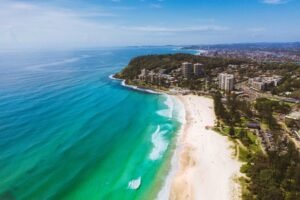








Kindergarten classrooms in some of Sydney’s wealthiest suburbs are emptying out as enrolments plummet in the face of skyrocketing rents and house prices, effectively dividing Sydney by what some economists have termed a “fertility wall”.
The number of kindergarten pupils at eastern suburbs public schools Maroubra Bay, Coogee, Waverley, Vaucluse and Bondi Beach all declined by over 50 per cent in the past eight years, enrolment data reveals.
Other areas close to the city have had dramatic falls, such as Taverners Hill Infants School in Petersham, where enrolments dropped from 25 kindergarten students in 2018 to just four last year, according to the Australian Curriculum, Assessment and Reporting Authority data.
KPMG urban economist Terry Rawnsley said greater Sydney was increasingly divided by a “fertility wall” separating areas of high and low birth rates.
“When you crack open the map of Sydney, there’s a real east-west divide,” he said.
“We’re still seeing pretty high birth rates of two and a half children per woman in the western suburbs. In the east, it is dropping down to less than one.”
Coogee Public went from 111 kindergarten students in 2018 to 40 enrolled last year. Coogee’s average rent has increased from $800 per week eight years ago to $1611 this year, which Rawnsley said was directly affecting the number of children living in the built-up suburb.
“Having one child in a two-bedroom apartment makes sense. Having three children doesn’t make sense,” he said.
Rawnsley said ABS data had historically shown it was “pretty uncommon” for a Coogee family to move to Marsden Park on Sydney’s outskirts. “If you really were searching for more space from Coogee, you’d end up in Marrickville or Earlwood,” he said.
But families living along the coast were also more likely to leave Sydney entirely, opting to move to regional centres like Newcastle or the Gold Coast, which further reduced Sydney’s birthrate.
“The other unique Sydney factor is that more and more young people are priced out of the city completely,” Rawnsley said.
“Sydney is having this hollowing out of families which would be having children, which then compounds the decline in the overall number of births.”
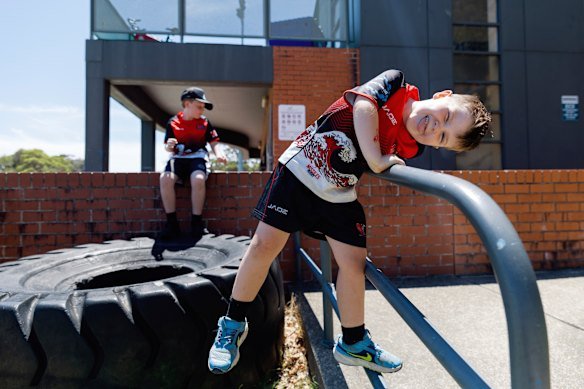
The drop in kindergarten students came as no surprise to Maroubra mother Emma Bayley, whose son Jimmy, 5, started kindergarten this year.
She opted not to send him to their zoned school but rather to Randwick Public a few suburbs over because it had a great reputation and it still had a sizeable number of children, which attracted a greater pool of funding.
“I really pushed to get him in,” she said. “I was the annoying parent who called Randwick Public every single day about my application because we didn’t feel we had another option.”
Bayley, a nurse who grew up locally, said their rent had increased from $560 a week over a decade ago to just over $1000 today. She said there’d been a significant demographic shift across the eastern suburbs.
“When I grew up, there was not one house which was double-storey on my street,” she said.
“Everything has gone up. I went to Bronte Public. The parents at that school now, they’re living in mansions, the whole area is built up. I have no idea where all this money comes from.”
Shrinking kindergarten cohorts are not just limited to the east and inner west – enrolments at Gordon East, Hunters Hill, Northbridge and Castle Cove public schools also fell by over 50 per cent.
Parramatta Public has also had a considerable loss of kindergarten students following the creation of additional schools in the area. Rents in that suburb have also increased sharply in recent years.
On the other side of the so-called fertility wall, Al-Faisal College’s Campbelltown, Liverpool and Austral campuses had a combined 407 kindergarten students last year, making it one of the largest cohorts in the state.
Northbourne Public School in Marsden Park, in Sydney’s northwest, was the biggest single public school: it has 240 kindergarten students.
Australian Christian College at Marsden Park has had the largest growth in kindergarten student numbers in the state, growing from 29 to 119 students within eight years.
Principal Brendan Corr said the school received 200 applications for kindergarten from parents attracted to the religious principles of the school and its strong record of academic excellence. Some use it as a springboard to get into selective high schools.
“We have a high proportion of families who sit the selective school entrance exams and then a significant proportion who are offered places in year seven,” he said.
Fees were about $5500 for kindergarten, which he says were on the lower side for other local private schools.
“Families are making decisions about whether they will come based on changes to their financial circumstances,” he said.
From our partners
Read the full article here