








By Dianne Apen-Sadler
Published on
If there’s one thing that’s here to stay after the COVID-19 pandemic, it’s digital nomadism.
Who wouldn’t want to make the most of their fully remote jobs by working from the beach, or the pool, or just a cafe with an incredible view?
While many choose to travel around constantly, others prefer to stick to one destination for several weeks or months – and if you fall into the latter category, there’s a new dreamy island country for you to consider: Sri Lanka.
First discussed in 2021, the digital nomad visa officially launched in February 2026.
Who is eligible for Sri Lanka’s digital nomad visa?
Like many digital nomad visas, applicants must be earning more than a certain amount. In the case of Sri Lanka, your salary needs to be above €1,700 (US$2,000) a month.
That requirement stays the same provided you have fewer than two children, but will increase by €425 (US$500) for any additional kids.
You’ll also need to be above 18 years old to apply, and you will need to prove you hit the minimum salary requirement while exclusively working for clients outside of Sri Lanka.
How to apply for Sri Lanka’s digital nomad visa
Applications are done through the Department of Immigration and Emigration website, where you’ll find all of the submission requirements.
Sri Lanka’s digital nomad visa is valid for one year, and costs €425 per person. It is renewable annually.
Aside from not working for any companies within Sri Lanka, visa holders are also obligated to “refrain from any political or disruptive activities”.
Why make Sri Lanka your new home?
Known as the ‘pearl of the Indian Ocean’, Sri Lanka draws in around 2.3 million international tourists each year.
Even if you’re not familiar with the country, you’ll no doubt have seen pictures of the iconic Galle Fort and the train from Ella to Kandy through the tea plantations.
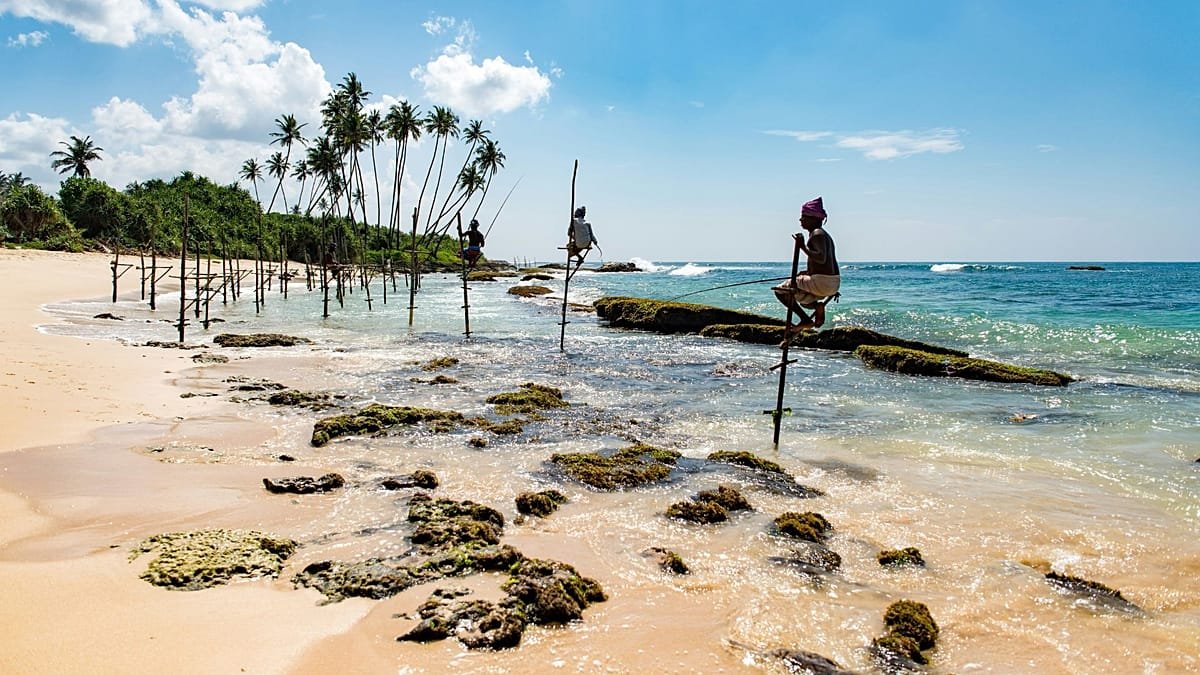
Visitors come for the dreamy beaches along the south coast, to see elephants, tigers and leopards at its national parks, and to visit heritage sites like the ancient cities of Sigiriya and Anuradhapura.
In 2023, Sri Lanka launched a new 300-kilometre walking route, the Pekoe trail, which passes through the country’s Central Highlands.
Having said all that, it should be noted that the country’s internet speeds may leave something to be desired, as according to the Speedtest Global Index, Sri Lanka ranks 131st in the world for fixed broadband.
Read the full article here