









More than 80 group homes for disabled residents have been closed and carers have started industrial action as a state funding crisis in the sector worsens.
The homes have been closed by the five private providers appointed to operate Victoria’s supported disability accommodation, which are struggling for survival after state government subsidies ended on December 31.
With the federal government’s National Disability Insurance Agency refusing to cover the funding gap created by the loss of the state subsidies, concerns are growing for the future of the entire 549 former state government-run disability homes, which house almost 2000 vulnerable Victorians.
As revealed by this masthead in September, 59 of the supported independent living homes were closed in the 2½ years leading up to the state government’s December 31 funding cliff. Since the subsidies ended, the closures have accelerated, and 84 disability homes have closed statewide.
The services closed include 39 homes run by Scope, 36 operated by Aruma, four managed by Melba, four Life Without Barriers houses, and one Possability home.
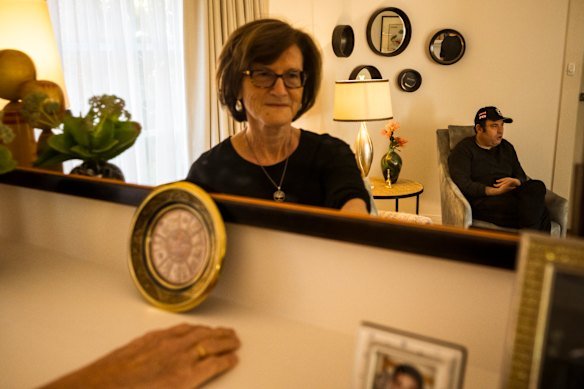
For the past seven months, Cheryl Soafkin has fought to stop the closure of her 37-year-old son Jeremy’s government-owned Camberwell home.
In July, the service’s operator, Scope, informed Cheryl that Jeremy’s home of 17 years was to be closed and, in October, his three elderly housemates were moved into other Scope-run services.
After securing a temporary agreement for the NDIA to top up Jeremy’s payments so he can receive one-on-one care – rather than one-to-four funding that is supposed to split the home’s running costs between residents – Cheryl was able to delay the closure.
On Friday, after trying 19 different NDIS providers over seven months, Cheryl signed a service agreement on behalf of Jeremy with a small NDIS provider, which has agreed to take over the home from Scope so it remains open.
But it is a bittersweet win. It has meant Jeremy and his carer are now alone in a five-bedroom home – a house that would be worth more than $4.3 million on the market if Jeremy were to move out and the binding agreement for it to remain a disability support home was broken.
Cheryl accused the state government of “gaslighting” disabled residents and their families by deliberately making the government homes unviable, so the properties can be closed and sold.
“I believe the state government’s intention is to sell off these properties. Many of them, including Jeremy’s house, are very valuable assets,” Cheryl said.
“It seems to me that the Victorian government is happy to let these group homes fall into disrepair and providers pull out of providing care.
“They’re happy to have providers cop the blame when, in my view, it’s the state government’s underlying agenda playing out perfectly for them.”
In line with the launch of the National Disability Insurance Scheme, the Victorian government progressively handed over the running of its 549 disability support homes to five private providers from 2016.
However, the government-owned homes are tied to existing workplace agreements that require the providers to pay the 5600 staff at rates higher than they receive from the NDIA, as well as provide higher levels of service to residents. The gap between NDIA payments and home running costs were covered by the state government under a $2.1 billion deal that expired on December 31.
With the state government refusing to continue the subsidies and the NDIA refusing to cover the funding gap, some providers have begun closing the homes and trying to move residents into other services without the increased running costs, where possible.
The five not-for-profit providers last year confirmed to The Age they were struggling and were operating with as little as one month’s cashflow. During a December 11 meeting, Scope’s chief executive officer Lisa Evans told staff its services would have to be “right-sized for our revenue”, as the loss of government subsidies contributed to a projected $28 million loss of revenue in this financial year.
In a last-ditch effort to save 55 homes it claims are no longer viable, Aruma has applied to the Fair Work Commission to tear up a workplace agreement for staff at services it inherited from the Victorian government.
In response, Health and Community Services Union members working at Aruma homes on Friday began industrial action, which will include a stop work on Wednesday to coincide with a rally at Minister for Disability Lizzie Blandthorn’s office.
The union has also applied to conduct a protected ballot of Possability workers and has signalled its intention to fight the closures at all providers, which union branch secretary Paul Healey said were happening against the wishes of residents and their families, many of whom had lived in their homes for years or decades.
“This is the difference between delivering a quality of life or a mere existence,” Healey said.
“People with disability deserve safe, stable homes where they can thrive, not a system that treats housing and support as expendable line items.”
In response to questions, the Victorian government said residents could decide if they wanted to engage a new provider through their NDIS package or relocate to a new home when providers withdrew services from government-owned disability homes.
“Sector sustainability is a matter for the Commonwealth government,” a Victorian government spokesperson said.
“It’s disappointing to see communications to residents that suggest the end of the transfer contracts could mean losing their homes – if a supported independent living provider withdraws services, this does not mean that the Victorian government closes the home.”
An NDIA spokesperson said the agency could not broker individual agreements with providers but was working to ensure participants were not left without support when a provider signalled it was withdrawing services.
“Where providers cease provision of services, they have an obligation to support participants by providing continued supports until a participant is able to transition to a new provider,” the spokesperson said.
“The agency has processes in place to manage participant safety if their providers cease services, particularly for participants in supported living. This includes supporting participants to transition to new providers where necessary.”
Start the day with a summary of the day’s most important and interesting stories, analysis and insights. Sign up for our Morning Edition newsletter.
From our partners
Read the full article here