




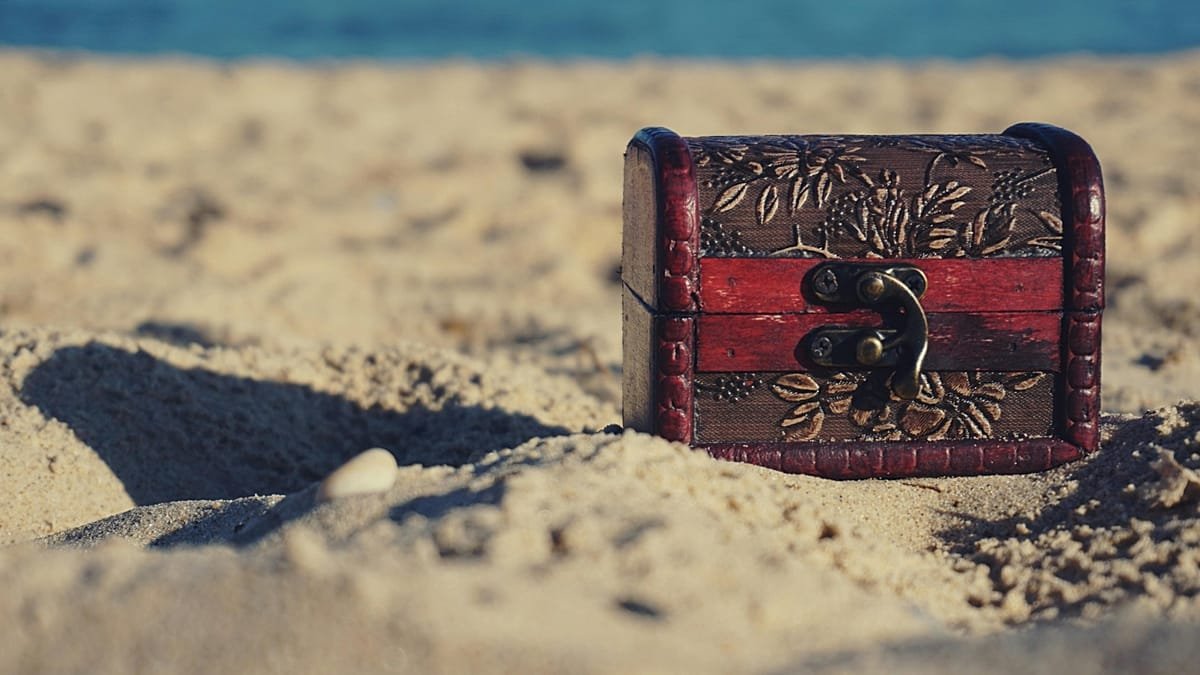
Film series like Pirates of the Caribbean and Indiana Jones have made treasure hunting more popular in the last few years.
However, enthusiasts don’t just want to explore their backyards with a metal detector anymore. Now, “hunters” are combining their love for adventure and travel with treasure hunts, and looking further afield.
Popular sitcoms like the BBC’s Detectorists have also contributed to the rise of metal detecting tourism, with a renewed interest in outdoor activities and post-pandemic hobby holidays supporting this trend too.
So where can you go for an unforgettable treasure hunting holiday?
Indonesia: Phinisi yachts, reef treasures and secret spice routes
Indonesia has a number of destinations that are perfect for treasure hunting fans, mainly due to its prime location on several ancient maritime trade routes. The Asian nation was also a spice hub during colonial times, adding to its value.
More than 20,000 ships are estimated to be lost along Indonesian coastlines, giving treasure seekers plenty of opportunities to look for gold, ceramics and other artefacts which would be significantly valuable today.
Travellers can charter a traditional phinisi yacht to explore the Raja Ampat archipelago for underwater finds among vibrant coral reefs and crystal clear waters.
The Musi River, also believed to be the location of the fabled “Island of Gold”, is another popular treasure spot for jewels, gold and statues from the Srivijaya civilization.
Travellers can muck dive in black sand in Alor and Sumbawa to look for rare crustaceans and nudibranchs.
Balinese beaches such as Canggu, Seminyak and Nusa Dua are also ideal for beachcombing and metal detecting.
Baluran National Park allows travellers the chance to hunt for historic military artefacts from World War II.
Antigua and Barbuda: Pirate history and hidden coves
Fans of the Pirate of the Caribbean series will especially love treasure hunting in Antigua and Barbuda, where you can recreate the movie experience by sailing in the Caribbean Sea and exploring hidden coves on your treasure hunt.
The country’s rich colonial maritime history means a number of shipwrecks to explore in depth. There are also plenty of limestone caves like Darby’s Cave, steeped with ancient pirate lore and potential treasure.
With 365 beaches, travellers are spoilt for choice, especially as some areas like the North East Marine Management Area (NEMMA) have areas that have remained mostly untouched for centuries, making them prime for historical artefacts.
Hunters can also visit historical sites like Fort Berkeley and Fort James, which are also known for having ancient finds.
Bonus? The islands also have a number of plantations, such as Betty’s Hope Plantation, which still contains a variety of British sugar trade artefacts like pottery, bottles and old coins.
Colchester: Celtic gold coins and Roman artifacts
Widely considered to be the UK’s oldest town, Colchester is another top spot for treasure hunting, holding more than 2,000 years of history from both the Roman era and Iron Age settlements.
With a high number of artefacts found regularly, history buffs have a very good chance of bagging their own share here.
As the first Roman capital in Britain, the Essex town has several artefacts like Roman brooches, coins and jewellery.
Many of these are exceptionally well-preserved, due to being under a thick layer of burnt, ash-rich soil, known as the “Boudican destruction horizon”, caused by the city being burnt to the ground in AD 61.
Apart from the Roman era and Iron Age, the town also has many Bronze Age, Neolithic and Palaeolithic finds like large funerary barrows and early flint tools.
This is especially due to surrounding areas like the Gosbecks Archaeological Park, which is a major Roman and Iron Age site too.
Sardinia: Shipwrecks, coastal caves and diving
Sardinia is another exciting treasure hunting spot, mainly because of its more than 1,800 kilometres of coastline boasting rich underwater vistas and dozens of ancient shipwrecks.
Travellers can dive in the largest underwater marine cave system in the Mediterranean Sea, the Nereo Caves, with extensive chambers, tunnels and arches, and plenty of treasure potential. Shipwrecks like the World War II-era Isonzo add to underwater adventures, as well as chances to spot high-quality red coral, often known as “red gold”.
There are also plenty of Bronze Age nuraghi, or ancient stone towers, along with Phoenician, Roman and medieval ruins, to sift for treasure in.
Submerged parts of ancient coastal cities like Nora and Tharros also have mosaics and other ruins to explore for rare finds. Significant Roman-era coins have been unearthed in other coastal areas like Arzachena as well.
Crater of Diamonds Park, Arkansas: Diamonds and gems you can keep
While several treasure hunting destinations require hunters to hand over their finds to the government, the Crater of Diamonds State Park, in Arkansas, US, offers a unique twist.
It is the only public diamond mine in the world where travellers can hunt for real diamonds and keep whatever they find. Apart from diamonds, it also has a number of other gems and minerals like amethysts, garnets, quartz, jasper and agate, among others, which can also be kept, if found.
This is due to the park sitting on top of a 95-million-year-old volcanic lamproite pipe, which also means that it produces a variety of rare diamond types like brown, white and yellow as well. Some notable finds include the 40.23-carat “Uncle Sam” diamond, which was the largest ever found in the US, and the 3.03-carat Strawn-Wagner diamond, which was graded as flawless.
Spread out over 37 acres, it offers plenty of space for treasure seekers to spread out and try their luck in multiple spots.
Since 1972, travellers have found between 35,000 and 75,000 diamonds, making a successful find highly likely. This is especially as the park regularly ploughs the area to bring new diamonds to the surface.
Tools like buckets, shovels and screens for dry and wet sifting are available to rent, with free identification of rocks and diamonds also possible.
Read the full article here