





Updated ,first published
Authorities are warning there is nothing they can do to stop the spread of H5N1 bird flu through Australia’s wildlife, after another 20 cases of the deadly virus were recorded nationwide.
There have now been 53 cases recorded overall, and further suspected cases in Victoria. Meanwhile, a cluster of nearly 50 dead birds off the South Australian coast is being probed for links to the current outbreak.
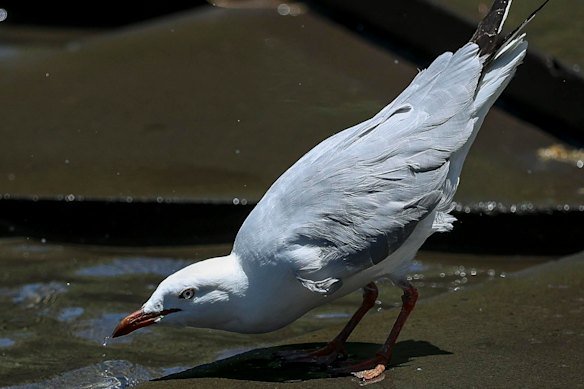
In its latest updates, the federal Department of Agriculture, Fisheries and Forestry confirmed a further 20 birds from Kangaroo Island and the south-east coast of South Australia had tested positive, including a silver gull found at the town of Robe.
Australia’s Chief Veterinary Officer, Dr Beth Cookson, said this was the first detection ever in a silver gull in Australia.
Cookson said all the infected birds so far were wild seabirds found in coastal locations, and there remained no detections in poultry or in our agricultural production system
Testing in the latest cases was confirmed at the CSIRO’s Australian Centre for Disease Preparedness.
In an update on Saturday afternoon, South Australian Minister for Climate, Environment and Water Emily Bourke said a cluster of 49 dead and at least 35 sick terns detected on Friday at Baudin Rocks, off the coast north of Robe, are also set to be tested for the virus.
“This is a significant change in what is happening in South Australia,” Bourke said.
South Australia’s Chief Veterinary Officer, Skye Fruean, said there were no reports of deaths or illnesses when the same area was surveyed two weeks ago, confirming that this was being treated as a mass mortality event.
“We expect we will get some bad news from that situation in the coming days,” Fruean said. “There is nothing we can do to stop the spread through our wildlife.”
Australians are now being warned to brace for mass deaths in seabird colonies and marine mammals.
While the risk to human health from the virus remains low, experts are concerned about the effect it could have on the nation’s seabird colonies – and as such wider ecosystems – as well as the poultry industry. In 2024, a different strain of bird flu led to authorities killing 2 million chickens, disrupting egg supplies.
The latest government update has come less than 48 hours after the H5N1 variant of the virus was detected in Victoria for the first time, in a crested tern in Portland.
In its latest update, Agriculture Victoria said it had detected a further six suspected cases in crested terns, also from the Portland and nearby Nelson Bay areas.
Burnet Institute chief health officer Suman Majumdar said a confirmed case in a seagull was significant.
“Gulls move between beaches, wetlands, farmland and urban areas, which could carry the virus into a much wider range of wildlife, poultry and environments,” he said.
Associate Professor Majumdar said overseas experiences with this strain suggested Australia should expect further spread along coastlines, mass mortality events in seabird colonies and marine mammals, and rising detections in the weeks ahead.
“What we are seeing now is the early part of that curve,” he said.
Jack Gough, chief executive of the Invasive Species Council, said the reported mass mortality event illustrated how quickly the outbreak could escalate.
“We cannot stop the virus, and ultimately it will be a numbers game for vulnerable birds and sea mammals,” Gough said.
“That’s why we need people to keep pet cats and dogs contained and governments to urgently invest in scaled-up wildlife resilience measures like fox and cat control.”
People who suspect they have seen birds infected with or killed by H5N1 are urged not to touch them, but instead to call the Emergency Animal Disease hotline on 1800 675 888.
National leaders met on Friday to discuss Australia’s response to the virus, which now spans five states.
Federal Agriculture Minister Julie Collins vowed to do “everything we can” to help protect Australia’s wildlife, agricultural industries and the national economy amid the outbreak.
The meeting was briefed by experts on this week’s decision to enact the H5 National Management Agreement.
The call was based on the advice of experts that the H5N1 bird flu in wildlife in Australia was not technically feasible to eradicate, Collins said.
“What we do know is we have that local transmission in the greater crested terns in South Australia,” she said.
The federal government had invested $113 million to prepare for the arrival of the flu strain in Australia, and released a further $24 million to states and territories in July.
With AAP


From our partners
Read the full article here