



Brenda Niall
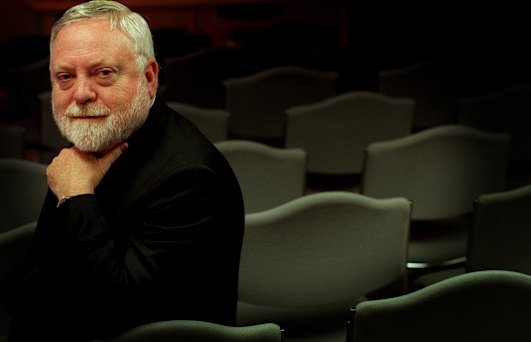
HUGH DAVID NIALL AO, MD, DMedSci (honoris causa) FRACP
August 15, 1937 to April 11, 2026
I was six years old and very pleased to have a baby brother when Hugh was born on August 15, 1937, the fourth child and second son of Connie Niall (nee Gorman) and Dr Frank Niall, cardiologist.
I remember Hugh as always determined to do what the older siblings were doing, never to be left behind. And to test things for himself – as when he burnt his hand quite badly after being told not to touch the hot stove in the playroom.
My clearest memory of Hugh as a personality comes from an evening when we older children were sitting in the study reading or doing homework while our father did his phone calls reporting to GPs and checking his public patients with interns at St Vincent’s Hospital.
Hugh was then just about walking and learning to talk – under two or so – and he was bored by being left on the floor with some age-appropriate toys. He staggered to the bookcase, pulled out one of the medical books and dropped it heavily on his father’s knee – saying with the intensity of one learning a new word: “Talk it!″
Hugh learnt to read early, but he liked to be read to, or even better to have his father’s nightly invention of a comic saga involving our neighbours, the Maher family, six kittens and a domesticated giraffe. This was Wild Life in Kew.
When Hugh was choosing his career path in 1954, all the signposts seemed to point to medicine. Frank Niall had died in 1952, aged only 53, at the peak of his career. Hugh, who felt his loss profoundly, knew enough about his father’s work to understand its pleasures and rewards. Frank Niall was a gifted diagnostician and teacher, well known to students at St Vincent’s Hospital, and to the general practitioners who sent patients to his thriving Collins Street practice.
Elsewhere in the family, Hugh had the examples of four uncles and his brother, John, all graduates in medicine. Three cousins including the future pioneer in medical research John Gorman were on their way.
Hugh’s 1954 matriculation results opened other doors. With first-class honours in six subjects and first place in Greek, Latin and calculus and applied mathematics, he was rated “brightest boy in the state” in the newspaper report of the Melbourne University matriculation results. Teachers at Xavier College suggested that he do an arts degree before he decided on medicine.
In later life, he said that his father’s death was a powerful influence, but he didn’t regret taking the traditional path. Medicine opened more doors than classics and it satisfied his curiosity.
Taking up a residential scholarship at Newman College, he made lifelong friendships with arts students including future professor of history Paul Bourke, with whom he co-edited the college magazine. He played cricket and tennis in the Newman teams and enjoyed the human variety of college life while working just hard enough to pass in the pre-clinical years.
Home once a week for dinner and clean shirts, he mentored his younger sisters. Margaret saved her maths problems for him and he taught Frances elementary Latin.
Hugh’s academic direction appeared in 1958 when he was invited by St Vincent’s professor of medicine John Hayden to take a year out from his medical course to work in the St Vincent’s Research Centre. As mentor there Hugh had a distinguished but reclusive Swedish biochemist, Pehr Edman, who gave Hugh unrivalled mastery in protein sequencing techniques.
Edman had been denied a US visa in the McCarthy era and was outside the research mainstream. Hugh was later to carry Edman’s expertise to the 1960s international science community.
Hugh completed his medical degree and did two years as an intern at St Vincent’s. There, he met Maggie Williams, a trainee biochemist whose vibrant personality and sense of life as an adventure made an immediate and lasting appeal.
They were married in October 1963. Three children – Lucy, Jake and Ben – were born before the family moved to the United States, where Hugh worked at the National Institute of Health in Bethesda, Maryland, and later at Harvard Medical School. The second daughter, Emma, was born in 1969.
Hugh and Maggie loved Boston, but while Hugh was building his scholarly career with long hours, conference travel and publications, Maggie carried heavy family burdens. Hugh was devastated when she left the marriage and took the children back to Melbourne.
Reimagining his career, Hugh left the Harvard Medical School. With his friend and colleague Geoff Tregear he negotiated new roles at the Howard Florey Institute in Melbourne. It was a risk to choose the Florey over Harvard at a comparatively early career stage, but it worked brilliantly for them both, with the cloning of the reproductive hormone relaxin a major achievement.
In its celebration of Hugh’s life, the Florey stressed his time at the National Institute of Health and Harvard Medical School, where he refined and extended the techniques that would make modern protein science possible. Hugh’s foundational work enabled the development of therapies for significant diseases and established him as one of the foremost protein chemists of his generation.
His impact on Australian science was most deeply felt in his years at the Florey. During that time in Melbourne, while he and Maggie were divorced, Hugh saw his children through schooling and university years, taking a father’s share in early morning swimming training and school sport. VFL football hadn’t been part of his own upbringing but following Collingwood became a shared passion with his sons and daughters.
In 1985, Hugh took a post as vice-president of research and discovery at the biotechnology company Genentech in San Francisco. Maggie went with him, and they remarried. The Genentech years were notably productive.
Hugh must often have had the satisfaction of seeing the clinical benefits of his work. Drugs developed under his supervision included Nutrogin for dwarfism, Herceptin for breast cancer, Avastin for cancer and Lucentis for preventing blindness.
When I was dismayed at a threatened loss of central vision by oncoming macular degeneration, he reassured me that new treatments were doing well in the US and would soon be available in Australia. He didn’t mention his own role in developing Lucentis at Genentech. He didn’t self-advertise. As he once remarked: “You can get a lot done if you don’t mind who gets the credit.”
Hugh’s later years were never dull. He served on many committees and was an effective chair who never talked too much. He was a vice-chancellor’s fellow at Monash University, and he returned to the study of the classics, enrolling in arts at Melbourne University, where he happily competed with young students to win prizes for Latin and Greek unseen translations.
Hugh was a loving father and grandfather. In his final brief illness, while he was unconscious in The Alfred hospital, his children and grandchildren took turns to sit with him, talking to him in case he could still hear them, and reading poems that he had taught both generations to enjoy.
From our partners
Read the full article here