



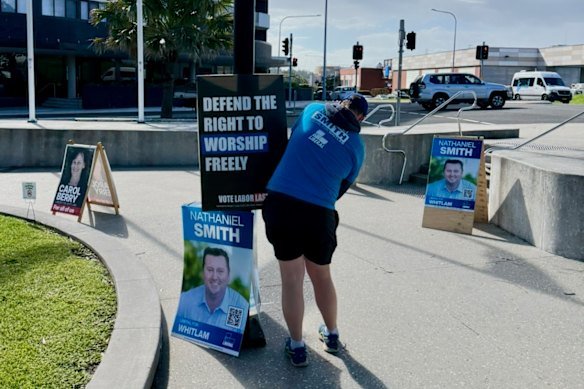
The article by Sherryn Groch and Michael Bachelard may well be the most important for politics in a generation (“Exclusive Brethren secretly paid far-right activists to perform stunts disrupting the federal election”, August 21). It reports their findings about the links between the Brethren and far-right politicians trying to influence the outcome of the last election using dirty tricks. Extremism, whether of right or left, always threatens to corrupt politics. As the Coalition moved further and further to the right, despite protests from Liberal Party grandees like George Brandis, it has become more obvious that a section with links to Trump’s MAGA movement is determined on a full takeover of the Coalition. Our electoral system, with its compulsory preferential voting, is robust, but our politics is not, and our democracy is now at stake. Threats to our democracy surely justify a royal commission to excise this cancer from our politics. Gary Barnes, Mosman
I’m horrified that the publicly funded Exclusive Brethren were out there doing their damnedest to intimidate the prime minister of Australia when he was respectfully campaigning in 2025. I was at a booth in the electorate of Whitlam at Flinders Public School early one morning, and I and an elderly lady were heckled and jostled by this same organisation. We were surrounded by a group of mainly young men who seemed to be dressed in the same high-end Australian country-branded clothing, complete with swish jeans, belts and highly polished, expensive boots. Complaints to the AEC booth supervisor were ignored and we were told to call the NSW Police if we had a problem. Has our democracy sunk to American levels? At the very least the Brethren should have their tax-free status revoked. Richard Bryce, Albion Park
As to keeping religion out of politics, as your editorial suggests (“Brethren zealots forgot religion and politics don’t mix”, August 21), one might regard this as just a bit too late for the Liberal Party in NSW and other states, and one might remind readers that it was that saint of the Liberals, John Howard, who first encouraged the Brethren to support his party. They saw the advantage, he saw votes, and hence we are where we are. As in so much, the baleful legacy of that man lingers, and he is to blame for religious groups seeing politics as another form of God’s work. Tony Sullivan, Islington
Sacking justified
At last the Catholic Church has found the moral backbone to get rid of Dallas McInerney (“Catholic Schools NSW sacks CEO after damaging ICAC appearance”, August 21). As a lifelong Catholic educator I have been appalled by McInerney’s lack of ethical insight. His dancing on the grave of the Voice referendum in 2023 revealed the real person. Our educators and students deserve so much more from our leaders. Anne Garvan, Chatswood

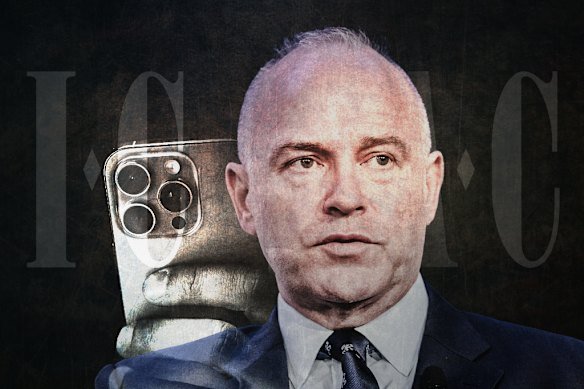
The current ICAC case has brought the influence of one group of schemers in NSW politics to the fore. Is it only at state level though? Was Malcolm Turnbull rolled because of the reasons mooted at the time? Or was it because he, along with his minister of education, Simon Birmingham, was planning to claw back $1.4 billion of overfunding to the Catholic education sector? I believe that plan was immediately abandoned by Scott Morrison. Brian Cook, Forresters Beach
Dystopian future
One Nation continues to be near the top in the opinion polls, so I look ahead to August 2028. Pauline Hanson, aged 74, is our prime minister, Barnaby Joyce is her deputy and Malcolm Roberts is minister for immigration, Indigenous affairs and employment. Most other ministers are Queenslanders and there are two new ministries: Monoculture, and Fossil Fuel Exploration. Pauline has “done a Morrison” on all ministries to make sure they are toeing the line. There are no longer ministries or departments relating to the environment, climate change or renewable energy. There is no ABC or SBS, and all temporary visa holders, and people from ethnic and religious groups deemed undesirable, have been deported. There is a moratorium on immigration. Gina Rinehart has been granted a permanent Voice to parliament and Mardi Gras celebrations have become illegal. Our nation will have been returned to the 1950s and some people will love it. But for me, it won’t seem like Australia. Ken Butler, Mount Colah
Too close for comfort
As Stav Zotalis writes, free speech and the right to challenge and even offend others is important (Letters, August 21), but these rights are not open-ended. We have many restrictions on free speech, such as defamation law or incitement. As Australia confronts increased antisemitism, including awful abuse of witnesses that appear at the royal commission, incredibly even extending to victims of the Bondi massacre, it’s beholden on us as a community to tread very carefully so that our society does not fracture further. Having a book prominently displayed just up the road from that massacre perpetuating the demonisation of Israel seems to me not just insensitive, but provocative and purposefully divisive. No one is talking of censoring this book; it’s still available widely – even at Marrickville library, we are told – but to display it prominently mere metres from the site of our worst terror attack, in an area with a high proportion of Jews, seems most unlikely to enhance “social cohesion”. Richard Abram, Bexley
Athletes run a fine line
Two opinion pieces published by the Herald on the same day each offer, in their own way, compassionate and nuanced consideration of the challenges faced by elite young sports people (“No excuse for toxic off-field behaviour but there is an explanation” and “Let’s not judge Nick Kyrgios. We haven’t walked in his shoes”, August 21). Both highlight the extraordinary pressures to reach the top, and ultimately, if implicitly, they ask how any of us might deal with years of commitment and hard labour as a child suddenly being rewarded with riches, celebrity and social mobility while still young. Both stop short, however, of asking the fundamental question, which is that if the system that creates these superstars can’t ensure their emotional well-being and stability, then why do we continue to support that system and expect these people to not only to keep performing for our entertainment, but also to be model citizens? Ross Duncan, Potts Point
Swans’ mud sticks
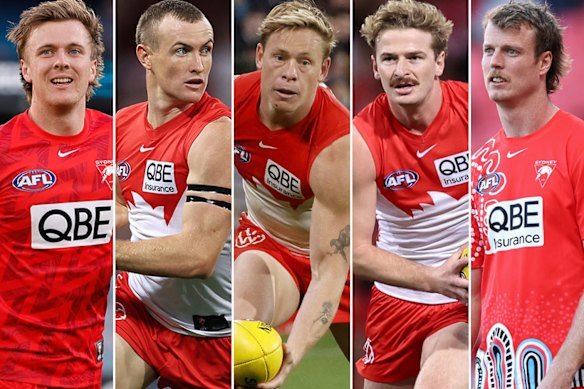
The distressing behaviour that occurred in a Melbourne hotel must never be downplayed. I am a Sydney Swans foundation member (1982) and an ambassador for the club. I will go to the women’s game on Sunday and stay for the men’s game. Why should Errol Gulden, Brodie Grundy and Charlie Curnow et cetera suffer for what those five allegedly did? Not to mention the older players like Dane Rampe and Jake Lloyd, who have just lost their last shot at a flag. I know there are different views about how we Swans supporters should treat the team. I am choosing to make a distinction between players based on their behaviour. Meredith Burgmann, Glebe
I find it offensive for the prime minister to bag the AFL and the Sydney Swans for their poor culture. Their culture isn’t their problem – it is five players who displayed appalling judgment. It is also pretty tough to blame both bodies for their lack of immediate response seeing as they were in the dark for hours as to what happened. There is another serious culture problem – the expectation that a “real male” should take part in betting. The PM did little to stop this problem when he had the chance. Maybe he should clean up his mess before telling others to clean up theirs. John Rome, Mt Lawley
Correspondent Mark Palmer talks of poor choices made by “adult men” (Letters, August 21). You hit the nail on the head with your use of the words, Mark. Much professional sport downplays the idea of maturity for its so-called stars. This is very noticeable with the constant references to the players as “the boys”. The reports we have so far received on this disgusting saga indicate a total lack of maturity. When immature sub-adults are made to appear as heroes, dire consequences inevitably result. Ian Usman Lewis, Armidale
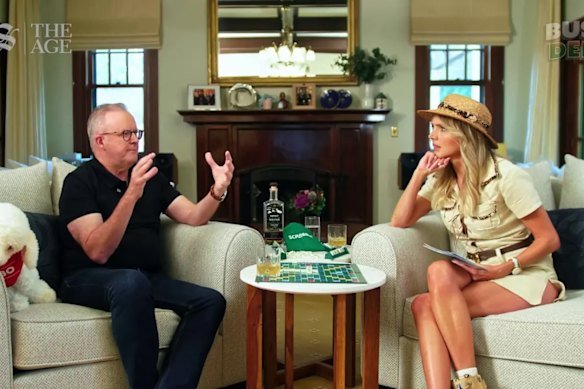
Anthony Albanese’s apology for appearing on the Bush Deep podcast is a distraction from the real issue. It is not his appearance on the podcast but rather the content of what he said that is offensive. Now, as a further distraction from his own behaviour, he says the Sydney Swans’ response to the actions of five players has been inadequate. The club’s response is about those players breaching club rules about late night drinking, not about any criminal matter – for which no charges have yet been laid, nor any conviction determined. Peter Nightingale, Pyrmont
PM’s reforms fall short
I predict the PM’s so-called success with his NDIS and gambling reform policies will come back to bite him (“Rival parties dancing to PM’s tune, August 21). There are big holes in both. It seems inevitable that people will fall through the cracks as a result of the major NDIS changes. And it’s doubtful the gambling reform package will achieve much at all. Nothing short of adopting all of the recommendations of the Peta Murphy inquiry would achieve the desired outcomes. Albo’s probably dining out on getting these bills passed, but it’s likely to be a pyrrhic victory. Graham Lum, North Rocks
Libs left a mess
Your correspondent Ian Morison, who tries to blame Labor for our trillion-dollar deficit, fails to mention the Liberals’ contribution, particularly John Howard’s legacy policies (Letters, August 21). First, Howard introduced middle-class welfare, targeting benefits to the well-off, seemingly to induce votes. Secondly, he committed Australia to the ultimately futile, enormously expensive Iraq and Afghan wars, costing taxpayers $30 billion to 2011, plus $400 million a year on the Iraqi and Syrian conflicts from 2014. Third, the disastrous international marketisation of Australia’s precious water began in 2004 under Howard. In the last drought, water costs soared from $100 to around $1000 per gigalitre: speculators made huge profits while our food-producing farmers were driven off the land. Fourth, at the Rudd government’s handover to Tony Abbott, post-GFC debt was $250 billion. In 2022, after nine years of Coalition government, debt was broaching a trillion dollars and it was certainly not all pandemic-related. Yet, there was no major infrastructure, no new dams, nothing to show for it. During the pandemic, under then-treasurer Josh Frydenberg, businesses that didn’t qualify for $27 billion in JobKeeper payments but got them anyway were allowed to keep that money, which was essentially added to national debt. Labor governments should have corrected such flawed initiatives, particularly water policy but, clearly, the Liberals were not competent economic managers. Barbara Chapman, South Yarra (Vic)
Ian Morison is correct that John Howard left behind a healthy budget position. However, he neglects to mention what the IMF identified a couple of years ago as the fiscal profligacy of those years. The mining boom had delivered windfall revenues, which could have been spent on the very productivity enhancements he claims are needed – investment in public infrastructure, transport, ports, et cetera – rather than middle-class tax cuts, CGT/negative gearing tax concessions or pre-election handouts. Investment in such good times, which would have improved our economic resilience and our growth in the medium to long term, was spent on Howard’s political prospects. Such is the short-termism of neoliberalism. The remainder of Mr Morison’s missive is a grab bag of Coalition, Institute of Public Affairs talking points, decrying any move towards renewables or workers’ rights. Never a clearer demonstration of the dichotomy between left and right. Greg Farrell, Yattalunga
Like Ian Morison, I pity our children and grandchildren. The Albanese government appeasing the gambling and gas industries while bearing down on Australians who rely on the NDIS is perverse. Especially when fair solutions exist. A 25 per cent tax on gas exports, for example, would raise about $17 billion a year. Every week we delay, we forgo roughly $350 million that could strengthen essential services and ease cost‑of‑living pressures. No wonder voters are disgruntled and seeking alternative representation. Labor could use a gas tax to tick many boxes: budget repair and fairness and providing a clear signal that the needs of Australians come first. If only. Larni Dibben, Glen Iris (Vic)
Ian Morrison’s anger at a “renewable obsession” shows his disregard for our future environment. Pity his children and grandchildren, and ours, if the renewable roll-out is ever halted by dangerous climate change denying politicians, who disregard science and spout the use of energy based around fossil fuels. John Cotterill, Kingsford
Your correspondent Ian Morison appears to have left out one irrefutable fact. The Coalition had doubled Australia’s debt before COVID hit. Certainly, Labor is not perfect but in their four years of government, it has produced two surpluses, something the previous government failed to do. Tom Duley, Bronte
Housing headache
In response to Julie Power’s article about housing (“The empty homes that could help solve Sydney’s housing crisis”, August 20), readers have suggested a British program “rent a room” and empty hotel accommodation (Letters, August 21). To my mind, these offer limited accommodation and are unlikely to be suitable for a family. But what of all those houses lying empty? According to census data quoted by Power, 9 per cent of 3.35 million homes are vacant. That’s 301,500 houses not occupied. In the small area I walk my dog, several houses are vacant, mainly substantial homes, plus at least one new build that has never been lived in. In a housing crisis, how can we, as a society, allow wealthy investors to simply leave their houses empty while we have people living on the streets, in their cars or couch surfing? Uncertain housing arrangements are detrimental to raising a family and being productive members of society. Fran Brew, East Killara
Labor’s low blow
Michelle Obama famously said “when they go low, we go high”. The same can be said of Fiona Brown’s response to Labor’s “mean girls”, who conducted a brutal, politically motivated campaign against her (“Fiona Brown declares ‘triumph’ after $1.48m settlement stemming from Higgins case”, August 21). For Minister for Women Katy Gallagher to maintain that Labor’s aggressive tactics and questioning were entirely “appropriate” displays a profound lack of empathy and accountability. If the government genuinely cares about workplace safety and the welfare of women in public life, it should start by acknowledging their egregious behaviour and the heavy personal toll exacted on Fiona Brown. Christine Windeyer, Longueville
Zomi deserves better
The dismissal of two IDF officers and the reprimand of three others speaks volumes about accountability and standards set by this military machine and its so-called independent inquiry into the killing of seven aid workers in Gaza (“Family, PM blast Israel ‘no-fault’ finding on aid worker’s death”, August 20). The fog of war apparently justifies any and all behaviour by the state of Israel. Zomi Frankcom and her colleagues, whose mission was no less than feeding the countless innocent families caught up in this hideous conflict, indeed do deserve better than the finding of “no reasonable suspicion of criminal misconduct”. Our government, Zomi’s family and the international community might rightly be unsurprised by these findings and deeply angered by Israel’s approach to the conflict in Gaza, where so many aid workers, journalists, medicos, women, children and civilians will never again see the sun rise. Bruce Hall, Avalon
Tragically, the government’s outrage over Israel not opening an investigation into the killing of Zomi Frankcom and her colleagues will have no effect on the Israeli government (“Wong ‘outraged’ after Israeli soldiers cleared over strike that killed Australian”, August 20). Yes, we should continue to press for justice over the killings, but Israel will only take any outrage seriously if we expel the Israeli ambassador. Joe Collins, Mosman

Shades of ethical grey
I’m all for the ethics and civics being elevated in the school curriculum (Letters, August 21). It helps students develop an understanding of what it is to be citizen of the world, not just an isolated entity. But I would suggest that the question at the heart of ethics is not “what is the right thing to do?” but rather “what is the least bad thing to do?” There are many ways to deal with an ethical dilemma and more often than not, many possible answers. Marie Del Monte, Ashfield
- To submit a letter to the Sydney Morning Herald, email letters@smh.com.au. Click here for tips on how to submit letters.
- The Opinion newsletter is a weekly wrap of views that will challenge, champion and inform. Sign up here.
Read the full article here