







Adam Gibson was still learning to tie his shoelaces the first time he was removed from his family and sent to live in his school principal’s home.
“You would walk into his office or his home and feel your gut twist and your skin crawl,” Adam said. “Every time you saw him you would tense up. It was like swallowing a bowling ball.”
He remembers the heavy smell of his cologne, a scent he wishes he could eliminate from his brain.
The practice of moving children into principal Jonathan Cannon and headmaster Russell Bailey’s care is common at Redeemer Baptist School and church in North Parramatta.
The Sydney Morning Herald has revealed the extent of the Redeemer Baptist Church’s control over members’ private lives, from orchestrating careers and marriages to dictating household structures.
The acclaimed Sydney private school with an extensive property portfolio has raked in tens of millions in government funding in the past decade – all while its teachers go unpaid, relying on a small stipend and, for some, Centrelink benefits.
The NSW Educational Standards Authority has since launched an investigation, while federal Education Minister Jason Clare has directed his department to examine the school.
Adam, now 24, is one of dozens of children moved into the household of Cannon, who is also the church elder. Over the past 38 years, an estimated 50 children have lived in the homes of Cannon as well as fellow elder Bailey.
When asked by the Herald, Bailey said the estimate of 50 “feels about right”. Redeemer said there were currently no children living in either the Bailey or Cannon homes. They did not answer questions about whether older students were living in their home.
Last week, Redeemer said it had “no reports of students being forced to stay in any teacher’s home”.
But ex-members say no child was removed for as long – or as young – as Adam, who was separated from his family at the age of seven.
“He was one of the youngest kids I have ever seen be moved for that sustained period of time,” said Alexandra Garth, now 27, who was also removed from her home in childhood and, like Adam, grew up in the Redeemer Baptist Church community.
“All of his siblings got split up, they went back, but he stayed,” Garth said. “I remember it so significantly.” At one point Adam’s parents and youngest sister moved into Garth’s family home, but Adam remained with Cannon.
From year 1 to year 5 he slept on a sofa lounge outside Cannon’s bedroom. He desperately missed his four siblings and parents.
When he was 10, his family moved into the house next door. He could smell his dad’s barbecue through the fence. He was allowed to eat dinner with his family on Mondays, dragging out the time, dreading returning to Cannon.
Living with Cannon, Adam said, was “living with fear”.
He returned to his family in year 5 temporarily. Adam was a boisterous child, buzzing with energy and sports mad. “I didn’t get into fights or anything, but I would be loud. Redeemer didn’t like that very much,” Adam said.
He hungered for the outside world, which he caught snippets of through the lives of his classmates who weren’t part of the church. He can count on one finger the number of times he was allowed to visit a friend outside the community. “I wasn’t usually allowed to go to my friend’s birthday parties,” he said. “I wasn’t allowed to join outside soccer or cricket clubs. I wasn’t allowed to be a kid.”
Despite being born in the highly fundamentalist community, Adam questioned his faith. He felt “like I was trying to fit a jigsaw into a puzzle, and it just was not fitting”, Adam said.
So, he acted out, testing boundaries. When he was in year 8, he was mucking around with classmates, and “dacked” a friend.
He knew he would get into trouble, but didn’t expect what came next. He was moved back into Cannon’s home, this time sharing a bedroom with five other boys, including international students. Under the agreement, his mother would wash his clothes. “It felt unnatural, and it didn’t make sense,” Adam said.


Bailey said the school could not and would not comment on “individual families … which lead our community to seek support from one another”.
“What I can tell you is that where families request assistance they are supported,” Bailey said. “In such instances, the best and safest environment is provided by families caring for each other which may include either temporary or longer-term care for their child. On agreement between families, care assistance can be arranged until the child’s parents determine that they are ready for their child to return home.”
Adam said living with Cannon forced him to grow up. “It was always cold,” he said. “I remember thinking, I am not with my parents, and I am going to have to do this all by myself now.”
He was 15.
Honour thy adults with proper authority
In the teachings of Redeemer Baptist Church, elders are seen as father figures, a better influence than the child’s own parents. “If elders decided your children were better placed with a different family, you weren’t free to say no,” said one mother who spoke on the condition of anonymity for fear of the church, having left it five years ago.
So normal was this practice of moving children that in his 2022 principal’s address, Cannon added a caveat to the fifth commandment. Children must honour their parents, he states, “and other adults who exercise proper authority for their benefit”, he added in brackets.
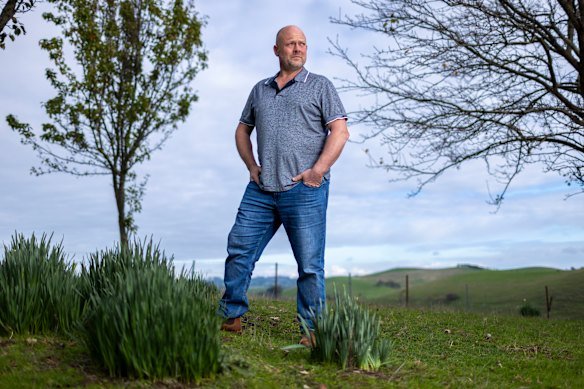
Among the children sent to live with Cannon and Bailey were overseas and interstate students, church students, and, occasionally, students facing expulsion or having issues at home.
“You’d have a student who was basically [living with elders] because keeping their position in the school depended on it,” said a former elder, who also asked not to be named for fear of reprisals.
This practice spans decades. More than 30 years earlier, another Gibson lived with Jonathan Cannon. Sam Gibson, Adam’s uncle, was adopted at birth into the fundamentalist religious sect in 1974.
When he was seven years old, his mother fell ill. Elders moved Sam into the home of another family. While in their care, his mother died. For years, he was moved between homes, living with different families, overseas students and “stragglers”, before eventually being placed into Jonathan Cannon’s care in 1991.
“Living with Jon was hell,” Sam Gibson said. “I hated every minute of it. I went to school with teachers, I came home to teachers. It was a 24/7 prison.”
When he left, at age 18, he was issued a warning from Noel Cannon, Jonathan’s father and then-principal of the school: “If you ever mention anything that goes on in here, I’ll come down on you like a tonne of bricks.”
Now 52, Sam said living in the Redeemer community and being moved between households has had a permanent impact on his life. “Nowhere has ever been a home for me,” he said. “I have never found a place where I can say I am at peace.”
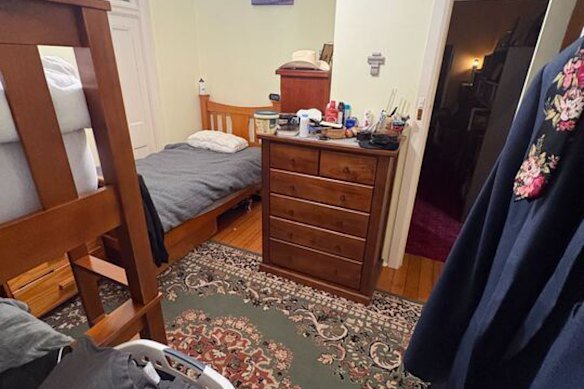
Sam has told his story before, 20 years ago in The Sydney Morning Herald, Parramatta Sun and Nine’s Sunday program. He is furious and heartbroken the sirens he sounded did not protect the generation after him, including his nephew.
“I am not making this shit up,” Sam said. “I am glad this is coming out, but I am getting flashbacks of everything that occurred.
“I just want individuals held to account. I don’t think the school is a healthy environment for students.”
For one mother, who thought about leaving church, the prospect of her sons living with Cannon was a deal-breaker. When the elders began discussing moving one of her sons into their care, her stomach dropped.
“It was suddenly going to be real,” she said. “I realised I could lose one of them to Jon. Once they go there, they aren’t yours any more.”
The boy who called the police
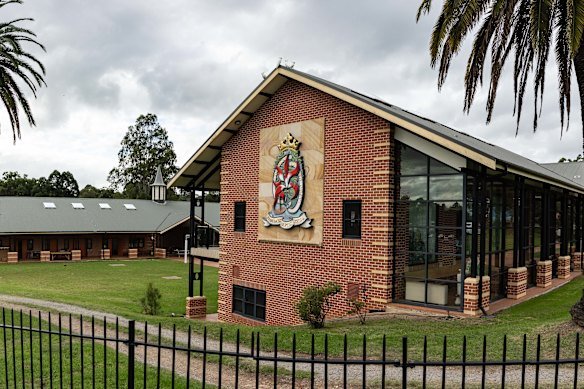
Another set of parents, who left in October 2021, and whose two sons were placed in two different elders’ homes, described feeling as if they had no choice. The parents, both teachers at Redeemer who spoke on the condition of anonymity for fear of reprisals, were called into Jonathan’s office one day and told their 14-year-old son had been suspended and was moving into an elder’s home.
The conversation was abrupt, and at the end Cannon casually mentioned the parents’ other son, in his 20s, would also be moving into another elder’s house.
“We were so shocked we didn’t even know what to say,” the father said.
They spent six months trying to get their sons back. They were particularly worried about their younger son, who was then 14 or 15. “Every time he saw us he would cry,” the father said. “We would tell him we are still trying to get him out.”
At one point, their son called the police and told them he was being held against his will.
When police spoke to the boys’ father, he told police that his son was in the elder’s house with his permission.
“I was a member of the church and I did not want the police to investigate the church,” the father said. “I stood up for the church. It was stupid. I wouldn’t do that now.”
The family left the church in 2021. As teachers at the school, they received a small stipend, no salary and no superannuation. They rebuilt their lives from nothing. They speak out because “the truth needs to be exposed”.
“We have seen the damage that Redeemer does both in our own family and in other families, in terms of separating children from parents, infantilising people, the damage caused when people leave, and that causes a split between the members of the family.”
Redeemer said in a statement: “On the rare occasion when someone decides that they do not wish to continue to live our Christian vocation, we are naturally disappointed, but we wish them the best for their future.”
Yet, the majority of those who leave Redeemer Baptist Church do so with empty pockets and a mountain of fear.
With $20 in his pocket and $7 on his Opal card
Adam Gibson left Redeemer at the age of 18. He walked out with a guitar, a $20 note, $7 on his concession Opal card, some clothes and a box of trophies. His only form of ID was a PDF of his birth certificate – the church refused to hand over his original – and, until this week, he had no photos of himself as a child.
He was terrified. Before leaving, the church had warned him he would be in jail within three months.
Instead, ex-members of the community reached out, giving him money, buying him a SIM card, work boots and a heater for his room. For years, he lived with a friend, their parents taking him in.
“I remember crying on my bed, thinking these are the people that they were saying were evil and the devil, and here they are giving me money to help me survive,” Adam said.
Slowly he rebuilt his life. He has his own family now. “I couldn’t imagine putting anyone through what I went through,” Adam said. “It may not have been illegal, but it was unnecessarily cruel.“
Be the first to know when major news happens. Sign up for breaking news alerts on email or turn on notifications in the app.
Read the full article here