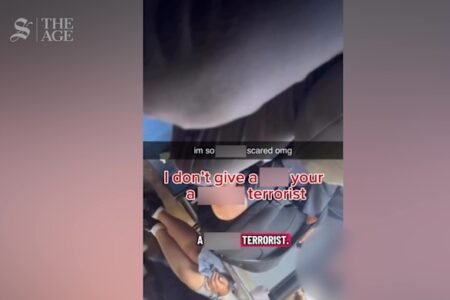






The Albanese government has overlooked some of the most significant recommendations from the special envoy for tackling Islamophobia, as it commits to a raft of measures described as a necessary step in preventing religious discrimination “dangerously close” to becoming entrenched in society.
Aftab Malik, the special envoy to combat Islamophobia, handed a report to government in September with 54 recommendations. The government’s response, released today, addressed 35 of those recommendations and said it would consider the rest.
It did not respond to Malik’s call for a ban on religious discrimination; to protect Muslims in racial discrimination laws; an independent review into counter-terrorism laws; and a commission of inquiry into Islamophobia and anti-Arab racism.
The government also rebuffed Malik’s push, outlined in his submission to the antisemitism royal commission, for a change to terrorism laws that would reduce reliance on religious and ideological motivation “as a central criterion to the offence” of terrorism.
Instead, it announced a series of measures to promote social cohesion in education, such as a review to find ways to strengthen religious and racial tolerance; community support such as funding for mental health, especially for Muslim women; the creation of an Islamophobia-related trauma protocol; promoting cross-cultural events; and workplace training for politicians and public servants.
Australian National Imams Council senior adviser Bilal Rauf welcomed the government’s recognition of Islamophobia, but said he was disappointed that the government was not contemplating legislative changes to deal with it like it did in January with antisemitism, following the Bondi terror attack.
“There doesn’t appear to be any approach to involving legislative change,” Rauf said.
“We know that there is hate out there. The most vulnerable among us, women, children, are suffering, and our laws are deficient. They don’t capture Islamophobia.
“To that extent, it does stand in contrast to the range of responses to deal with the equally important experience of antisemitism.”
Prime Minister Anthony Albanese said it was clear that the government must do more to combat Islamophobia and the government’s response was based on the principles outlined by Malik, with practical action to promote social cohesion and to keep communities safe.
“Islamophobia has no place in Australia,” said Albanese. “Every Australian deserves to be safe, respected, and at home in our country.”
Multicultural Affairs Minister Anne Aly declared the response a milestone moment, as the first government recognition that Islamophobia is an immediate threat to the community.
“It is dangerously close to becoming normalised, and that it has traumatising, detrimental and long-lasting effects on a significant number of Australians,” Aly said.
Malik welcomed the government’s response and said its recognition of the threat from Islamophobia was significant, but said he would continue to advocate for further measures that still needed to be addressed.
“This is just the start of the journey,” Malik said. “To tackle Islamophobia at its roots, we must address the challenging questions. These include stronger and more consistent legal protections for Muslim Australians, further national examination of Islamophobia, and action that addresses its social, institutional and structural causes.”
In reference to the overlooked recommendations, Malik said he recognised that governments must balance competing priorities, but said there was an urgent need for further action.
“Muslim Australians should not be expected to bear the cost of that complexity indefinitely,” he said.
Malik, in his submission to the antisemitism royal commission, argued that the current definition of terrorism was “ill-equipped to address the reality of modern extremism, which features hybrid, intersecting, fluid, non-coherent ideologies that are also progressively driven by personal grievances”.
ASIO strongly disagreed in its submission to the same inquiry, arguing for religious and ideological motivation to remain in the definition of terrorism, as they “reflect the key overarching belief systems through which narratives can … mobilise large numbers of people to action, including towards violent action”.
Albanese said the government decision to ignore Malik’s recommendation was guided by advice from security agencies.
“Everyone’s view is given consideration, but primarily we sit in the National Security Committee of the government and we take advice from our security agencies. I have confidence in them.”
The Alliance of Australian Muslims and the Australian National Imams Council welcomed the government’s response but said “much more needs to be done” following its long-awaited release.
“It must be followed by meaningful and timely action, supported by clear commitments, appropriate resources and strong accountability,” the groups said in a joint statement. “This should include practical enhancements that lead to lasting systemic and structural improvements across government policy, education, legislation, community safety, public institutions and other areas.”
The Australian reported on Saturday that One Nation leader Pauline Hanson had described Islam as a religion based on terrorism in a podcast interview in April.
“I’m sorry, it’s an ideology that is, you know, and a lot of it’s based on terrorism,” Hanson said to podcast host Isaac Butterfield, a right-wing comedian.
“Pauline Hanson has been undermining social cohesion for 30 years … since her comments led to her being disendorsed by the Liberal Party in the lead-up to the 1996 election,” Albanese said on Saturday.
Malik said remarks such as Hanson’s isolated and marginalised Muslims.
“Words have consequences, and we’ve seen that in America, we’ve seen that in England, and we’ve seen that across Australia of late,” he said.
Start the day with a summary of the day’s most important and interesting stories, analysis and insights. Sign up for our Morning Edition newsletter.


From our partners
Read the full article here