


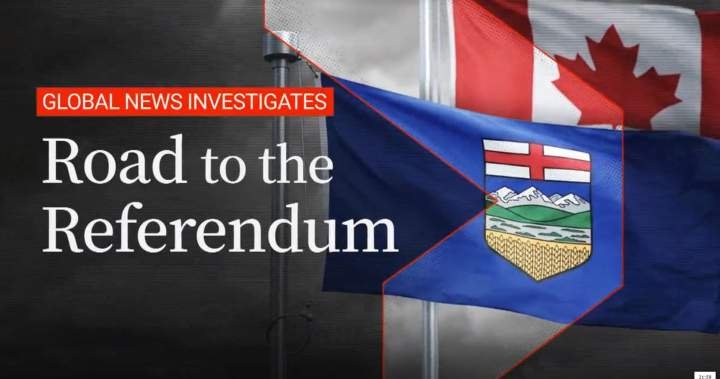
While the question about Alberta’s future place in Canada has dominated discussions about the province’s October referendum so far, there are another nine questions on the ballot that so far have been subject to little public debate.
Five of the nine questions deal with issues of immigration reform — including whether the province should have increased control over immigration and whether it should be able to withhold health care, education and other social services from people who aren’t Canadian citizens, permanent residents or who have an “Alberta-approved immigration status.”
The other four questions deal with giving the province more control over the appointment of judges, abolishing the Senate, giving provinces the ability to opt-out of federal programs on health care, education and social services, and changing the Canadian Constitution to give provincial laws priority in areas of shared jurisdiction with Ottawa.
To Edmonton lawyer Avnish Nanda, who helped create the pro-immigration group “Our Alberta Advantage,” the questions about immigration are “harmful, racist” and “unnecessary.”
“As more people learn about it, they become angry over the amount of money being spent on this unnecessarily. And as they dig deeper into the questions and the ramifications, (it’s) just confusion. We don’t need this,” said Nanda, who added that his organization is “pushing back against this anti-immigrant, anti-Canadian narrative that this government is peddling through this referendum initiative.”
Alberta Premier Danielle Smith has defended the questions aimed at immigration reform by saying “not every newcomer is a net contributor” to provincial coffers.

Get daily National news
Get daily Canada news delivered to your inbox so you’ll never miss the day’s top stories.
And despite the number of immigrants to Alberta slowing recently to just a fraction of what is was a few years ago, Smith has also blamed immigrants for putting a strain on provincial resources.
Brendan Boyd, associate professor of political science at McEwen University in Edmonton, said while the provincial government may have been hoping for Albertans to have a fulsome debate about all the issues on the referendum ballot, so far that doesn’t seem to be happening.
“If you look at some of the polling over the last couple of months, I don’t know that any of these things are sort of top of mind for Albertans,” Boyd said.
“It tends to be affordability. It tend to be concerns about health care and the economy and none of those things are really on the ballot in this referendum.”
With the question about Alberta’s place in Canada dominating the debate so far, Boyd said he wouldn’t be surprised if a lot of people answer one question, then move on.
“I could see that definitely happening where these other questions don’t get as good of a turnout or good responses on those — (it) totally wouldn’t surprise me,” Boyd added.
“I guess that’s one of the things I would say is why that sort of direct democracy in these referendums maybe aren’t the best forum to discuss these things. It sort of assumes that it’s going to spark this great, fulsome and useful debate that we have and sort of start the process of deliberative democracy. But as we’ve kind of seen, that’s not happening.”
Asked by Global News about what the province is doing to ensure a debate on the questions does take place, a spokesperson in the office of Alberta Premier Danielle Smith provided an emailed statement that says:
“Alberta’s government will use various channels to communicate with Albertans on the implications of the fall referendum questions including online, TV, radio, and social media. The Premier also travels across Alberta every summer and will continue speaking directly with Albertans through town halls, public events, media interviews and more.”
The statement also encouraged Albertans to visit the website albertareferendum2026.ca where the 10 ballot questions and information on these issues is posted.”
The referendum takes place on Oct. 19.
Voters will be provided with a stack of colour-coded ballots, one for each question, and will be free to mark an X on as many ballots as they want, or leave them blank.
Elections Alberta said a total of 38 million ballots will be printed.
Read the full article here