





The European Commission is preparing to reshape the European Union’s renewable-energy rulebook after 2030, signaling a major shift from less regulation to greater focus on investment, grids and storage, according to a draft impact assessment seen by Euronews.
The internal document states that the existing renewable energy law is no longer enough to deliver the EU’s 2040 climate ambition to reduce net greenhouse gas emissions by 90% compared to 1990 levels, which EU lawmakers agreed last November.
A new EU proposal to revamp the bloc’s renewable energy framework is due by the end of the year to ensure the post-2030 climate framework aligns with all sectors that must contribute to the common goal of reaching climate neutrality by 2050.
In 2025, clean power accounted for 26.2% of EU final energy consumption, while current national plans put the bloc on track for only about 41% by 2030, below the 42.5% binding EU target, the draft document warns.
However, the Commission is skeptical that its 27-nation bloc will achieve even the 41% target.
“While the situation varies from one member state to another, the current trajectory for renewable energy deployment suggests that even the projected 41% share may be difficult to achieve with current progress at member state level,” reads the draft document.
At the same time, the Commission appears reluctant to address the EU’s renewable deployment gap by simply piling on new mandatory targets.
Brussels seems to reject additional mandatory measures on self-consumption and renewable-energy communities, mandatory regional cooperation and joint projects as well as further permitting legislation, arguing that recent reforms still need implementation.
“The stakeholder feedback received at stakeholder workshops emphasised the importance of regulatory stability in this area and pointed at insufficient implementation of the current framework as the key issue to tackle,” reads the draft document.
Grid congestion — a major barrier
While the bloc needs to increase clean power production to meet the targets, it also needs to ensure its electrical systems can receive and transport it. The EU excels at producing clean power, but it struggles to dispatch it where it is needed, which is a major barrier to the bloc’s overall climate and energy transition.
Renewable electricity reached almost 50% of EU generation in 2025, but the power system is increasingly struggling to use all that cheap electricity, the draft document acknowledges. Grid congestion, insufficient storage and inflexible demand are producing more negative prices and renewable curtailment, often to the detriment of clean power producers.
In 2024, more than 10TWh of renewable electricity — enough to power around 2.85 million European homes for an entire year — could not be used because of grid congestion and insufficient cross-border capacity.
A recent audit from the European Court of Auditors stated that renewable energy capacity gains linked to the bloc’s REPowerEU, the 2022 plan to ditch Russian energy and become energy sovereign, are “negligible” compared with the Commission’s 103GW goal. They also pointed out that grid infrastructure — particularly cross-border electricity connections — is the plan’s most striking weakness.
Redispatch — effectively switching on more expensive generation because cheap renewable power cannot reach consumers — cost around €4.3 billion in 2024. Without action, annual redispatch costs could reach €26 billion by 2030, the Commission estimates.
Brussels knows it needs dramatically more clean energy to hit the 2040 climate target, but the draft acknowledges that simply adding wind and solar without grids, storage, flexible demand and electrification can create its own costs.
To address the remaining challenges, the EU executive proposes better monitoring of curtailment, clearer rules for hybrid renewable-and-storage projects, stronger investment signals for flexibility and greater use of electric vehicles and smart charging as sources of system flexibility.
Veerle Dossche, renewable energy programme manager at the NGO Climate Action Now Europe, said the Commission’s impact assessment makes a “compelling case” for an ambitious and binding post-2030 renewable energy target. However, it notes that delivery must go beyond ambition.
“This requires robust national contributions, clear trajectories and effective compliance mechanisms, backed by measurable KPIs, so that early warnings trigger corrective action when member states fall off track,” said Dossche.
Power struggle over the power grid
Meanwhile, the legislative train has departed.
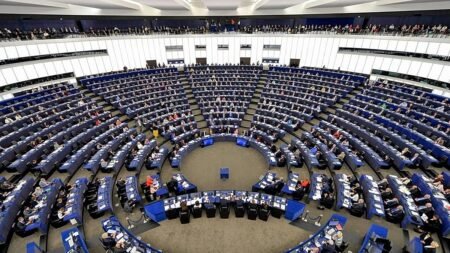
MEPs in the Parliament’s industry committee backed a draft report on the future governance of the EU’s power grid on Thursday, paving the way for adoption in plenary next week in Strasbourg, followed by the inter-institutional talks among the EU co-legislators, the Parliament and the Council.
EU lawmaker Tsvetelina Penkova (S&D/Bulgaria), leading negotiator on the legislative file, said the new rules should also help reduce electricity price disparities among EU countries and regions
“The Commission will now have a stronger role in defining the strategic framework, while ACER (the EU’s energy regulators) will provide greater independent scrutiny. This is an important step towards making our infrastructure planning more democratic, transparent and accountable,” said Penkova on Thursday.
EU lawmaker Virgil-Daniel Popescu (EPP/Romania) said Thursday’s vote — backed by MEPs from the centre-right, liberals, Socialists and Greens — offers a “balanced and pragmatic” approach to turning Europe’s energy goals into the infrastructure needed to strengthen energy security and bring down energy costs.
“We have strengthened the Commission proposal by introducing a more strategic approach to infrastructure planning. Europe should have a clear picture of where the major bottlenecks are, which strategic corridors and network reinforcements are needed, when they should be developed towards 2040 and 2050, and what level of investment will be required,” Popescu told Euronews.
Parliament backed plans to centralise Europe’s energy infrastructure planning, giving the Commission a leading role in drawing up an overview of the bloc’s future energy system as the first step towards a more coordinated process for identifying new grid needs.
However, this position risks clashing with the Council, with several EU countries rejecting a centralised takeover from the Commission, fearing loss of national sovereignty.
Another legislative file on permitting rules linked to the “Grids Package” is already underway, with official talks expected in October.
Read the full article here