




Calgary city council has rejected a request to allow for a charter school in an industrial park in the city’s northeast.
The Rocky Mountain Charter School Foundation had applied to rezone the 11-acre site near 10 Street and 68 Avenue N.E. to allow for a K-12 charter school with a focus on health and wellness, sustainable agriculture and global technology.
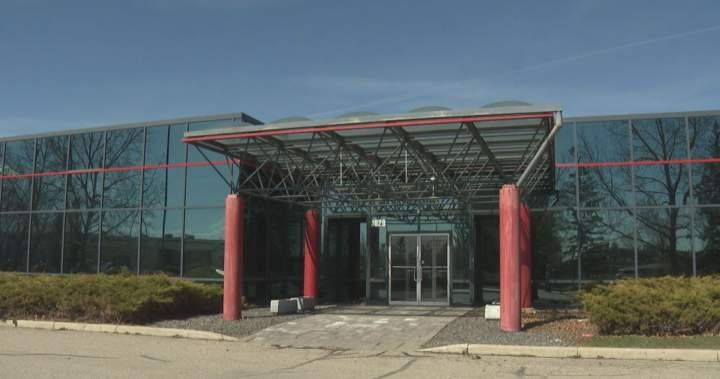
The site, which is located in the Deerfoot City Business Park between Deerfoot Trail and Calgary International Airport, is home to an office building with warehouse space.
However, city councillors voted 12-2 against the application, which has officially been refused and abandoned over a number of concerns with the site.
“We don’t have a school for September 2026 for 750 students,” said Nasser Kadri with the Rocky Mountain Charter School Foundation. “It’s not so much a question where we go from here, it’s where the kids go from here.”
Several councillors had noted concerns with the site’s proximity to the airport, as well as industrial businesses in the area including a window and glass manufacturing plant, an ambulance training centre, a heavy equipment storage facility, and a drywall supplier.
The Calgary Police Service firearms training centre is also located near the proposed school.
“I’m not sure why we’re even considering this,” said Ward 10 Coun. Andre Chabot. “This is probably the worst place in the city to put this type of use.”


Get daily National news
Get daily Canada news delivered to your inbox so you’ll never miss the day’s top stories.
Placing a school in an industrial park would be “begging for trouble,” according to Calgary Mayor Jeromy Farkas, who also voted against the proposal amid concerns of a lack of pedestrian infrastructure like sidewalks along the site.
“There’s a place in the city to have schools that’s closer to parks, that’s closer to residential areas, that’s supported by transit near pathway connections with sidewalks,” Farkas said.
According to the Rocky Mountain Charter School Foundation, the proposed school had a conditional approval from Alberta Education.
In a statement, Education Minister Demetrios Nicolaides said school authorities are responsible for securing appropriate facilities, and that funding is only released after a lease is signed and zoning approvals are secured.
“Through discussions with the school authority, it was communicated that relying on a single facility option carried inherent risk, as zoning approval was not guaranteed,” the statement said.
“Given the site’s industrial location, there was a recognized possibility it could be deemed unsuitable. This risk was identified and clearly communicated to the school authority.”
Ward 14 Coun. Landon Johnston and Ward 5 Coun. Raj Dhaliwal were the sole votes in favour of the proposal.
Dhaliwal said he had been in conversations with the applicant and had hoped to mitigate council’s concerns in the development permit stage of the process.
“If we could get it to the (development permit) stage and it’s identified that this is not going to work, it’s not going to work,” he told reporters. “That’s why I was supportive of it, to at least take it to that stage, but unfortunately it failed.
City administration had noted that allowing a school in that industrial area “may weaken the supply of strategically located industrial land,” and could reduce the area’s “attractiveness for warehousing and related industrial investments.”
“Thirty years of experience in education, I totally believed that this site is perfect in many ways,” Kadri told reporters. “I understand that it’s industrial, but which takes precedence: industrial or our kids?”
The Calgary Planning Commission recommended city council reject the proposal, with Commissioner Nathan Hawryluk noting there is “strong logic” for not allowing a school in an industrial area.
“This application is a reminder that we need to find a real plan for finding space for charter schools,” he wrote in his comments to council.
“Ideally, that land would be located by people and not in the middle of industrial areas.”
Read the full article here