





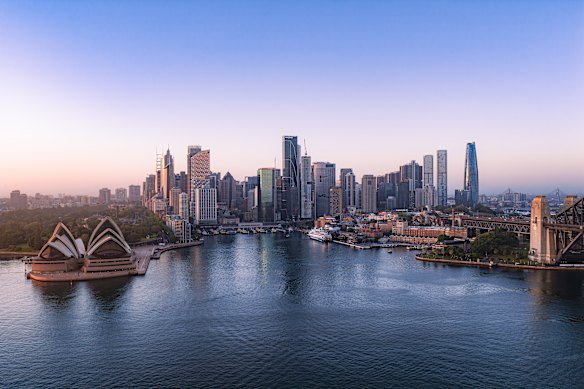
Another government project stumbles along apparently with no progress for the people or consequences for those responsible (“How $190 million was blown on Circular Quay revamp”, June 1). It’s yet another example of the abject failure of privatisation and outsourcing of what was once the actual role of government institutions responsible for infrastructure projects. It seems that the diversification of stakeholders involved in these projects doesn’t ensure compliance with contracts, schedules, cost and other requirements, meaning that, ultimately, no one is held accountable. It’s almost like it’s a deliberate strategy to diversify overall responsibility. And yet the torrents of cash, the ongoing inconveniences along with the endless finger-pointing continues. I’m reminded of the famous words of Robert F. Kennedy: “Success has many fathers, but failure is an orphan.” Bernard Stever, Richmond
What is wrong with the Labor state government? The suave and elegant Chris Minns is proving a classic case of style over substance. There’s no better example than the government’s grand plans for Circular Quay, designed, like the Sydney-to-Newcastle fast rail, to tease rather than transform. Instead, he wants to cut the high line and the long-awaited Town Hall plaza for being “too expensive and disruptive”. Excuse me? I thought Sydney was trying to reinvent itself as a tourist destination. Then there is the crumbling Paragon at Katoomba and delays to the Metro line to Sydney’s new gateway, the Western Sydney Airport (“Warnings that metro rail line to Sydney’s new airport is set to be delayed again”, June 1). At this rate, he will reverse another promise to reduce our 86,000 poker machines so he can fund more plans. Peter Farmer, Northbridge
Falling birth rate
Katrina Strickland’s article on declining fertility (“No one talks about those who wanted children and never had them. It’s time we did”, May 30) and Matt Wade’s piece on the barriers facing Australian women who want children (“For many it’s time to have fewer children, or none”, June 1) raise concerns about housing affordability, childcare costs, insecure employment and the rising cost of living. The discussion risks overlooking another perspective: the ethical question of bringing more children into an increasingly unstable and overpopulated world. Philosopher David Benatar has argued that those who are never born are spared the inevitable burdens of suffering, loss and mortality. The Book of Ecclesiastes reflects a similarly sombre view, declaring that “better than both is the one who has never been born”. Such perspectives remind us that procreation is not merely an economic decision, but an ethical one. This debate should not focus solely on frustrated fertility aspirations. It should also acknowledge that children born today inherit a future marked by ecological strain, geopolitical instability and the universal burden of mortality itself. These concerns deserve a place in any serious discussion about fertility and population. Joseph Ting, Brisbane (Qld)
Your editorial overlooks the realities of women in modern society (“Policy failures a big factor in fertility decline”, June 1). Today’s shrinking family unit has less to do with economic limitations than with the empowerment of women and reproductive freedom. Liberated from the outdated expectation that marriage demands a life of domestic servititude, women now have choices. In a more socially acceptable world, some women prefer to remain childless. Many do find fulfilment and purpose in devoting themselves to full-time motherhood, whereas others dedicate themselves to building a career, with many striving to balance both motherhood and career; albeit within the constraints of a world still predominantly shaped by men. Pronatalism will not inspire women to produce more progeny. Mary Carde, Parrearra (Qld)
Fossil fuel thugs
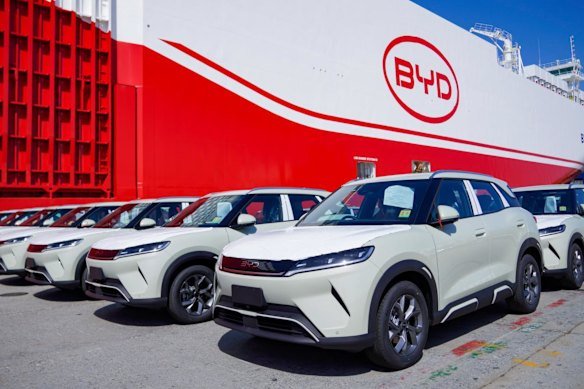
The editorial cartoon by Badiucao seeks to remind us that the repressive Chinese government is behind the global push to EVs (Letters, June 1). While this is true, let us not forget that the world’s dependence on oil has been propping up the Saudis, who murdered and dismembered journalist Jamal Khashoggi, the Iranian mullahs, who massacred thousands of their own people while exporting terrorism, and Vladimir Putin in his war against Ukraine. Meanwhile, the pollution from burning oil adds to urban air pollution and contributes significantly to global warming. Finally, the USA could have taken the lead on EV development but dropped the ball and has ceded leadership to China. Any country could build EVs, but the major economies that produce oil seem to be under the control of these violent thugs, who profit every time people fill their tanks. Neil Ormerod, Kingsgrove

AUKUS goalpost shift
I recall the 1970s slogan about Richard Nixon: “Would you buy a used car from this man?” He was still elected. Well, it now seems that Australia is about to emulate that by buying a used submarine (or more) from the biggest used-car shyster the White House has ever seen: “Only one careful owner, and never fired in anger. Trust me mate, I’ll do right by you.” Are we all mad (“US downgrades AUKUS sub to second-hand version”, June 1)? Peter Gunn, Hornsby
Second-hand subs with reduced lifespans also brings forward the issues around the disposal of their reactor compartments and highly enriched spent fuel. AUKUS was a dud deal from the start but was touted as an advancement that will take our defence capabilities beyond 2050. Seems to me the goalposts have been moved. Daniela Catalano, Haberfield
In the Bard books
Bruce Wolpe asks if Trump were a Shakespearean character “would the Bard’s tragedies signal curtains for Trump’s presidency” (“Trump fiddles as presidency burns” June 1)? One can only guess what fun the Bard would have had with Trump as a subject. At a minimum he’d have Cassius, Falstaff, Iago and Shylock all rolled into one bloated, vindictive egomaniac. All I can say is “If this were played upon a stage now, I could condemn it as an improbable fiction” (Twelfth Night: 3,4). Adrian Connelly, Springwood
Specialist needs
That a substantial part of the population cannot afford to see a specialist is obviously extremely concerning (“Alarm at huge increase in bills for specialist surgery”, June 1). The question that arises is how many people suffer unnecessarily or die prematurely as a result of their reluctance to see a specialist due to the cost. The absurd cost of specialists is a profound limitation of Medicare and a gross injustice that needs to be resolved. Alan Morris, Eastlakes
Tax gas hard now
Another day, another round of complaining from the gas industry (“Labor gas plan triggers alarm in Asia”, June1). Gas industry representatives like Samantha McCulloch may have “serious concerns” about the Albanese government’s proposed gas reservation policy, but that is a biased position shaped by vested interests. The public also has “serious concerns” about the profits made by climate‑polluting multinational gas corporations that export our resources while paying very little in royalties and taxes. The groundswell of support for a 25 per gas export tax suggests that the social licence of these climate‑wrecking companies is being eroded. With regard to gas reservations and taxes, Labor should feel emboldened to act in the interests of everyday Australians. Larni Dibben, Glen Iris (Vic)
Red means stop
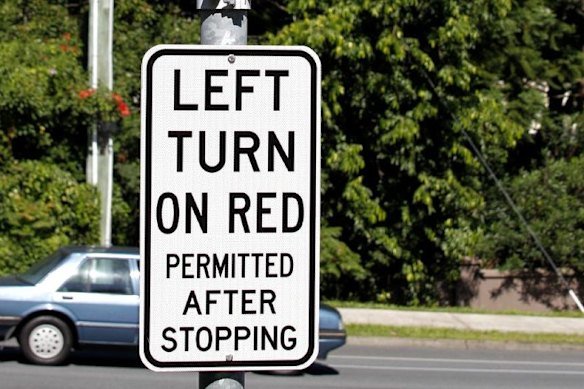
Left turns on a red encourage drivers to race to the traffic lights even though other drivers have stopped. They pose a huge threat to pedestrians on the crossing, especially children, because the driver won’t see them. They also pose a threat to cyclists, who presume a green light means they are safe. In Australia, we cater to this requirement, where it exists, with a much safer slip lane. So thanks but no thanks, Antone Martinho-Truswell (“The red light we should be allowed to drive through: My gift to Australia”, May 31.) Anthony Healy, Centennial Park
Joys of homeownership
With prices as high as they are, buyers who have recently purchased houses may never accumulate much equity in them. However, simply leaving the precarious rental market has many benefits to people, and some of these may even be quantifiable in the flinty world of economics. Renters never see a cent of their rent payments again, but the struggling mortgage holder gets some economic gain from their payments. Interest rates go up and down, but only fluctuate by small amounts each year. Rents always rise. But the main benefits are to mental health and family stability. House buyers are no longer tenants, forced to move whenever their short-term lease ends. With each move, family members involved in schools and other parts of their community have to form new networks, not to mention finding new GPs and setting up new utility bills. We must never underestimate the joy of a new homeowner nailing that first-ever picture hook into their own wall. Marjorie Sutcliffe, The Rocks
Treating houses primarily as assets and focusing heavily on the “value” they represent has always been a mistake (“Sydney, Melbourne hardest hit by sharp fall in property prices”, June 1). Clearly they remain assets to landlords, however, to owners of our own homes they are simply somewhere to live. Unwinding the neoliberal prerogative of putting a price on everything has become urgent. The government’s steps on capital gains is a move in the right direction, and we can expect fall-out as a new way of thinking is bedded down. Nevertheless, the excesses of neoliberalism need to be addressed. Greg Baker, Fitzroy Falls
I don’t understand the fuss about falling house prices. Labor is blamed, but if house prices rose, Labor would also be blamed. The critical point is that if you receive a lower price for your dwelling, because of the market, it is likely that you will be paying a lower price for your next purchase. Anne Elliott, Balmain
A matter of degrees
Hear, hear to the article by Professor Cath Ellis about the importance of a degree (“Don’t tell young people to walk away from university. For many, it’s the only way”, June 1). I do hope her wisdom gets the airplay it deserves at university boards around the country and in Canberra. There have always been and always will be challenges on the horizon for higher education. At the moment, it’s AI. It will take figures like Professor Ellis to lead the charge that will keep Australian degrees highly valued. I attended UNSW many years ago, coming fresh from a country town. I was challenged to think, rubbed shoulders with an eclectic bunch of students and learned a lot. My years there provided a priceless education and experience. Along with Prof Ellis, I would concur that academic Kylie Moore-Gilbert might think twice and encourage her stepdaughter to launch into university life (“I’m an academic, but I’ve told my stepdaughter to think twice about going to university”, May 28). Bruce Hall, Avalon
There has been a lot of publicity about AI and its negative involvement in university learning, however, I completely agree with Cath Ellis about the need for degrees in many professions and problems with assessing students’ performance. We university academics need to focus on designing assignments that assess critical thinking, assure learning by providing interesting challenges, be available to interact and provide feedback to students, and provide a supportive learning environment. Students need to know that they are entitled to these services, and to advocate strongly for them. Ben Basger, Bondi Junction
Backward step
Tony Abbott is back on the airwaves claiming “we don’t believe in ourselves any more”. A bold statement, but how does he know? It’s clear Abbott’s own electorate showed very clearly that they no longer believed in him by booting him out. I think if he took the time to ask around, he’d find many Australians have a far greater belief in themselves than they do in the newly elected president of the Liberal Party and his vision for the future, which is so clearly rooted in the past (Letters, June 1). Nick Franklin, Katoomba
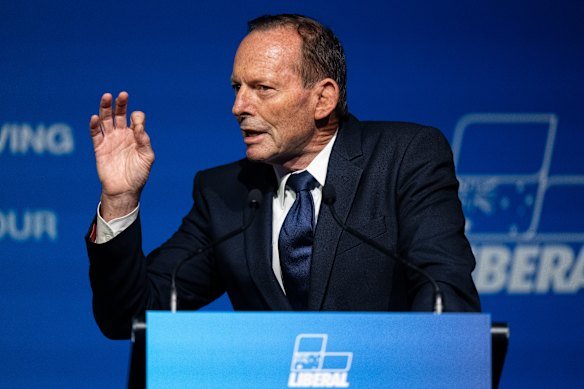
A page of letters reinforced why voters tossed Abbott out. Voters believe scientists that climate change is real and that renewable energy is the best way forward for Australia. The best option for Tony is to leave us in peace, without his anger and negativity. He might find more peace and relevance by joining a community garden. He could plant the seeds of positivity that grow into something worth sharing with others. Gardening is good for everyone, including bullies. Bea Hodgson, Gerringong
Tony Abbott says “We’re under new management”. Sadly, Tony, you have the cook who didn’t win Masterchef, the same staff who don’t understand customer service, tired decor and last year’s menu. I’m not sure why you’d get any of the old customers back, let alone appeal to new ones. Kevin Hunt, Kenthurst
Thank you, dear readers, for a wonderful morning’s entertainment. While reading the letters about Tony Abbott, my husband was snorting and weeping with uncontrollable laughter, while saying “can I just read you this one?” Eventually I was able to read them for myself and had the same reaction. Liz Stephenson, Elderslie
Not one, not two, but 17 letters put the verbal boot into Tony Abbott on these pages on Monday. The spleen, the anger and sheer hatred expressed by many of the contributors had me choking on my cereal. Who’d be a politician and have to put up with all this? Not me. Ross MacPherson, Seaforth
My wife notes that only one of the 17 letters about Tony Abbott yesterday was from a woman. I’d be interested to read what other women thought about the former prime minister who had such a tough time attracting female voters. Rob Mills, Riverview
In an interview, Tony Abbott expressed his wish for Angus Taylor to become the thirty-second prime minister. I’d have thought he’d have wanted him to last longer than that. Graham Meale, Boambee East
- To submit a letter to the Sydney Morning Herald, email letters@smh.com.au. Click here for tips on how to submit letters.
- The Opinion newsletter is a weekly wrap of views that will challenge, champion and inform. Sign up here.
Read the full article here