



The death of a 12-year-old in rural New Brunswick remains unresolved five years later.
A coroner’s inquest held this week has ruled Aaliyah Burrell’s manner of death to be undetermined, while making details public and recommending preventative measures for the future.
Aaliyah was found unconscious in her Florenceville, N.B., home on March 12, 2021, medically said due to sharp force injury to the neck, though legally concluded as undetermined.
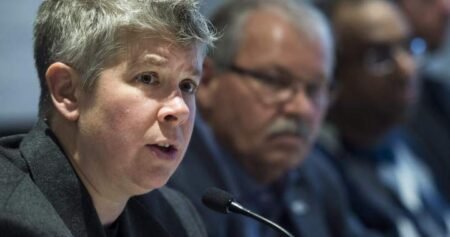
Regional Coroner Jérome Ouellette says a lot of information remains incomplete.
“I’m very saddened by the death of this young girl,” says Ouellette. “During the testimony, it was mentioned that she was undressed and another testimony that said it was cold in the house.”
In the early hours on the day of the incident, 911 dispatchers receive a frantic phone call from Aaliyah’s mother, Isabella Burrell, saying, “I think my daughter’s dead,” adding, “Looks like she stabbed herself…I don’t know what happened exactly.”
Paramedics say they arrived on scene around 5 a.m.
Inside, they say, were “doorways covered in blankets,” and the mother performing CPR on the 12-year-old at the top of about a 20-step stairway, with a lantern the only identified light source.
“It was dark and cold,” said primary care paramedic Sharon McIntosh, noting there were no signs of a power outage in the area.
Aaliyah was reportedly wearing only her bottom underwear.
McIntosh said they turned on their cellphones’ flashlights for some visibility and immediately started CPR and using a defibrillator, with little success. Aaliyah was taken to the Upper Valley hospital by roughly 6 a.m., and with no signs of life, was declared dead by 6:55 a.m.
A total of 12 witnesses testified, including officers and paramedics who responded to the scene, the doctor who worked on Aaliyah, the coroner who investigated, Aaliyah’s middle school principal, and law enforcement and medical officials for technical clarity.
While a trauma patient is now immediately rushed to the ER, McIntosh says protocol instructed CPR for the first 20 minutes at the time. Today, an acute care paramedic team can also be called on scenes, though crew numbers are said to remain limited.
“I expected it to be a big open gash but it was just right here on her collar bone,” said McIntosh.
Dr. Ather Naseemuddin, who worked on Aaliyah’s body at the hospital, described the wound as at least six cm deep, two cm long, and 0.7 cm wide, puncturing the left lung and causing substantial internal bleeding.
Naseemuddin says a pair of “scissors was presented to me sent in a plastic bag.” However, he says in this case it was not possible to determine if the wound was self-inflicted or from an attack by someone else.
The inquest heard two slightly varied versions of how the events unfolded on the morning of the incident.
Coroner Doug Arch who investigated the scene says, based on his conversation with Aaliyah’s father, Ramone Anthony Burrell, he understands that the incident took place on the main floor. Aaliyah stabbed herself on the left side of the neck by the collarbone, made her way upstairs, removed the scissors and tossed it in the sink, before making her way to her parents’ bedroom, which is when they called 911.


Get breaking National news
Get breaking Canada news delivered to your inbox as it happens so you won’t miss a trending story.
A second version shared by the RCMP officers on scene, as relayed to them by Isabella, states that the parents noticed Aaliyah standing in the doorframe of their room, when she suddenly stabbed herself in front of them.
In both versions, the scissors are found in the sink, with no signs of blood stains. Arch says that when inquired about the lack of blood stains, Aaliyah’s father told him that the tap was dripping which cleaned the blood off.
Both RCMP officers who first responded to the scene also confirmed no presence of blood on the scissors, with the bathroom light turned on.
Something was wrong at that point,” Arch said. “There was nothing to say that a 12-year-old girl would do that to herself…that the parents were not telling the truth.”
“If there was some DNA or blood on scissors, could help,” said Naseemuddin, in trying to determine whether the stab was from that pair of scissors, adding that it isn’t something they typically check. A police officer is also almost always known to accompany a body for autopsy, but in this instance, it was not the case.
Examining a pool of blood at the top of the staircase on the second floor, located in front of the parents’ room, Arch says, “It looked like to me as if the body was laid in between the blood stains.” He said there were no signs of blood elsewhere on site.
Earlier that day, at the break of dawn, when paramedics arrived on scene, McIntosh says she didn’t see any blood, “maybe like a smidge underneath her (Aaliyah).” She believed there was substantial internal bleeding, she added.
Slight abrasions were reportedly seen on several parts of Aaliyah’s body, including under her breasts and lower belly, though they were not considered suspicious due to their faint nature.
Arch says he was introduced to the scene at around 6:30 a.m., being treated as a suicide by law enforcement and medical officials questioning the basis of this determination. Arch says he also called Child Protective Services to the scene.
“State of the house looked as if it was being torn all apart for remodelling,” Arch said. “There was not much food in that house.”
Const. Alexandre Bordeleau, one of two officers who first responded to the scene, says at that point, it appeared to be a suicide, and their focus was on supporting the family. He says they reached out to Victim Services for help, but no assistance was provided.
Seeing the lack of food supplies, one of the officers headed out to make sure the kids had something to eat.
The parents said in their statement that Aaliyah previously expressed suicidal thoughts, and attended counselling sessions in Ontario. However, this information cannot be confirmed as the coroner’s office does not have jurisdiction over other provinces.
Aaliyah’s middle school principal Deidra Rioux says they track each student’s academic and social behaviour, and no mental health concerns came up for Aaliyah. She said Aaliyah was “an all-round great kid,” describing her as cooperative, sweet and shy, who enjoyed playing badminton and volunteered in a female empowerment group.
Rioux says schools pivoted to online learning in March 2020 due to the COVID-19 pandemic, reopening in-person with restrictions by August. However, she says Aaliyah’s family was one of few who chose to continue virtual learning from home.
Several witnesses flagged the behaviour of Aaliyah’s stepfather, Ramone Anthony Burrell, with Arch describing it as being strange. “He was making sounds I’ve never heard before and he was pounding on his leg.”
Bordeleau said Ramone’s reactions were extreme, “very theatrical, very over the top…he probably suffered from mental health issues.”
After the incident, RCMP tried several times to interview Ramone, but got no response.
A online review of police information indicates that Ramone was identified by the New Brunswick Woodstock Police Force as a person of interest in a threats investigation in May 2022. Police confirm a Canada-wide warrant was issued and he was later arrested in Hamilton, Ont.
According to police reports, Ramone faced charges including criminal harassment and intimidation in connection with the investigation.
During a conversation with Isabella at the hospital, Arch said he noticed blood in her left ear. Upon denying any injury or cut, Arch says she quickly made her way to wash it off.
Arch said a request for more case information from the RCMP got him about a two-sentence response, while the norm is one to two pages of detail.
Aaliyah was said to be living with her younger siblings, mother and stepfather. The kids were reportedly sleeping in tents on the main floor, with the parents’ bedroom on the second floor.
The operator who called the RCMP relaying information from the initial 911 call, based on the mother’s description, called it a “possible suicide,” a notion Arch says was held onto, with investigations held on that premise.
“We didn’t believe it was a suicide,” he said, adding he felt a lack of assistance from the RCMP.
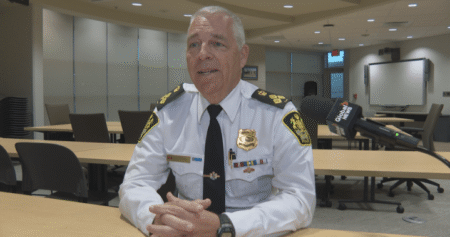
Saint John Police Sgt. Matthew Weir, who was not involved in this case, says investigators must ideally treat every death as a possible homicide. If that doesn’t hold up, they move to suicide, then accident, and if nothing fits, it’s labeled undetermined.
Arch says suicides have one of the highest burdens of proof.
A sharp, pointed knife will go in much more easily than something blunt, said Naseemuddin, adding the stab was positioned virtually vertically downwards into Aaliyah’s chest cavity.
“Sometime with self-inflicted injuries, especially sharp force injuries, you see hesitation marks of very similar injuries that may not be as long or as deep,” said Naseemuddin. “I just see a single injury.”
No noticeable signs of struggle were identified.
The Chief Medical Examiner of Nova Scotia, Dr. Matt Bowes, says suicide in pre-teens is rare, but possible. Over the last 15 years in Nova Scotia, he says, 14 individual under age 15 committed suicide.
The coroner’s office can review the deceased’s digital search history. But because the parents weren’t considered suspects, their records weren’t examined. The coroner’s office says that decision — and any warrant — would have to come from police.
Ouellette says what stands out to him is the deceased’s age and an inquest five years after the incident as witnesses navigated some fading details, with a few individuals now retired.
Ouellette says a sequence of reports are needed before starting an inquest, which could take a while. RCMP created a second review report, Ouellette added, which was revisited by the Coroner’s Office, before handing it over for review by the Child Death Review Committee who recommended an inquest.
Ouellette, a former chair of the Child Death Review Committee, says, “It’s one of the only times that they’ve requested this.”
A coroner’s inquest is to make key facts public, determine the cause of death, and make recommendations to prevent similar fatalities in the future. Evidence given during a coroner’s inquest cannot be used against the witness in another trial or proceeding.
A five-member jury made six recommendations — including a standard police protocol for the death of a minor, mandatory autopsy attendance by both law enforcement and the coroner in suspicious child deaths, as well as improved coroner training.
They also called for more extended care paramedics in rural areas, regular wellness checks for homeschooled students, and better documentation when deciding on additional support services.
Read the full article here