






NEWYou can now listen to Fox News articles!
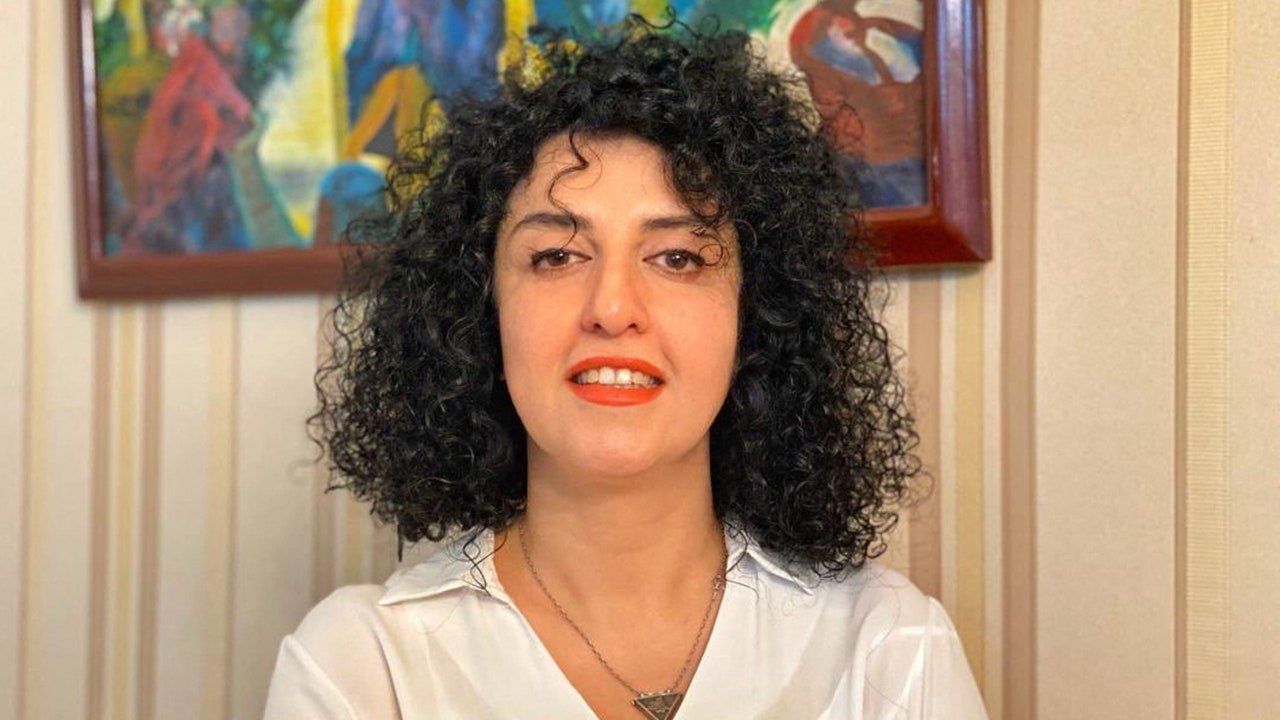
EXCLUSIVE: As Iran’s opposition struggles to find a unifying figure amid war, repression and near-total internet blackouts, the husband of jailed Nobel Peace Prize laureate and Iranian human rights activist Narges Mohammadi says his wife remains physically battered but politically unbroken, even as she sits in prison after what he describes as a brutal arrest and beating.
“Narges is a human rights activist and an advocate for civil society,” her husband, Taghi Rahmani, told Fox News Digital in an exclusive interview from Europe in exile. “In mobilizing society, and in organizing and shaping civil institutions, she is an active and courageous woman.”
At a moment when Iran’s ruling establishment is reeling from the aftermath of U.S. and Israeli strikes, a fragile ceasefire, economic collapse and intensified crackdowns, Mohammadi’s name is emerging in a new light: Not only as a global symbol of resistance, but potentially as one of the few opposition figures whose legitimacy comes from suffering inside the system rather than exile, dynasty or factional politics.
INSIDE TEHRAN AFTER STRIKES: IRANIAN WOMAN DESCRIBES FEAR, CHECKPOINTS AND PEOPLE USED AS ‘HUMAN SHIELDS’
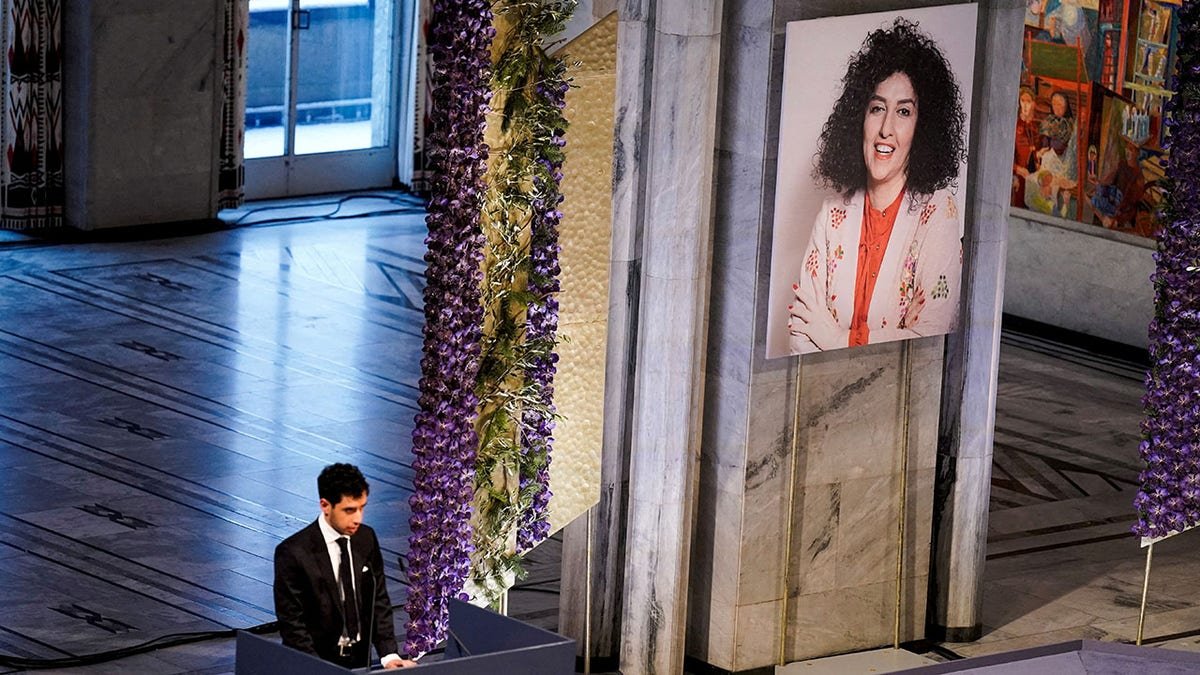
Mohammadi, awarded the 2023 Nobel Peace Prize while imprisoned, has spent decades as one of Iran’s most prominent women’s rights and human rights activists.
Trained as an engineer and later a journalist, she served as vice president of the Defenders of Human Rights Center, founded by fellow Nobel laureate Shirin Ebadi and became internationally known for campaigning against compulsory hijab laws, solitary confinement, prisoner abuse and the death penalty.
Now, according to her husband, her condition has worsened dramatically.
“Narges is currently detained in Zanjan prison,” he said. “She was arrested in Mashhad during the month of Dey (around January) and was severely beaten. During her arrest, she received numerous blows, resulting in severe injuries to her chest, head, body and lungs.”
Rahmani said prison medical authorities determined she should be transferred for treatment under her own physician’s supervision in Iran, but that Iran’s Ministry of Intelligence is refusing the transfer and insisting she remain in Zanjan.
“Spiritually and mentally, Narges remains steadfast,” he said. “She believes the Islamic Republic is not desirable for the Iranian people, and advocates for a system based on freedom, human rights and open relations with the world. Physically, however, she has sustained severe trauma and urgently requires medical attention.”
Rahmani said the last time he spoke with his wife was the night before she left for Mashhad, Iran, where she was later arrested.

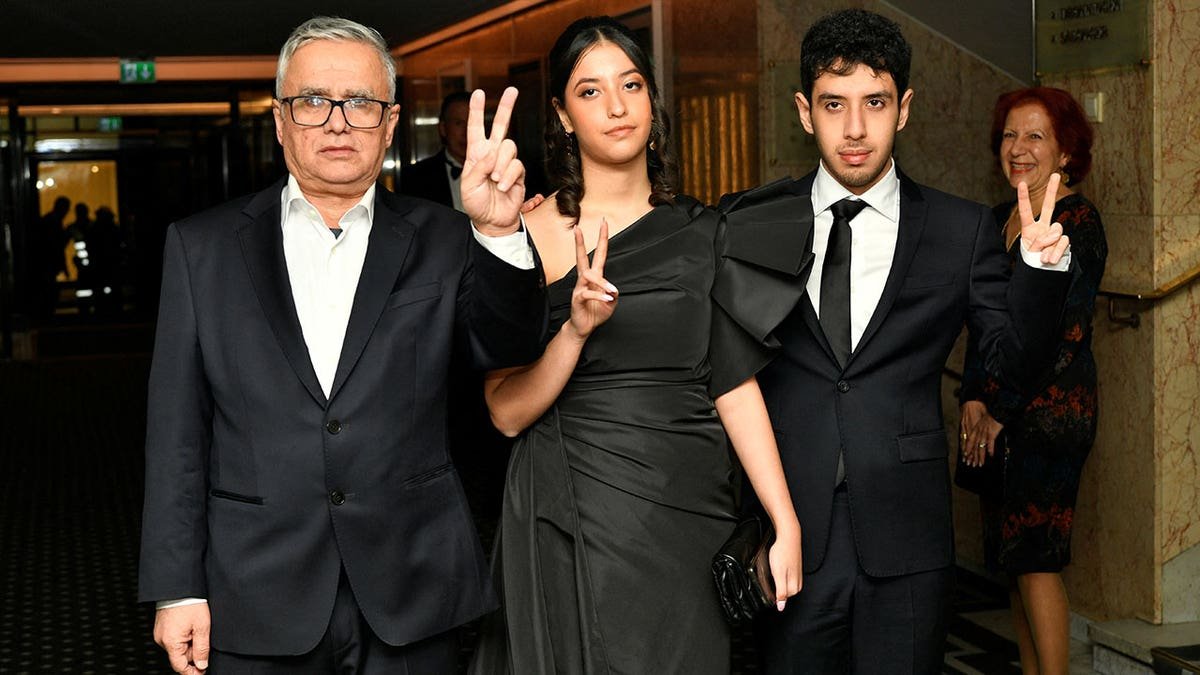
His account offers a rare inside look into the life of one of Iran’s most internationally recognized dissidents at a moment when questions over who could realistically lead opposition to the regime are intensifying.
“We hear a great deal about the Iranian opposition, yet media in the free world often lack a precise definition and a full understanding of what the Iranian opposition actually is,” Iranian anti-regime activist Maryam Shariatmadari told Fox News Digital.
Shariatmadari, one of the most recognizable faces of Iran’s “Girls of Revolution Street” movement, a wave of anti-regime protests that began in 2017 when Iranian women publicly removed their hijabs and stood in defiance of the country’s mandatory veiling laws, was sentenced to prison in 2018 after publicly removing her hijab in protest.
WHAT’S NEXT FOR IRAN’S TERROR ARMY, THE IRGC, AFTER DEVASTATING MILITARY SETBACKS?
According to Shariatmadari, one camp consists of Iranians who view the 1979 Islamic Revolution itself as the foundational national disaster, believing Iran’s trajectory was derailed when the Shah fell. The second includes former revolutionaries, reformists, communist factions and groups such as the Mujahedin-e Khalq (MEK), many of whom emerged from or once supported the revolutionary system before later opposing it.
“The first group considers the 1979 revolution a disaster and seeks a return to Iran’s previous path,” she said, while the second includes “those who participated in the revolution but later became opposition figures after being excluded from power.”
That distinction, she argues, helps explain why Reza Pahlavi, the exiled son of Iran’s last shah, remains uniquely recognizable among many anti-regime Iranians despite spending decades outside the country.
Lisa Daftari, foreign policy analyst and editor-in-chief of The Foreign Desk news platform, told Fox News Digital, “Inside Iran, Pahlavi remains one of the only opposition figures with broad name recognition, and his message clearly resonated during the January protests, which is why his name still carries weight for many Iranians both inside the country and in the diaspora.”
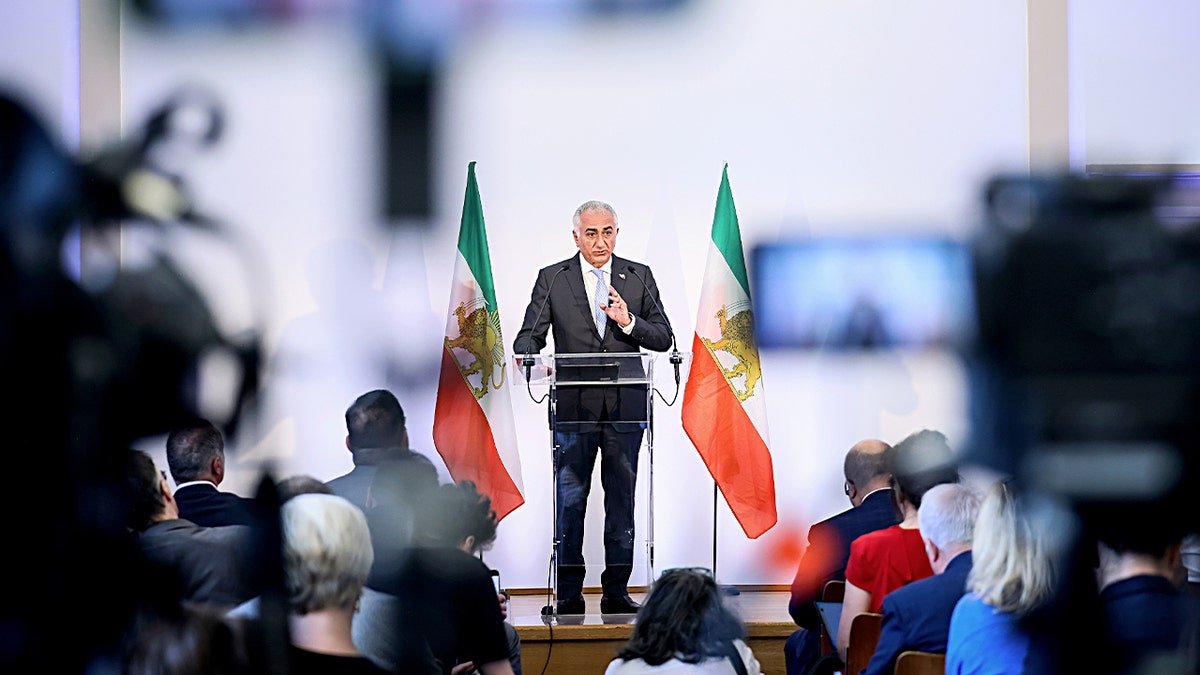
Pahlavi himself sharpened that message Friday after a series of European appearances, accusing both European politicians and journalists of ignoring the scale of Iranian suffering.
“I spent the past several weeks traveling across Europe, speaking to members of parliaments, governments, and the press,” Pahlavi said in a video statement on his official X account. “My visit had one objective: to give a voice to the millions of Iranians held hostage by the Islamic Republic … But I can now say with confidence that silencing, that censorship is not just happening at the hands of the regime in Iran, but by the international and particularly the European media.”
EXILED IRANIAN CROWN PRINCE REVEALS 6-STEP PLAN TO EXERT PRESSURE ON TEHRAN’S REGIME
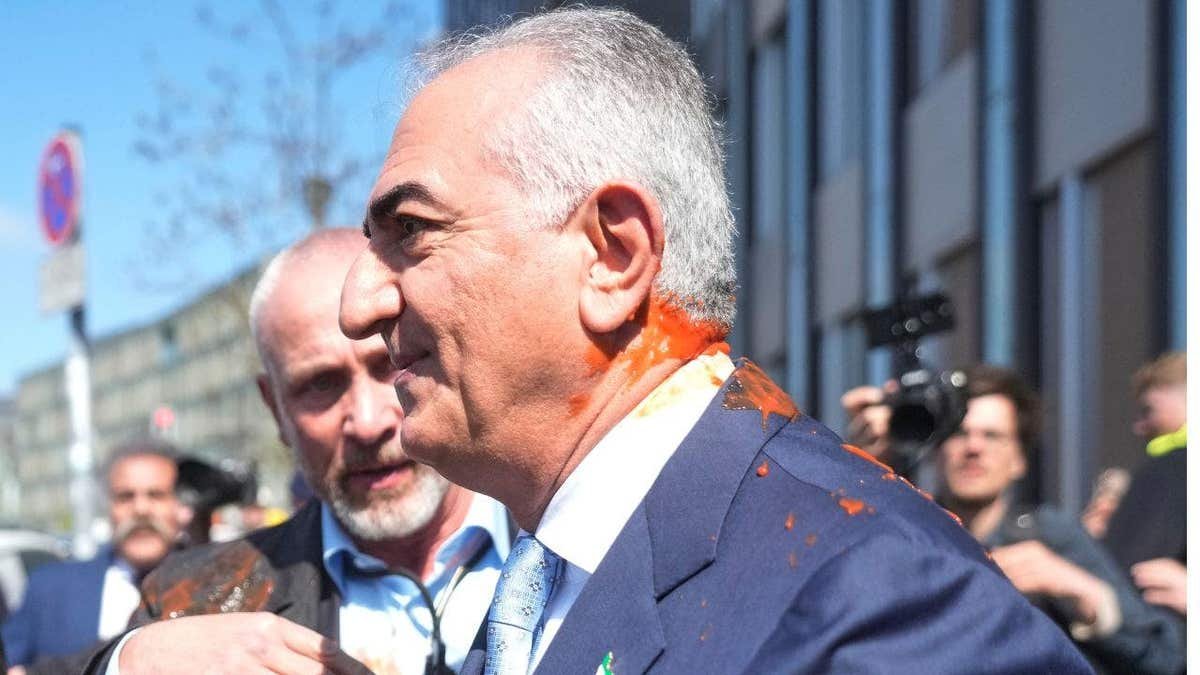
He went on to condemn what he described as European indifference to the mass killing of protesters and political executions, saying that across two press conferences in Stockholm and Berlin attended by more than 150 journalists, “not a single one” asked about the tens of thousands he says were killed during January’s crackdown or the political prisoners facing execution.
“Whether or not Europe stands with us … I will fight for my people and my country,” Pahlavi said. “We will fight until Iran is free.”
Still, even some supporters acknowledge why the administration has hesitated to openly embrace him as a transitional figure.
Daftari warned that overt Western backing could backfire by making him appear externally imposed rather than domestically legitimized.
“The Trump administration’s decision not to more openly embrace him as a transitional figure likely reflects several factors: a deep wariness of making regime change the explicit end goal or appearing to engineer it after Iraq and Afghanistan, concern that overt U.S. backing could put an even bigger target on his back and a strategy that is currently focused less on anointing a successor and more on degrading the regime’s capacity to threaten its own people, the region and the United States,” she said.
If Pahlavi represents dynastic memory and explicit regime-change politics, Mohammadi represents something profoundly different.
AS AIRSTRIKES RAIN DOWN ON THE IRANIAN REGIME, CAN A FRACTURED OPPOSITION UNITE TO LEAD IF IT FALLS?
Mohammadi’s place within that landscape is distinct due to her unique kind of legitimacy at a time when many Iranians are searching not only for opposition to the regime, but for a figure who embodies endurance under it.
For now, however, Rahmani warns that Iran’s domestic conditions may make any mass uprising extraordinarily difficult.
“As you know, war serves as an excuse to suppress domestic forces within a country,” he said. “This war has now increased the intensity of the regime’s actions against the opposition.”
He argued that despite internal divisions, the Islamic Revolutionary Guard Corps has effectively consolidated power, militarized the streets and severely weakened civil society.
“The Islamic Republic has practically taken control of the streets during wartime and has severely weakened Iran’s civil society, which is the guarantor of democracy. In our opinion, this war, under these conditions, is not to the benefit of Iran, nor to the benefit of the Iranian people.”
CLICK HERE TO DOWNLOAD THE FOX NEWS APP

That may be the defining challenge for Iran’s opposition today: not simply finding a leader, but surviving long enough under extraordinary repression for one to emerge.
Whether Mohammadi can become that figure remains uncertain. But from prison, her husband says, she has not stopped believing Iran’s future can be different.
The Iranian mission to the United Nations did not respond to a request for comment in time for publication.
Read the full article here