





Artificial intelligence has been playing an increasing role in our lives at the micro level for years, from our televisions and smartphones to our playlists and emails. But Prime Minister Anthony Albanese’s speech entitled AI in Australia’s interests at the University of Sydney this week marked a turning point in acknowledging that the technology is reshaping our nation at the macro level.
The speech focused on data centres, which are now being built all over the country as states and territories feverishly compete to attract the billions of dollars in investment involved. In Victoria, Premier Jacinta Allan has vowed to be “ruthless” about bringing data centre construction to the state, with a series approved in just weeks under a fast-tracked ministerial system that bypasses local zoning regimes.
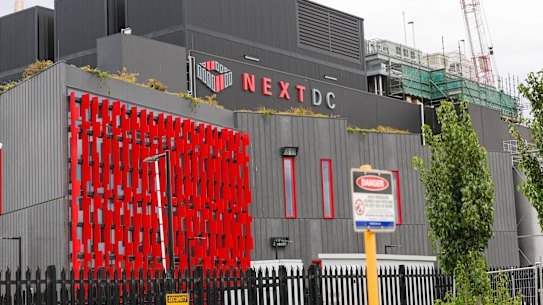
Among the approvals is one for tech giant NextDC in Geelong, on 169 hectares of land long earmarked for sorely needed housing. A $911 million centre proposed for a Port Melbourne site by the same company in October was approved in January by Planning Minister Sonya Kilkenny without a meeting with NextDC.
Danny Pearson, Victorian Minister for Economic Growth and Jobs, told The Australian Financial Review at the time that “you put AI on a leash and you let it run. If it starts to get away from you … then you look at trying to say, ‘We need to intervene.’”
Albanese seems to have grasped growing public unease over that position and whether the “leash” requires tightening. “We cannot revisit this issue after companies have built whatever they want, wherever they want, and try and then reopen negotiations,” as he put it.
That unease has crystallised around three concerns that the prime minister identified: “where they are built – and the power and water they use”. A proposal by developer Syncline for Australia’s largest-ever data centre, over 350 hectares in Plumpton, in Melbourne’s outer north-west, would require more electricity than the total output of Victoria’s remaining coal-fired power stations.
Just as the siting of wind turbine arrays in rural areas has fed a community backlash, our state political reporter Daniella White heard from Labor sources that voters in Melbourne’s west, which already feels its interests are neglected by the government, fear that they will become a dumping ground for facilities that benefit people living elsewhere. It will not be lost on the prime minister that this is the kind of sentiment One Nation might expect to exploit.
In his speech, Albanese committed to ensuring that “the next generation of large-scale data centres” would be net generators of energy rather than net users, in theory preventing them from pushing up power prices for other consumers, a hot-button electoral issue. He also said they would be legally obliged to “build new renewable generation – and firming – to strengthen our national energy resilience” and rules would oversee their use of water.
While much will depend on the detail of the legislation the federal government puts in place, The Age welcomes a national focus and national regulation of these pressing questions. On Friday, Allan welcomed it too, though whether what the prime minister proposed is actually “entirely consistent with the work we are already doing here in Victoria”, as she put it, remains to be seen.
Where the centres are built near residential areas, such as in West Footscray, reaction to them from locals is often negative. In the United States, this has already become a major political issue. The prime minister talked about determining AI’s “social licence”, a term borrowed from debates over natural resources extraction.
The tech sector itself has been working to address alarm over its water consumption by using dedicated recycled water and in this weekend’s Good Weekend, Victoria Laurie interviews DUG Technology’s Australian chief executive, Matt Lamont, who believes he has found an innovative and cost-effective solution to reducing the power demands of data centres.
Lamont would doubtless have listened with interest to Albanese’s promise to encourage domestic innovation, since he tells Laurie he found it easier to sell his ideas in the US than here. But as our foreign affairs correspondent Matthew Knott writes, the prime minister’s speech “offered a bit of something for everyone … reflected in the fact both unions (who want tough AI regulation) and big business (who want a more hands-off approach) praised [it].”
The question now is whether Albanese and other party leaders grasp that questions around data centre construction and AI development more generally are not simply about economics but have, at their heart, a political licence.
The major missing piece in the approvals landscape at present is transparency around what we are signing up for, its effect on our transition to renewable energy (“how clean is your cloud”, as protesters have put it) and an effective voice in the process for the public.
Whether a centralised Office of AI in the Department of Prime Minister and Cabinet can bring us closer to that goal is questionable. If, as one writer put it recently, this country’s political class decide “transparency is for the little people” when it comes to these mega-projects, then trust in our current political model is likely to erode further. The prime minister, and the premiers, have their work cut out.
Get a weekly wrap of views that will challenge, champion and inform your own. Sign up for our Opinion newsletter.


From our partners
Read the full article here