





European Union energy ministers have secured a greater role in planning Europe’s future electricity system after launching an intense political campaign against the European Commission’s proposal seeking more control over the bloc’s power grid.
Two politically sensitive issues in the bloc’s plan to revamp the electric grid were discussed by energy ministers in Luxembourg on 26 June: a new centralised planning scenario for future grid investments and a sweeping effort to accelerate permitting procedures for clean power projects, which typically take 5 to 10 years to be approved.
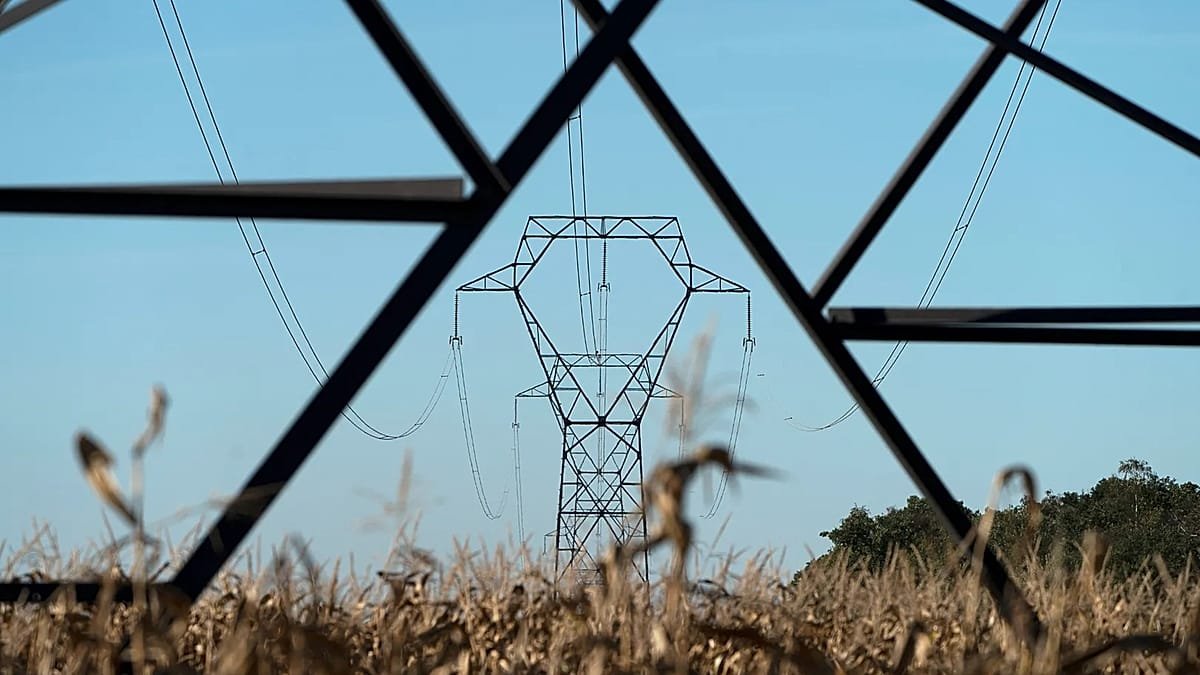
While Europe excels at producing clean power, it struggles to transport it due to ageing infrastructure. Wind farms in the North Sea, solar parks in southern Europe, hydrogen production and electrified industries all require transmission networks that are larger, smarter and much more interconnected than today’s fragmented system.
For years, European energy policy concentrated on expanding renewable generation. The bottleneck has now shifted to the network infrastructure itself. Many analysts argue Europe already has enough renewable investment planned to meet much of its future demand, but lacks sufficient transmission capacity to move electricity to where it is needed.
After pressure from several EU countries, namely Sweden and France, the EU Cypriot Presidency – whose term ends on 1 July – has softened the original Commission proposal tabled in December, paving the way for today’s backing from EU capitals.
The agreement redirects part of unused “congestion income” – revenues generated when electricity transmission lines become bottlenecks – towards financing new interconnectors between EU countries.
“I’m happy to say that today the Grids Package seems to be possibly landing in a completely different area,” Swedish energy minister Ebba Busch told reporters. “This also includes a big win for Europe, since member states still have more power over where their congestion revenues land, but also power over what type of heavy investments are made in the grid system that will affect EU countries.”
From January 2028, energy transport system operators, such as the French RTE or the Portuguese REN, will have to allocate 10 percent of the annual congestion income that has not been spent on network investments to EU projects toward reducing congestion on interconnections. The share of these funds will rise gradually to 25 percent by 2031.
Crucial for the green transition
European Commissioner Dan Jørgensen told ministers that the Grids Package is “one of the most important files in this mandate”.
“If we do not manage to significantly expand our grids faster than we are doing today and if we don’t manage to use them in a more rational and efficient way, that will be the biggest bottleneck for the transition that we need,” he said.
In the end, governments secured a greater role in the process, ensuring that national authorities verify the data and assumptions used in the central scenario. The compromise text also explicitly requires planners to take account of national and regional circumstances and to incorporate the latest national climate plans.
“Today’s agreement paves the way for Europe’s electrification towards achieving climate neutrality. By fast-tracking permitting and enhancing interconnections – including ending energy isolation for member states – we are securing affordable, clean energy and bolstering energy security for all European citizens,” said Michael Damianos, Cypriot Minister for Energy, on behalf of the Council.
To avoid a rigid one-size-fits-all approach, the procedure will be supplemented by sensitivity analyses examining alternative energy supply mixes, demand patterns and future trends.
These analyses are intended to test the resilience of planning assumptions and account for differing pathways to reach the bloc’s climate goals.
The compromise also introduces regular revisions to the central scenario, which must be developed at least every two years. Data collection will be coordinated with other reporting exercises to reduce bureaucracy.
Rheanna Johnston, senior policy advisor on energy transition at the independent climate change think tank E3G, said the deal reached on Friday signals that interconnected electricity networks are a strategic priority for EU countries to deliver real benefits to Europeans.
“Europe can’t electrify without prioritising its grids,” she said. “However, the more important test will be whether the final agreement on the Grids Package provides the long-term planning, coordination and investment signals needed to accelerate grid deployment across Europe.”
Voluntary tacit approval for permits
Perhaps the most immediately consequential reform under the Grids Package is the attempt to shorten approval times.
Measures include digital one-stop permitting portals, electricity and renewable projects presumed to be in the overriding public interest, the possibility of tacit approval and simplified procedures for renewable infrastructure.
“I’m very well aware that most of what we decide today (26 June) is not going to be visible in reality tomorrow,” Jørgensen said, noting that speeding up permits will help lower electricity bills. “This is about long-term planning, but in the medium-term it will make a very real difference.”
The European Parliament’s industry committee will vote on the Grids Package on 1 July before the full house votes on it. Once adopted, political talks between the EU co-legislators kick off under the incoming Irish EU Presidency.
Elisabeth Cremona, energy infrastructures lead at the energy think tank Ember, told Euronews that legislation from Brussels ultimately won’t solve grid problems on its own.
“Member states can already and should urgently start implementing solutions that address the tangible consequences of underprepared grids,” she said.
Read the full article here