




As the European Union extends its carbon market to buildings and road transport, the European Council and European Parliament have agreed to strengthen a financial tool designed to stabilise new carbon costs for heating and fuel due to kick in in 2028.
The deal reached by the EU co-legislators on Wednesday evening serves as an economic safety net by issuing emergency permits if carbon prices exceed a certain threshold.
This so-called “market stability reserve” aims to protect households from energy price spikes while funding green infrastructure improvements.
Under the EU’s expanded carbon market, the Emissions Trading System 2 (ETS2), fuel suppliers will need to buy “polluting permits” for the carbon dioxide their products emit.
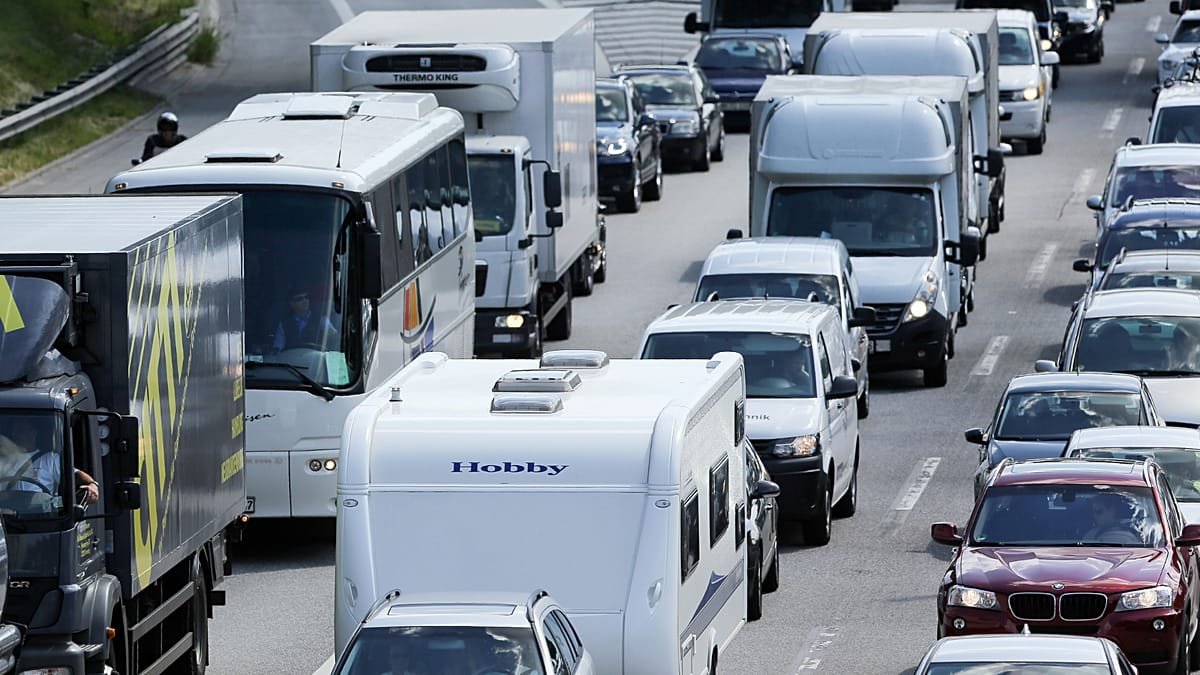
If demand for fuel is high, the price of these permits shoots up – and that could make gas, heating oil and petrol much more expensive for everyday citizens already dealing with high costs due to the US-led war against Iran and the bloc’s reliance on imported fossil fuels.
Danuše Nerudová (Czech Republic/EPP), who is leading the legislative file in the Parliament, said the deal reinforces price stability and prioritises support for vulnerable citizens. He also said the EU executive will assess the financial tool before it comes into force in 2028.
“It (the deal) also extends the discussion on price-control measures and commits the Commission to assess by October 2027 the application of the ETS2 to buildings, road transport and the appropriateness of the current measures to protect vulnerable households,” Nerudová said.
Despite the deal, the political talks over EST2’s full implementation have been shot through with controversy.
Earlier this year, Slovakia and the Czech Republic called for the new carbon tax to be delayed until at least 2030, citing the law’s social impact. On the other side of the argument, Sweden, Denmark, Finland, the Netherlands and Luxembourg signed a joint paper expressing opposition to any delays or amendments to the system.
Citing social concerns, 19 EU countries called on the Commission last summer for a smooth ETS2 rollout, prompting the Commission to propose a targeted amendment to the market stability reserve.
To prevent households and businesses from facing higher energy bills, the EU will draw on a reserve of extra permits. If prices spike above €45 per tonne, the EU will inject up to 80 million emergency permits into the market per year, quadrupling the original limit.
Higher consumer prices ‘expected in all EU countries’
The findings of a 2026 ScienceDirect study indicate that the ETS2 will increase consumer prices in all EU countries.
“When carbon is priced at €57.5 per metric tonne of carbon dioxide, the average increase in the cost of living is 1.18 percent without energy efficiency measures and 1.04 percent with substantial improvements in energy efficiency,” the study concluded.
The researchers said the magnitude of the impact can be expected to vary across member states, with central and eastern European countries likely to see larger price increases, while northern and western countries shielded to an extent by better energy efficiency and more widespread electrification of heating and transport.
Currently, 100 million allowances are released in a single step once the number of allowances in circulation falls to 210 million. Under the new agreement, a smaller volume will be released as soon as circulation drops below 260 million while remaining above 210 million, thus avoiding sudden supply shifts and sending a more stable price signal.
Flooding the market with these permits increases supply, which forces carbon prices and energy bills back down.
A massive oversupply of carbon permits was making it too cheap for factories to pollute. To address the problem, the Commission created the market stability reserve in 2015 to serve as a sink for surplus permits when a risk of oversupply arose.
The EU has since decided to replicate this financial instrument to create a separate reserve for the ETS2 to stabilise carbon prices for building insulation and fuel.
Speaking on behalf of the Cyprus EU Council Presidency, Cypriot Minister for agriculture, rural development and environment Maria Panayiotou said the deal will foster confidence and give households, businesses and member states “predictability”.
“The agreed adjustments will improve market liquidity, reduce price volatility and strengthen the system’s ability to respond to unwarranted price increases,” she explained.
The deal now needs to be endorsed by the Council and the Parliament.
Read the full article here