






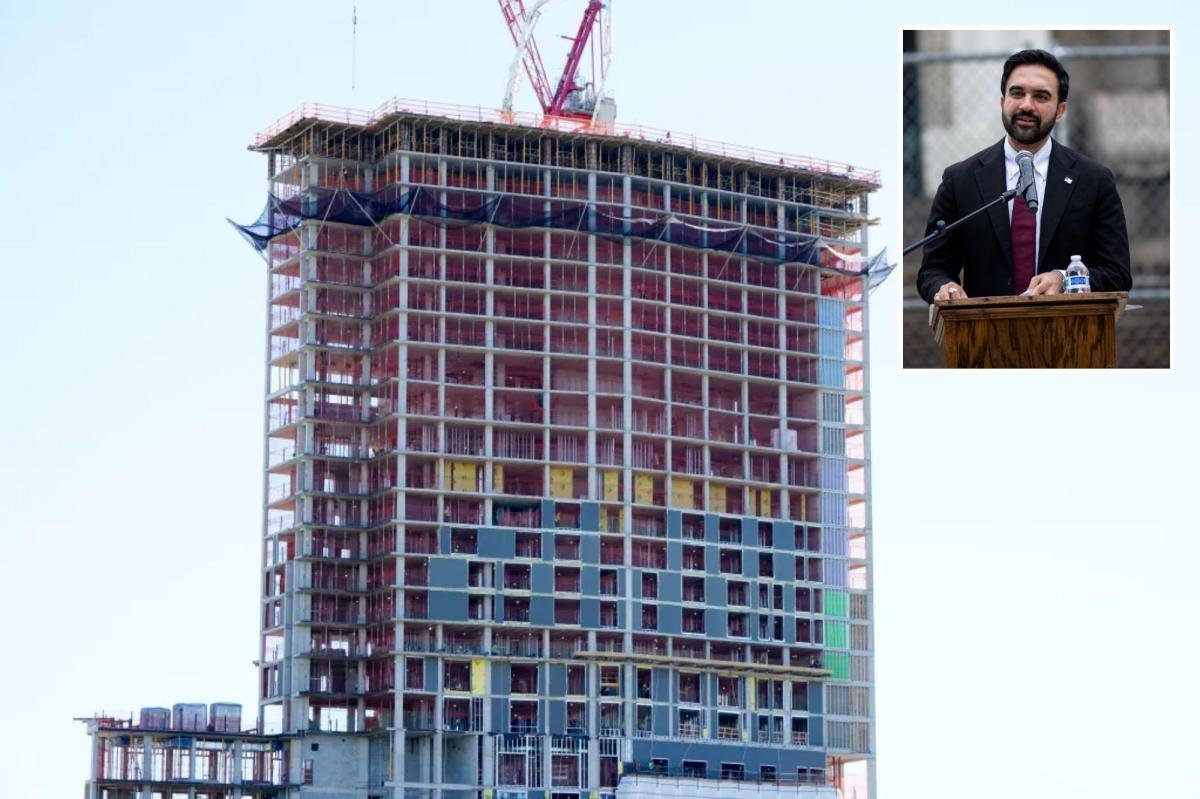
The Big Apple is planning to overhaul its decades-old building codes to spark new construction and accessibility upgrades by finding “cost savings” measures for developers, The Post has learned.
The plan will be rolled out under a Department of Buildings-led “Affordable & Efficient Code Reform” task force starting in late 2026, part of Mayor Zohran Mamdani’s “Block by Block” master housing plan set to be unveiled Tuesday morning.
It could mean new construction with smaller elevators and buildings erected using non-traditional materials that could cut development costs.
“At a moment when working people are being pushed out of the city they built, New York cannot afford half-measures or delays: This plan meets the housing crisis with the urgency it demands,” Mamdani said in a statement.
The task force is expected to probe existing NYC Construction Codes for “cost-saving measures that can be achieved without compromising safety” for new builds ranging from affordable residences to office-to-home conversions to new classrooms, according to the DOB.
The agency expects to review codes alongside engineers, contractors and housing developers, and weigh long-debated proposals such as the permitted use of cheaper, smaller plumbing materials in new construction and the implementation of smaller, European-style elevators in existing buildings.
“Whenever you’re building a construction budget for a project and you’re thinking about the debt that you have to take on, that debt translates into the rent that someone may have to pay or the purchase price of a unit or the commercial rent that has to be charged,” DOB Commissioner Ahmed Tigani told The Post.
“Us thinking about how we can make a reasonable impact in the construction budget is trying to affect downstream what that owner competitively has to charge in order to get their project done,” he added.
The move comes as the city faces a shortage of affordable, available units.
Manhattan’s vacancy rate fell to 1.55% in April, a level last seen before the pandemic reshuffled the city’s housing dynamic. At the same time, new leases signed surged 21% from March and 12% from the prior year, making it the busiest April for Manhattan rentals since 2021.
“We are 100% focused on our commitment to meeting the crisis that’s in front of us, and the crisis looks, in different ways, to different people,” Tigani said, “but supply is certainly part of it.”
The task force comes ahead of a related DOB-led pilot program set to launch in 2026 to allow smaller-than-currently-permissible elevators to be added to existing walk-up buildings.
Only 34% of apartments in New York City — including only 21% of pre-1974 builds — are step-free, city reps said.
While current city code requires elevator sizes to accommodate emergency medical access, including a 7-foot stretcher and wheelchairs, the task force would also explore the use of smaller elevators in existing walk-ups.
“I expect vibrant and spirited discussions: Some of these topics have been contentious,” Tigani added,
“But we think that we can’t waste any more time, given where costs are, where the need continues to be, and the fact that we have had some really good gains and momentum.”
The mayor’s office touted the task force as part of a housing plan that will be “protecting tenants and homeowners, investing in public housing and ensuring the workers building that housing have good-paying, safe jobs.”
Follow live updates on Mayor Zohran Mamdani’s socialist agenda and the latest in NYC politics
The initiative follows several other construction code revamp initiatives, including a December 2025 introduction of the city’s first-ever existing building code, which focuses on renovations to existing buildings.
Last month, the mayor’s office unveiled reforms to speed up the leasing process for roughly 10,000 apartments, slated to cut timelines for affordable housing projects.
Mamdani has previously floated a $100 billion plan — built with the city’s capital funds — to triple the city’s production of affordable, publicly-subsidized and rent-stabilized homes, spurring 200,000 new units over the next decade.
“We must fight for both the tenants of today and the tenants of tomorrow,” Mamdani added.
“‘Block by Block’ shows how New York City can do exactly that.”
Read the full article here