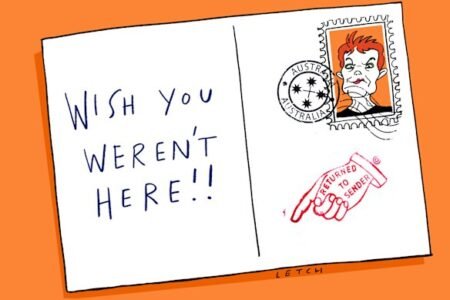






The federal government has announced that 84.1 per cent of visits to general practitioners are now bulk billed, and has called that progress. The figure counts the doctors who’ve stayed in the profession. After 13 years, I am not one of them.
About four years ago, a patient walked into my consulting room struggling – she told me that much. What she could not yet tell me was that she had a specific plan to end her life, and the means to carry it out. She came back recently to tell me that because of the time and kindness of that first appointment, her children have a mother today.
I have thought about that a great deal. Not with pride, but with the weight of it. She was not describing anything exceptional that I did. She was describing what becomes possible when a GP makes enough time to sit with a person. To notice. To make someone feel that they are worth an hour of another human being’s unhurried attention. That is not a luxury. That is general practice.
I am not leaving because I want to. It is the vigilance of never being allowed to miss anything. It is the patient distress carried home. It is the unpaid hours that continue after the last patient has gone. And it is all of that inside a system whose government will not acknowledge, in anything but words, what a good GP is worth. I have been filling the gap between the care I refuse to compromise on and the support I receive to provide it – with my own time, my own earnings, and emotional reserves my children also deserved. I am done.
Female GPs carry a more complex and less remunerated caseload than our male colleagues. In the Royal Australian College of General Practitioners’ 2024 Health of the Nation survey, nearly eight in 10 female GPs named psychological issues among their three most common patient presentations, compared with just over six in 10 male GPs. Women’s health appeared in the top three for 52 per cent of female GPs and 3 per cent of male GPs. Male GPs reported more musculoskeletal, respiratory, circulatory and skin presentations. Complexity takes longer, and it shows: female GPs spend on average three minutes more with every patient. We are also more likely to bulk-bill those who cannot afford to pay, and to run over time because a person needed more than 15 minutes.
Medicare pays per consultation, not per minute. An analysis by Ochre Health of 511 GPs across its practices found the women billed about $24 an hour less than the men – a gap driven almost entirely by the number of appointments fitted into an hour, not by what women charged. We are not paid less for the same work. We are paid less for more complex work that unavoidably requires more time.
The government is telling you that GPs refusing to bulk-bill are the problem. We are not. The problem is an unwillingness to invest meaningfully in general practice, and a determination to disguise that. The “triple bulk-billing incentive” tripled not the bulk-billed rate but a small incentive payment – a pebble thrown into a cavern, with a press release claiming that the cavern was filled and that GPs simply needed to step up.
This is not ignorance. Asked at the National Press Club in April whether longer consultations should attract a higher rebate, the minister accepted that female GPs do longer consultations, more mental health work and more complex multi-condition care – but also said he had reached that view on anecdotal evidence, without necessarily seeing the hard data.
I would rather leave than practise Band-Aid medicine. I would earn considerably more doing exactly that – shorter appointments, higher throughput, less emotional investment. The financial logic is obvious. I have never been able to make myself do it. It takes time to build the trust that lets someone finally tell you the thing they have never told anyone. Patients know when you care. The trust inside that relationship is the thing that heals.
I am not alone. A study published late last year in the Australian Health Review by Professor Louise Stone, Professor Karen Price and colleagues surveyed 770 female GPs who had left or drastically reduced their clinical hours. They described themselves as an underclass, doing the profession’s invisible emotional labour for a fraction of the remuneration, and named government narratives around bulk-billing as a key driver of their exit. The authors called what these women experienced “malignant disregard”. I recognise every word.
Australia faces a projected shortfall of more than 11,000 full-time-equivalent GPs by 2032. Women now make up nearly half the workforce, and we have been given a shorter expiry date. A longitudinal study of more than 4000 Australian GPs found the median age at which women left clinical practice was 47; for men, most exits came after 67. Here is what should trouble you: women were not planning to go. Mothers of young children reported lower intentions to leave than their colleagues – and left at higher rates anyway.
We do not leave because we have stopped caring. We leave because we have been caring, at extraordinary personal cost, in a system that has decided not to look.
My patient’s children have a mother today because of a long appointment with a GP who had time to notice. That is what is being lost. Not a statistic, not a workforce number, but a particular quality of attention that keeps people out of emergency departments and out of crisis.
I leave with profound gratitude for every patient who trusted me with their most difficult moments. They have been the privilege of my professional life. But a system that mistakes the sound of a pebble for the work of repair is not one I can afford to wait for any longer. Across Australia, female GPs are saying this out loud. I am one of them, and I will not be the last.
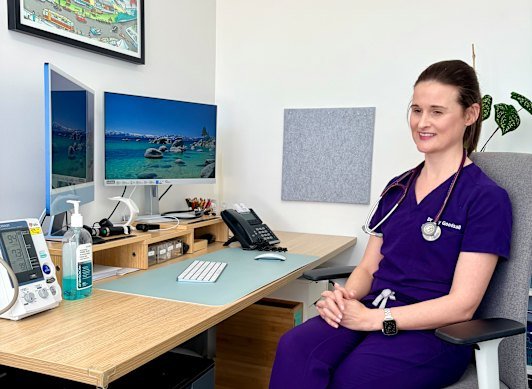
Dr Elly Goodsall is leaving general practice after working as a GP in Newcastle since 2013.
Lifeline: 13 11 14
Get a weekly wrap of views that will challenge, champion and inform your own. Sign up for our Opinion newsletter.


From our partners
Read the full article here