




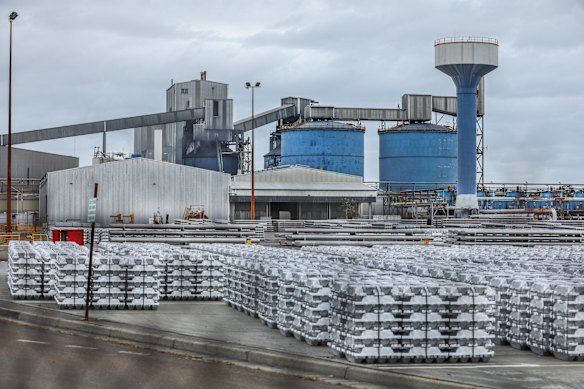
Could someone please explain to me (are you there, Ross Gittins?) why governments just give handouts to businesses in trouble (“Rescue package for smelter”, August 13)? How many times does that just pump up the share price, allowing shareholders to sell out, followed by an inexorable crash into insolvency? Why isn’t it structured as a shareholding so that if the promised revival actually happens, the taxpayer can sell out and get their money back, and if it goes wrong, we get a share of the leftovers, or simply take the business into public ownership if it is of critical importance, like the aluminium smelters? The US government did this in its support for banks during the GFC, later making a handsome profit when the shares were finally sold. In contrast, our government so regularly and unconditionally supported our now-defunct car industries that those international companies came to see it as free money available on saying the magic words “we’re going broke”. When they eventually did, we got nothing. Similarly, it was reported that some local companies just booked the generous COVID subsidies straight onto their annual profit figure. So Ross, why is it so? Stein Boddington, St Clair
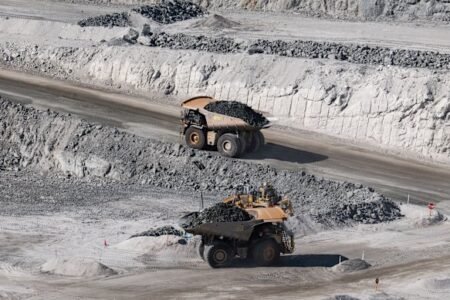
There have been numerous taxpayer bailouts for industry in Australia; $240 million to Nyrstar zinc and lead smelter in SA and Tasmania; $600 million to Mount Isa copper smelter bailout; $2 billion to the aluminium smelter bailout in Gladstone; and now, $2.5 billion for the largest smelter in the country, Rio Tinto’s Tomago facility near Newcastle, or $2.5 million for each of the 1000 jobs saved. Nice economic theory at work; privatise the profits and socialise the losses, to the benefit of those the government looks kindly upon. Joe Weller, Mittagong
It’s time that taxpayers’ money being used to “prop up” billion-dollar industries to “keep them afloat” is seen as a long-term loan, not just a way to top up the coffers. Rio Tinto (Tomago) and Qantas (remember COVID) shareholders know what I’m talking about. Taxpayers should see a dividend for their investment. Barry Ffrench, Cronulla
Castles in the air
Perhaps while David Chandler is solving the housing crisis he could also suggest removing the almost 50 per cent tax and levies on new dwellings (“A simple idea that could deliver housing”, August 13). In his example of selling for less than $1 million, the developer would net less than $870,000 after GST and selling costs. Then there’s the cost of the land and the building, plus interest of about 12 per cent needs to be paid as well as land tax and other holding costs. As he says, a developer needs a profit incentive to build but at that net price, where is it? Peter Icklow, Pymble
Telstra passes the buck
Vicki Brady is the CEO of Telstra and as such makes risk-management decisions (“Telstra boss rakes in $6.8m but Triple Zero outage costs her”, August 13). Do you replace ageing servers, the ones prone to failures that would incur a cost, or accept the occasional shutdown of the Telstra network? The servers were not replaced, a shutdown did occur and people’s lives were affected and, indeed, put in jeopardy. My mum, who is 102, had her emergency wearable phone disconnected. She lives alone and only became aware that she was disconnected this week when testing the system. Luckily, she hasn’t had any falls since the outage in July. Mum keeps up with the news and was no doubt impressed that the day she found out that the risk had been transferred from Telstra to her, Telstra management was able to risk-manage enough extra money so that Brady could accept an 11 per cent pay rise. Bill Austen, Glebe

Money monopoly
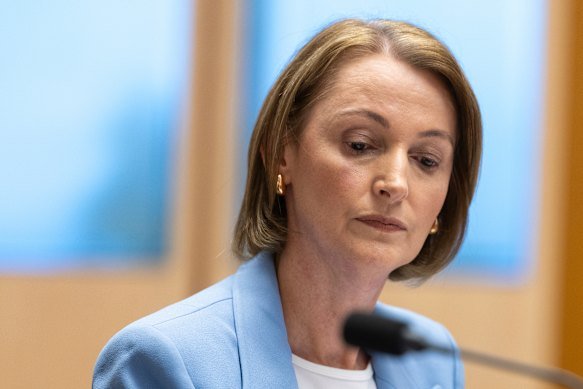
It seems an anomaly that the second-highest capitalised company on the ASX is a non-productive, rent-seeking organisation with the simple task of garnering our savings and lending them on (“Time to buy a house? CBA chief seems keen”, August13). Where is the competition that should have emerged to pare CBA’s ability to make money out of old rope? Does anyone care? Mike Bush, Port Macquarie
Misery loves company
The misery index, created by economist Arthur Okun in the 1960s, combines unemployment and inflation to gauge the level of economic distress experienced by ordinary people (“You’ve got company on the misery index”, August 13). Misery is not simply a function of what we do or do not have; it is also heavily influenced by what others have and by what we are told we should have. In the past, advertising and marketing created a great deal of FOMO by blurring the distinction between our wants and our needs. Social media has taken this many notches further. We all know that “negative equity” can be a furphy, as long-term assets such as housing are not expected to produce gains in the short term. All assets go through market corrections, and becoming anxious after reading newspaper reports about falling house prices is not a sensible thing to do. It seems a contradiction that Australia can rank 11th in the World Happiness Report and yet register an Australian misery index that is 25 per cent higher than the previous year. Perhaps what we need is a “contentment index” – and a greater willingness to celebrate that instead. Manbir Singh Kohli, Pemulwuy
As usual, Shane Wright is on to something. The misery index combination of the unemployment rate, the inflation rate and Wright’s addition, negative equity in the property market, is valid. Perhaps there is another factor – the “misery guts” factor, for want of a better term – people like Tony Abbott and John Howard, who only have miserable things to say, particularly about the government. However, neither of them contribute as much to the misery index as Pauline Hanson. Wright pins some of the blame on the Reserve Bank, but they’re just doing their jobs. The people who should be blamed most, or exposed for their efforts, are those who deliberately add to our misery for their own political gain. Geoff Nilon, Mascot
Migrants not the problem
How many times does it need to be said? We who are critical of the sheer numbers of immigrants over the past decade have not “lost sight” of the contribution they have made to our great country (Letters, August 13). What we object to is pump-priming demand for housing, healthcare, education and numerous other community services while failing to pump up the supply of all those services. Some people seemingly want to divide us into uncaring people and oh-so-caring people who seem to be only ones who recognise that migrants have contributed to Australia’s development. Do such virtue-signallers not understand numbers or nuance? It’s about having enough infrastructure to cope, not whether past immigrants have made a contribution. Chris Mangan, Bracken Ridge (Qld)

Union power
While reactionary politicians rail against immigrants and the media report appalling working conditions in the fruit-picking industry, the Transport Workers Union has reminded us of how important trade unions continue to be in guaranteeing fair treatment and acceptable wages in Australia (“Food delivery drivers seal minimum hourly wage”, August 13). While this is long overdue, it’s to be hoped that the exploitation of delivery riders will cease as a result of the ruling by the Fair Work Commission. Such institutions protect us against the extremes of neoliberalism. They must be supported by all political parties claiming to act in the interest of the least powerful members of society. And that includes One Nation. Philip Bell, Bronte
Bragg’s bravado
I am sick of taxpayers being treated as mugs. Shadow minister for housing and homelessness Andrew Bragg suggests we lower the maximum tax rate from 47c (actually 45¢) to somewhere in 30s (“Coalition frontbencher goes rogue on housing, migration, tax”, August 13). Guess who benefits? The wealthy, including politicians. He then proposes to increase the GST, which hits those who cannot afford to pay more tax. It needs to be said that the progressive tax rate system is the fairest, as those who can afford to pay more tax do so. Further, those who reach the maximum bracket only pay that top rate on income above $190,000. Anything below that incurs a much lower tax rate. John O’Connell, Old Toongabbie
Andrew Bragg made a few valid points about the effects of red tape on housing problems, although his solutions could lead to jerry-built homes. The worst feature of his National Press Club talk, though, was his repeated reference to communism, which seems to have become the major sales point of the Coalition’s criticism of the government. They are beginning to sound like a mix of J. Edgar Hoover and Joe McCarthy with their “reds under the beds” rhetoric. Ray Alexander, Moss Vale
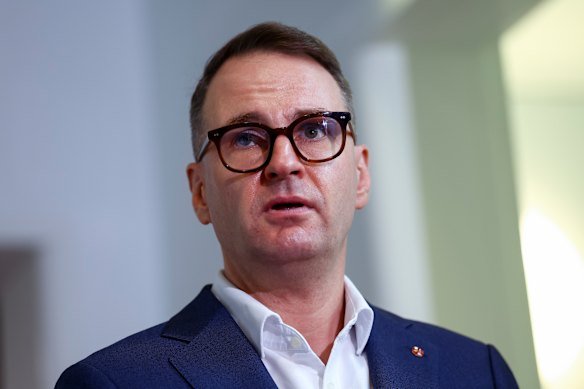
Andrew Bragg has described compulsory superannuation as a “loss of liberty” and “state-sponsored corruption”, however, I expect he will accept his own generous compulsory superannuation package when he leaves parliament. Toni Lorentzen, Fennell Bay
Dollars and sense
If it eventuates, this record-breaking $10 billion deal will at least partially offset the $368 billion or so Australia is spending on AUKUS (“Australia on brink of record $10b defence export deal with UK”, August 13). Pity we’re shovelling money into a black hole of paranoia-induced defence spending when we should be making it through investment in research, invention and development. Frederick Jansohn, Rose Bay
Bad look for Libs
It’s a bad look for Liberal councillors to dump a proposal for an online register to ensure all meetings with lobbyists are disclosed (“Council that triggered corruption probe rejects transparency plan”, August 13). After all, back in 2010 ICAC found “that local councils face a wider range of corruption risks than state agencies, but appear less likely to use the management controls important to sound corporate governance, making them more vulnerable to corruption”. Anne Wagstaff, Oatley
Pity the children
I can relate to Sue Ellyard’s description of Boomers’ multicultural and egalitarian childhoods (Letters, August 13). I was one of that lucky cohort. But her assumption that tutoring, extra homework and relentless study pressures are the reasons for the absence of kids playing in the streets nowadays might be off the mark. In many households, unless sport is also an option, I would venture that the lure of screens for mindless gaming takes precedence, with kids sitting like robots feeding this societal addiction we have enabled. Either way, it’s sad and dispiriting. Judy Finch, Taree
Food for thought
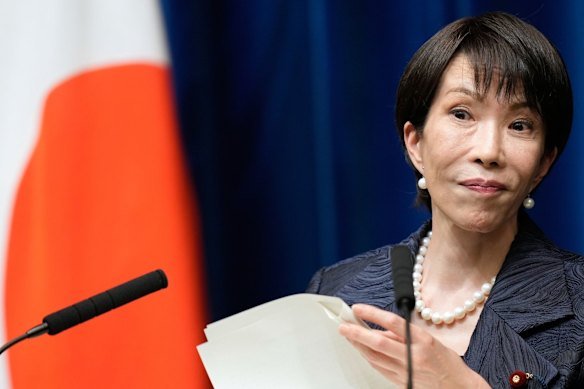
The fruity furore takes an interesting twist with the Japanese ambassador weighing in to shut down the issue once and for all (“Japanese ambassador moves to quash melon drama”, August 13). Will the PM’s morally outraged critics now turn their attack on Japan’s prime minister for not joining them to denounce Albo? And yes, I see what you did with “melon drama” in the headline. Brian Jones, Leura
Intrusive questions
Profound concern should be provoked by the 2026 census. Whoever takes charge of proceedings in each family must raise questions that will be highly sensitive and painful for many young people. First is the question devolving mother to “parent 1” and father to “parent 2″ – raising issues of gender-role fluidity. Second is “sex recorded at birth”, which brooks the concept of gender reassignment. Third is the option of declaring sexual orientation, raised among people as young as 16. “None of the government’s business” unfortunately is not available among response options. We all benefit when census findings identify requirements for police stations, hospitals and post offices – but what possible public interest may be served by woke lines of interrogation? David D’Lima, Sturt (SA)
Some of the questions in the Australian census, especially in regard to people who are visiting from overseas, are simply irrelevant. We had our son, daughter-in-law and three grandchildren staying from the UK, and the questions that we had to answer for them were invasive and intrusive. The Australian government does not need to know where they work or how much they earn or what their sexual orientation is. More work needs to be done by the statisticians on the question. Sandra Hargreaves, Kincumber
John McKay invites a reinterpretation of the word “atheism” for purposes of the census (Letters, August 13). And rightly so. Authentic faith can only exist in the face of uncertainty. Where evidence-based certainty prevails, it would be illogical not to believe. It cannot be proved scientifically that God exists. Neither can it be proved scientifically that God does not exist. So, belief that God does, or does not exist requires trust, a leap in the dark, faith. Hence, an atheist could be described as a person of faith from a different perspective. A.J Kavanagh, Ryde
John MacKay asks if there is an alternative word for atheism to describe believers who don’t identify with establishment churches. My niece and her husband found like-minded people who just held meetings in each other’s houses. “Home church” I believe they called it. I call myself a rationalist because I can’t ignore all these believers. Can I say that God doesn’t exist if so many imagine he does? We can and do imagine things later made manifest. But not God, except for Jesus, whose followers believed him to be God made manifest. Problem is, he never claimed that himself and all we “know” about him is written in the third person and sounds like folklore to me. I tick the “no religion” box in the census. Should there be a box for those who are, like me, unable to believe the unbelievable? How about a box for believers (unaligned), John? Garry Feeney, Ashfield
- To submit a letter to the Sydney Morning Herald, email letters@smh.com.au. Click here for tips on how to submit letters.
- The Opinion newsletter is a weekly wrap of views that will challenge, champion and inform. Sign up here.
Read the full article here