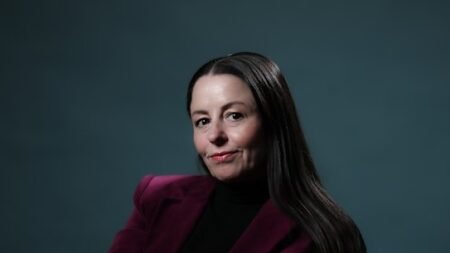





Students in year 7 and 8 at Bellbird Park State Secondary College learn language a bit differently from kids at most other Queensland schools.
But deputy principal Diane Pashen wants other schools to follow her lead.
Pashen’s part in creating the school’s Yagara language program earned her a Schools Plus Teaching Award this week.
That program’s goal was “reviving the sleeping language”, Pashen said, alongside connecting students with both the culture of the country they lived upon and their own.
“We’ve got over 54 different languages at the school,” the deputy principal said.
“When students enrol, we get to know their families as well … that’s how it started, through consultation with community around what they were wanting and that connection then to our elders.”
The language program won the curriculum and innovation award at this year’s Australian Education Awards, and was last year dubbed the best First Nations program.
The newest accolade comes with a $20,000 grant Pashen hopes will help the program grow both up and out.
“The model that we have, I want to extend that to other schools that have already started maybe little aspects of it,” she said.
Pashen said she wanted to expand the program into Bellbird Park Secondary College’s senior curriculum, which would require blending the program’s teaching method with state and national curriculum requirements.
The classes were taught in a co-teacher model in partnership with the Wirrinyah Gurrnung Corporation. A Yagara person delivered new content each week in one lesson, and a supporting classroom teacher would help package and revise the content in a second lesson.
“No one can teach Yagara language, other than Yagara people,” Pashen said.
She pointed out the “sleeping” language risked being confined to a small number of speakers, and said the program also partnered with research projects documenting Indigenous languages.
Bellbird Park student Allorah Wittmann said the class was the first time she had heard Yagara spoken.
“The Yagara alphabet was really interesting but hard because there were new sounds we do not have in English,” she said. “Introducing yourself … took a lot of effort to remember what to say and how to say it.”
Pashen said students were also assessed differently “to make it more authentic”.
“Rather than students sitting down and doing an exam where we go, ‘tell us the word for elbow’ … students will go and just have a yarn [with a Yagara person] about all of the things that they’ve learned, and then that’s what they get marked on,” she said.
The program also covered Yagara culture, such as totems, significant landmarks – like the site of the Deebing Creek mission, 10 kilometres south of Ipswich – and identifying and using local plants.
Pashen said expanding the program would be a slow process, and she would visit schools in the Northern Territory later this year as part of her fellowship program.
“I’m really keen to keep playing in this authentic teaching and learning space,” she said.
Start the day with a summary of the day’s most important and interesting stories, analysis and insights. Sign up for our Morning Edition newsletter.
From our partners
Read the full article here