





The temperature in parts of Sydney last Saturday reached a balmy 24 degrees. With clear blue skies and a light breeze, the day offered long-overdue sunshine after weeks of rain and wintry mornings. People flocked to the city’s beaches, embracing the rare warm weather as the days grow shorter and the mercury drops.
For officers in NSW Police’s Marine Area Command, days like Saturday, busy as they are because of increased traffic in Sydney Harbour and the city’s rivers, are among the best to be on the water; policing on the harbour in perfect conditions is a perk of working in one of the force’s most challenging and unique commands. By midday, though, what started as the kind of winter day Sydneysiders relish had darkened.

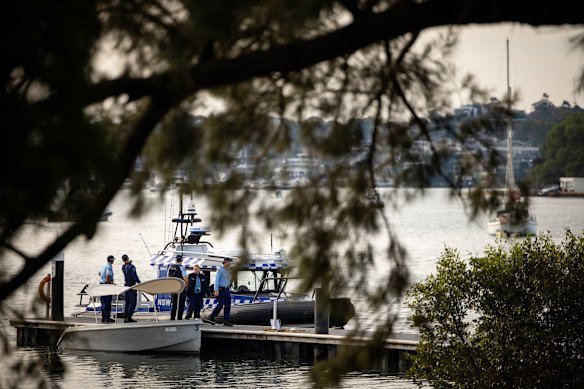
When the command’s Balmain headquarters received reports of a body floating in the Parramatta River, officers had already been deployed to an unfolding emergency at Coogee Beach, where local swimmer Leah Stewart had been mauled by a great white shark. Pulling bodies from the city’s waters is not an unusual task for Marine Area Command officers; occasionally, they are called to The Gap in Watsons Bay to retrieve the body of a troubled soul. Still, the discovery of the body of a six-year-old girl – thrown into the river from a boat by her father – was jarring even for seasoned detectives rarely rattled by the macabre nature of police work.
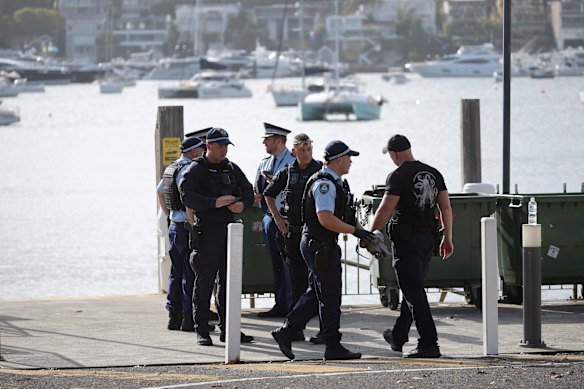
Despite the visible nature of the Marine Area Command’s work on the water, little attention is drawn to the role it plays in major police operations across the city. Its officers are among the most trained in NSW Police and possess a unique skill set, rarely more crucial than last weekend. For hours, the command’s divers scoured the murky waters of Hen and Chicken Bay at Concord, searching for the missing six-year-old girl without a break. Having fruitlessly searched for hours and with the sun setting, the discovery of security camera footage from a waterfront property allowed detectives to pinpoint where the girl had been thrown in. Using the footage, divers mapped a course and, almost six hours after starting their search, pulled the girl from the riverbed. Such was their determination, the divers were prepared to search through the night and beyond the point of exhaustion, putting themselves in harm’s way.
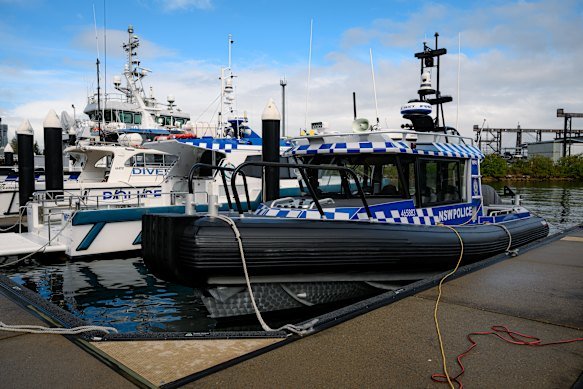
Some of the first officers at Concord on Saturday arrived onboard a specially designed high-speed boat added to the Marine Area Command’s fleet in December. A month after it was added to the fleet, Water Police 41, or WP41, carried first responders to Nielsen Park, where 12-year-old Nico Antic had been attacked by a bull shark while swimming at a popular jump rock with friends, who pulled him from the bloodied water.

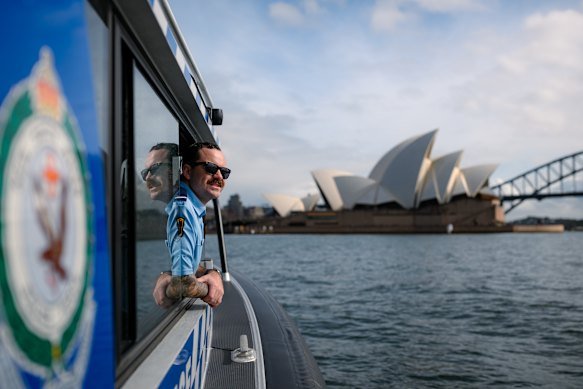
The boat’s specially designed bow allowed it to travel within arm’s reach of the rock platform, where an officer onboard, Senior Constable John Morris, applied a tourniquet to each of Nico Antic’s severely mauled legs. Within minutes, officers had ferried the boy across Rose Bay, constantly performing CPR to keep him alive, to waiting paramedics at the nearby ferry wharf. Nico Antic died from his injuries less than a week later, but the heroic actions of his mates and the Marine Area Command officers onboard Water Police 41 gave the 12-year-old a chance at survival and his family the opportunity to say goodbye. “Things like that make a big difference in people,” Superintendent Joe McNulty, the head of the Marine Area Command, told the Herald.
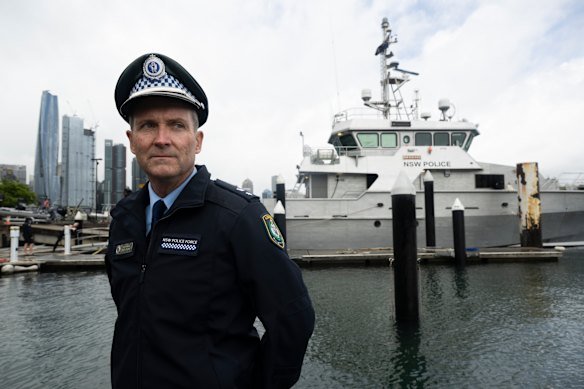
McNulty points to the importance of the Marine Area Command at a time when Australia’s maritime borders, and its coastal cities, are under constant threat from international crime syndicates importing unprecedented amounts of drugs – namely cocaine and methamphetamine – into the country. At the forefront of authorities’ efforts to stem the flow of illicit substances into the country, the Marine Area Command’s work has never been more vital. “Crime does not start at Bondi Beach or three nautical miles out to sea, crime starts offshore,” McNulty says. “We don’t wait for it to come to our shores.”
The command is an invaluable partner of the Australian Federal Police, tasked with intercepting drug smugglers offshore. Its strength, McNulty says, is not only its maritime law enforcement expertise, but its intelligence-gathering capabilities. Its detectives work closely with counterparts in NSW Police’s organised crime squad to safeguard the more than 2000 kilometres of coastline in NSW, stretching from Cape Howe in the state’s south, to Tweed Heads on the Queensland border. Of extreme concern is the vulnerability of the South Pacific and its remote islands, which are increasingly used as a thoroughfare on the preferred trafficking route of international drug cartels flooding Australia with cocaine and methamphetamine. “The Pacific needs to be watched very closely,” McNulty says.
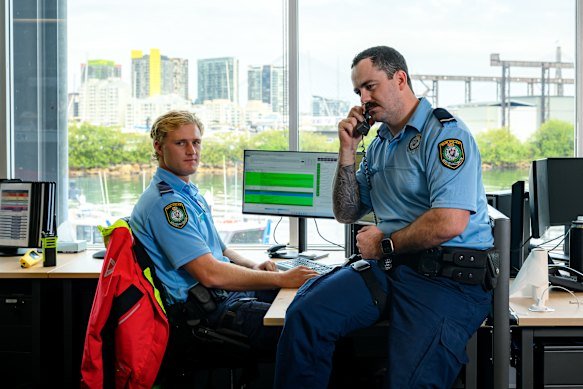
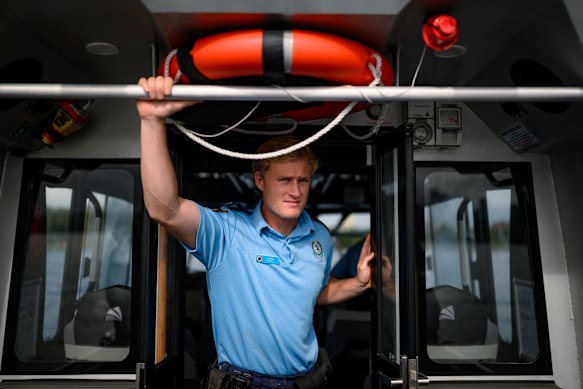
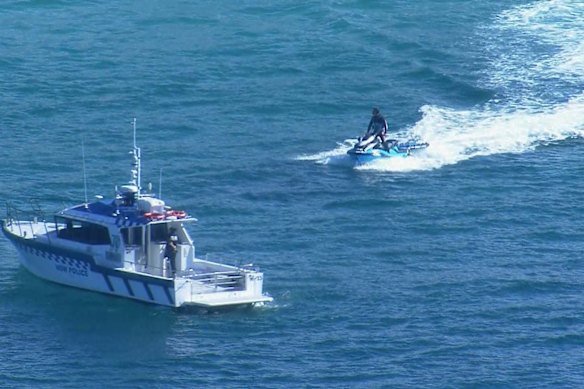
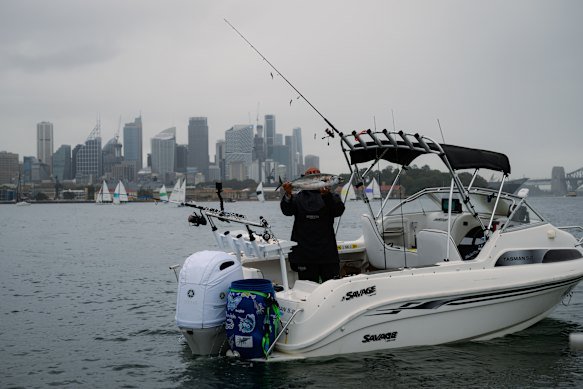
There is, though, a brighter side to the Marine Area Command’s work. When the Herald joined two of the command’s constables, Nathan Bell and Jayden Stevens, onboard the Water Police 41 on an overcast and wet Sunday, the harbour is quiet, braved only by the most dedicated sea lovers; one, a surfer, catches a rare wave breaking on the northern end of Shark Beach – just around the headland from where Nico Antic was attacked months earlier. Anglers wetting a line in the fleeting sunshine happily comply with routine checks. Out in the shadows of The Gap, a lone kayaker coasts over the rolling swell, his vessel moving in and out of sight. Such conditions offer an appreciation for the power of Mother Nature, Bell says.
Though at times uneventful, such day-to-day policing of the harbour is crucial, McNulty says, to building the skills officers will need when they are inevitably called on to carry out a high-risk operation offshore. “This is our job 24/7,” McNulty says. “We never stop.”
Despite the often testing conditions, few officers in the Marine Area Command would willingly give up what they consider the best posting in NSW Police.
“It does have its ups and downs, the job. We can have brilliant days where there’s perfect weather, clear skies, flat waters, but that can all change in a matter of minutes, and we can be offshore recovering a body and dealing with some sort of traumatic incident for someone,” Stevens says. “You’ve sort of got to keep moving on.”
Start the day with a summary of the day’s most important and interesting stories, analysis and insights. Sign up for our Morning Edition newsletter.
Read the full article here