



Big AI firms will be caught in Labor’s tough Digital Duty of Care proposal, the government has pledged, in its latest move to project a sense of control over the AI revolution.
After Prime Minister Anthony Albanese revealed rules for data centre construction last week, his government has pivoted to talking up fresh consumer protections.
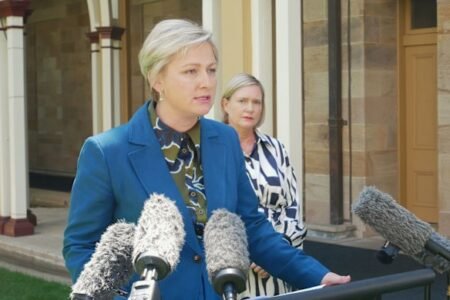
Also on Sunday, Victorian Premier Jacinta Allan unveiled separate laws that would make it easier for parents to sue AI or social media companies for mental harm.
Without providing full details, the Albanese government is promising stronger privacy laws for personal data, rules to stop firms using AI to adjust prices based on the wealth of a buyer, and a framework to regulate use of automated decision-making by federal agencies such as Centrelink.
The online duty of care, which has sparked concern from critics who support an open internet, will capture AI firms. This means private players such as OpenAI and Anthropic may need to conduct risk assessments and publicly report on the consequences of its systems to comply with Australian law.
Proposing safety obligations on AI firms is another sign that Labor wants to appear front-footed ahead of the party’s national conference this week, at which unions and other activists will demand more interventionist approaches. Albanese is trying to balance those instincts against Labor’s wish for more AI investment in Australia.
Assistant Minister for Science, Technology and the Digital Economy Andrew Charlton said AI was critical for both national security and a more dynamic economy as China aimed to outdo the US on technology that was expected to shape geopolitical competition for years to come.
“This is the most important technology of our lifetimes, and we face a question as a nation about whether we want to have it in Australia,” Charlton said on Sky’s Sunday Agenda. “If we’re renting it from abroad, that means we are always paying foreigners for this technology.
“It’s also important for security. These data centres house your photos and house your medical records. Having that data in Australia has value to us.”
The Digital Duty of Care proposal was announced alongside Labor’s social media ban for under-16s. It would shift responsibility onto platforms from responding to individual complaints to preventing harms before they occur.
Labor has said it wants to regulate AI more quickly than it took to clamp down on social media, but the extent to which a smaller nation can shape the future on AI uptake is uncertain as bigger nations and the tech behemoths set the rules of engagement.
Technology companies, privacy advocates and free speech groups have warned the duty of care reform could make it impossible to hold an anonymous online account and may revive elements of Labor’s abandoned misinformation laws.
In a keynote speech last week, Albanese flagged new laws to ensure the data centre gold rush, which has propped up Australia’s flat economy, would not put strain on the nation’s energy or water supplies.
Deputy Liberal leader Jane Hume said Albanese’s speech “was given an awful lot of hype but really there was very little to it”.
“It was a process speech. It was about bureaucracy rather than opportunity and innovation,” she said. “Where was the conversation about lowering barriers to entry, or innovation, or lowering energy prices, or upskilling workers?”
The Victorian government said on Sunday that it would put forward laws to unmask online trolls and make it easier for people to sue digital giants.
“They feel powerless … on a couple of fronts,” Premier Jacinta Allan said. “How quickly kids become obsessed with these online platforms … I see it in my own household.”
Under the proposal, the Victorian Civil and Administrative Tribunal would be handed so-called de-masking powers to force social giants to detail the identity of users.
Get the day’s breaking news, entertainment ideas and a long read to enjoy. Sign up to receive our Evening Edition newsletter.


From our partners
Read the full article here