



Families can expect to pay more for potentially less at some Victorian Catholic schools next year, amid warnings that teacher salary increases could mean fee hikes and subject cuts.
About 40,000 Catholic school staff, who are negotiating a workplace agreement for the next four years, anticipate an increase in line with the 28.3 per cent increase public school teachers are expected to endorse by October.
Catholic teachers, who have had pay parity with public colleagues since the 1990s, have received a commitment from employers to match the government offer, alongside a warning that it will have consequences.
Melbourne Archdiocese Catholic Schools, the state’s largest employer of Catholic school teachers, wrote to employees saying it hoped to avoid “significant fee increases” due to wages going up.
“While these changes will be government-funded in state schools, Catholic schools will not receive additional funding commensurate with the additional cost,” wrote MACS general manager Marwin Austerberry and director Mary Oski.
“They need to be supported through our usual budget and planning process.”
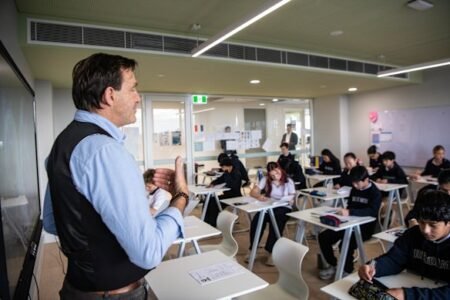
Mater Christi College, an all-girls secondary school in Melbourne’s outer east, warned that low-enrolment subjects might not run next year while some camps and excursions might be cancelled due to budget constraints.
Principal Maria Haggett said the federal government, which provides up to 80 per cent of public funding for private schools, would not increase funding to cover the pay rise.
Haggett said the federal government’s decision was unprecedented in her career and left non-government schools with few options but to raise fees.
“We don’t want to price anyone out,” she said. “We also want people to understand that there’s not a profit motive here. This is about operations and sustainability.”
Haggett said the school of about 680 students, which receives more than $900,000 in annual government funding and charges about $12,690 a student, was still finalising its 2027 fee increase.
“It certainly won’t be less than last year, and last year was around 7½ per cent,” she said.
Victoria’s more than 490 Catholic schools will share in $3.2 billion from the federal government this year.
A federal Education Department spokesperson said the Australian government provided recurrent funding to all schools, including Catholic schools, calculated with reference to the Schooling Resource Standard.
“The SRS is increased annually to reflect changes in wages and other costs, with its indexation formula giving a 75 per cent weighting to the Wage Price Index, reflecting the fact that teacher and staff salaries are a significant part of school costs,” the spokesperson said.
The financial viability of more than 100 Victorian Catholic schools could be tested due to the pay rises, with total enrolments at Catholic schools failing to keep pace with independent schools.
MACS has confirmed St Pius X Primary in Heidelberg and Ss Peter and Paul’s School in Doncaster East will close at the end of the year due to low enrolments. It says fewer than 20 of its almost 300 schools have fewer than 100 students.
However, 47 Catholic schools in Melbourne have fewer than 150 students, and 105 schools have fewer than 150 students when Catholic regional schools are included.
Victorian Catholic Education Authority chief executive officer Elizabeth Labone said Catholic schools were planning 2027 budgets to accommodate the changes from the new enterprise agreement.
“This is about investing more of our school budgets directly in teachers and staff so they can be among the best-paid educators in the country, with leading workload conditions,” she said.
“As a sector, we’re mindful of the pressures facing families and are committed to keeping fees as low as possible while continuing to provide a high-quality Catholic education.”
The warning over program cuts comes as Catholic school teachers push for increased bargaining power, including the right to strike, through an application currently before the Fair Work Commission.
The Independent Education Union Victoria Tasmania, which represents about 14,000 Catholic school members in the state, has applied to the commission on behalf of 24 of the state’s 35 Catholic employers.
MACS, the biggest employer with more than 18,000 staff, blocked its employees from being part of the application by arguing the union didn’t have majority support because it had underestimated the number of Catholic staff in the workforce.
The union intends to bring blocked MACS and regional diocese staff into the Fair Work process after going back to the Catholic schools that mounted a legal challenge and establishing majority support.
Union general secretary David Brear said this was about giving Catholic education staff the bargaining power they needed to win a fair deal.
“What’s deeply frustrating is that Catholic employers have spent enormous time and resources fighting their own employees’ right to bargain collectively, when they could have spent that time sitting down with us and negotiating a fair agreement,” Brear said.
“Catholic employers have had plenty of time to plan for wage increases – it’s been clear for years that they were needed to keep Victorian education competitive.”
Brear said the feedback from principals was that some schools could absorb a cut to their budget and continue to operate without significantly altering programs.
“But in many places, the cuts are so deep that resourcing student-facing programs is an issue and there will staff impacts,” he said.
Start the day with a summary of the day’s most important and interesting stories, analysis and insights. Sign up for our Morning Edition newsletter.
From our partners
Read the full article here