





By their own admission, a group of 30- and 40-somethings running one of Melbourne’s most popular RSLs are firmly stuck in the past.
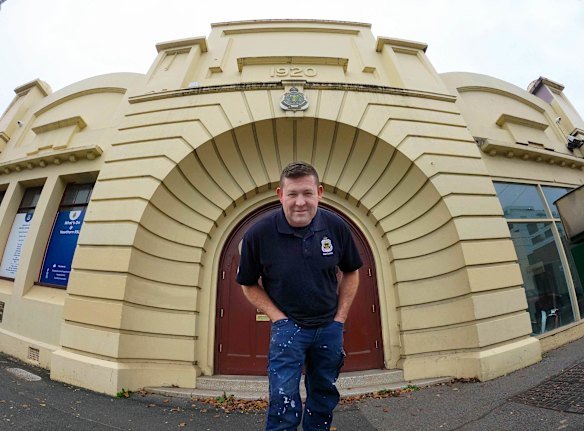
Cross the threshold through the massive, arched, red wooden door, and you’ll see Hawthorn RSL president Drew Maddison, speckled with paint. He points to the floor, where they’ve ripped up carpet to expose the original terrazzo.
“These floors are the same [that] World War II veterans crossed,” Maddison says, indignantly.
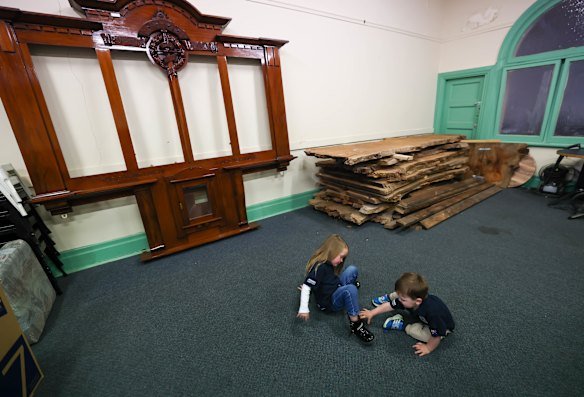
Though today’s RSLs are synonymous with parmas, pints and pokies in the minds of many, in this century-old building, there are just a couple of old rooms with lounges and tables strewn about, and the original brickwork peaking through peeled plaster.
Here, the ethos is simple: it’s a place for veterans to come and share, to find community and support, and to work towards restoring a building that represents a collective history.
“Hawthorn’s a bit of an outlier in a lot of ways,” says member Celia Hale.
“We’ve decided that the way that we need to run an RSL is the way they did it in the 1920s, and the reason the sub-branches were set up in the first place was to support veterans.”
After back-to-back closures across the state in the past 18 months – and while other sub-branches buckle under ageing committees and increasing financial and bureaucratic burdens – RSL Victoria is reckoning with its identity, drawing a hard line under sub-branches that it says have strayed too far from the original mission.
Over time, hospitality ventures became a necessary means for many RSL venues’ survival, and bankrolled veteran support – but the organisation was never intended to prop up commercial venues, critics say.
Others still bear the RSL branding, they add, but have effectively become private clubs, rather than what returned services leagues should be.
A return to basics, combined with what happened in Victoria’s north-west last week, could be a blueprint for the future: a new era of “super RSLs” that honour the past, while also adapting to the present.
The walls of Red Cliffs-Irymple RSL in Victoria’s north-west are lined with black-and-white photos, tightly packed alongside rows of medals hung above glass cases displaying soldiers’ tankards, mess kits and slouch hats.
Peter Fleming is the custodian of this collection, belonging to what was once Australia’s largest soldier settlement community.
As the RSL sub-branch’s president, he feels the weight of that stewardship.
Before a merger with Mildura RSL was announced last week, he also felt an existential dread.

“We just didn’t have the membership to continue to operate,” Fleming says.
“Because we had so much here with regard to buildings and memorabilia, if we didn’t act, we could have lost the lot.”
When Fleming put a distress call out to other sub-branches, two towns in Mildura’s orbit – Merbein and Robinvale – responded.
Together, they resolved to merge with Mildura – the bigger, better-resourced RSL, that could inherit their administrative burden while also supporting veterans across the regional network.
The merger is thought to be the most significant in the state’s recent history, and RSL Victoria state president Mark Schröffel hopes it will be seen as a way forward for others.
‘If we didn’t act, we could have lost the lot.’
Peter Fleming, Red Cliffs-Irymple RSL president
Over the past decade, about 50 sub-branches have quietly fallen away in Victoria – roughly a sixth of all RSLs across the state.
A consultant’s report this time last year found some sub-branches were too small or poor to deliver meaningful services, and were struggling financially because of veterans’ increasingly complex issues.
It also warned that RSL Victoria was overly reliant on revenue from its 50-odd pokies venues, which are at risk from the state government’s long-awaited gambling reform package.
“I certainly hope it [the merger] becomes a blueprint, and it’s certainly been thought about in that way,” Schröffel says, noting RSL Victoria is overhauling its corporate structure.
“Our organisation at the moment, I’ll be quite blunt, is unsustainable in its current form,” he adds.
“But we know exactly what we need to do to make it sustainable, and we’ve got a clear pathway.
“We just need to bring our members along.”
In Melbourne’s east, the Kew RSL has been accused of failing to abide by the core purpose.
After it was hit with a 12-month suspension for failing to support veterans and their families, and forced to shut its doors, the state branch earlier this month confirmed the century-old RSL’s closure.
In response, members argued the branch was profitable and had raised money for veterans.
“Assets held in trust for Kew members were then claimed by the central body,” a committee member said following the closure. “These actions sit uneasily with the public statements about sub-branch ownership.”
Members feared corporate changes could make it easier for this to be repeated across the state, the committee member said.
Other recent closures include Mentone (in liquidation), Pascoe Vale (voluntary closing after it sold its venue to Melbourne Racing Club) and Newport (which also had its charter suspended).
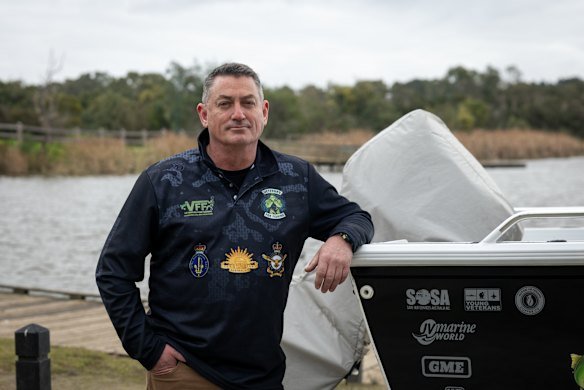
In Melbourne’s outer-east, Chris McAleer reflects on his time as vice-president of his local RSL.
A reserve forces soldier for more than a decade before he joined, he says that during his time at that RSL, he was spoken down to by other veterans, who told him he was out-ranked and out-served.

“There’s a reason why I’m not with that RSL any more,” he says.
McAleer and Mat Keene agree this is a big problem, with some sub-branches making younger veterans feel judged rather than welcomed, and referring to them as “clubs”.
“That’s how they’re treating them,” McAleer says. “It’s just a private boozer.”
The pair say younger veterans are now more inclined to join ex-service organisations like theirs, which break out from four walls.
Keene’s Young Veterans initiative gets returned service members out horse-riding, surfing, four-wheel driving and riding dirt bikes, while McAleer’s Veterans for Fishing allows veterans to come together on lakes and river banks.
“I was in the Iraq invasion in ’03, you know, and I don’t want to talk about that all the time,” Keene says.
“I want to get past it, create new memories.”
Ultimately, though, he and McAleer’s priority is supporting all veterans – a purpose, they agree, is still the primary focus of many Victorian RSLs.
This includes Hawthorn RSL, where every person is keen to tell their story, and the room is loud with the sound of the kids playing, and adults laughing.
Member Chris O’Connor is quiet until after everyone else has spoken. For what it’s worth, he says, the reason he joined is because of them.
He knew it was the right fit when he crossed the threshold, and saw the exposed terrazzo floor – black and red, the colours of Melbourne’s battalion.
Get the day’s breaking news, entertainment ideas and a long read to enjoy. Sign up to receive our Evening Edition newsletter.
Read the full article here