






Montreal bartender Jackson Long, a proud rum connoisseur with Jamaican ancestry, is deeply concerned about Canada’s unknown darker past with the sugarcane spirit.
“There are just big aspects of this history that are always kind of buried,” he said, minutes before opening time at El Pequeño bar in Old Montreal.
“Then, eventually, some historian decides, ‘Hey, this keeps coming up. I’m going to look into this a little bit more.’ There’s such a huge, untold story there.”
One such historian is Allan Greer, who’s now hoping to address some of those historical gaps with a new book called Canada, in the Age of Rum.
His findings show how cheap rum, largely from the Caribbean or made from molasses from those islands, was key in fuelling Canada’s economy, particularly in the 17oos.
“I found statistics suggesting people in 18th century Canada drank about 15 times as much alcohol as today, and it was pretty much all in the form of rum,” he told Global News.
In some regions, he pointed out, the amount consumed was more than 30 litres per person annually, in rum alone.
According to Greer, companies profited by coercing impoverished seasonal workers into buying the addictive spirit at four to five times the retail rate, putting the workers in debt to the companies.
“Typically, fishermen, fur trade voyageurs, lumberjacks, find themselves at the end of the season penniless, indebted and often have to sign on for another season of work to pay off their debts,” he said.


Get daily National news
Get daily Canada news delivered to your inbox so you’ll never miss the day’s top stories.
He refers to this period as a time of “alcoholic capitalism.”
“Because I think it plays a vital role in allowing these industries to be profitable,” he reasoned. “If employers paid the wages that they contracted for, they probably would’ve gone out of business. So, it’s a device mainly to claw back wages to make these enterprises viable.”
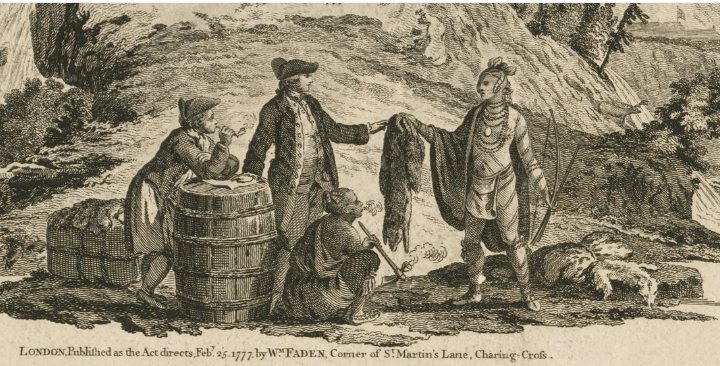
The historian revealed how Indigenous communities were also targeted, and how traders from urban centres like Montreal foisted rum upon Indigenous communities for fur, in return for other products.
“(The traders) create a desire because, as we all know, liquor is addictive, and it created a lot of turmoil among people who had never had any experience of alcoholic intoxication,” he explained.
Greer noted, however, that it appears European settlers drank more, and that when Indigenous communities saw the social problems drinking was creating, they pushed back against the rum traders.
“In places like Kahnawake, near Montreal, you see it as early as the 1670s — very early on,” the historian noted. “Different people at different times, when they recognized that there’s a real community, social problem here, mobilized against it.”
Interestingly for him, though, settler communities only started serious rallying against the impact of booze a century later — around the 1820s.
Still, as other historians observe, the stereotype connecting Indigenous communities and alcoholism persists to this day.
Dr. Omeasoo Wahpasiw, associate professor in Indigenous studies at Carlton University, said it’s vital to address prejudices and stereotypes about Indigenous Peoples and alcohol.
“Indigenous Peoples, I think on and off reserve, are more likely to not drink alcohol than the rest of the Canadian population,” she pointed out. “So I think it’s an important fact to know that the stereotype doesn’t ring true.”
Statistics Canada surveys depict lower rates of reported drinking in Indigenous communities compared to others.
Scholars point out that stories of colonial expansion showing how companies profited from commodities, like chocolate, tea, sugar and rum, by using exploited labour hardly ever mention Canada.
According to Dr. Anya Zilberstein, associate professor of history at Concordia University, Greer’s work now shows how rum was used as a coercive tool in Canada, in the absence of extensive enslaved labour.
“This book makes the case for the ways in which Canada was connected, not just to the commodities trade, but to the expansion of exploited African labour across the Atlantic world,” she told Global News.
She noted that most of the people in the colonized Americas were targets for habit-forming commodities, including rum.
“But I was surprised by the extent to which Canada really relied on rum.”
Those aspects of Greer’s findings, revealed in online summaries of Greer’s book, also surprised Lance Surujbally, author of the rum blog, Lone Caner.
“(Rum) was being used in ways that I had not yet considered — as sort of a debt bondage, an indentured servitude,” he concluded.
“It certainly creates a greater conversation about the role of rum, or alcohol of any kind, in societies. In that sense this is something that I definitely want to find out more about.”
Long was also excited upon learning some of what Greer uncovered, and stressed, “I think Canadians everywhere should realize that it has a lot more to do with them and their history than previously mentioned.”
He hopes consumers can learn the backstory while still appreciating and enjoying modern-day commodities, like rum.
Read the full article here