





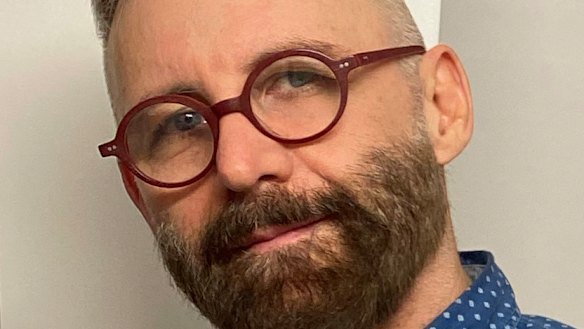
In this second instalment of an occasional series on significant people and moments in the 195 years of the Herald, I talk to Antonio Sarno, who 31 years ago, was the key driver of the establishment of smh.com.au.
Fitz: Tony! You and I worked together 40 years ago in the Herald’s sports department, and I loved two stories you told at our Tony Zuccarini Appreciation Society lunch a few years ago. First, of how you got into computers, and second, the beginnings of smh.com.au. Over to you, Maestro. Everything you say, can and will also be used in a book I want to write on the 200th anniversary of the Herald.
AS: [Laughing.] I am amazed you remember that first story! But yes, I was studying communications at UTS on Broadway, and though I was OK at dating, I noticed that the blokes who did really well were the witty ones. And I thought, “I’m not naturally witty, but maybe I can use computer technology to help me become witty, to tabulate witty things that I could say on dates…” That got me very interested in computers!
Fitz: GUMP! You a goddamn genius, boy! And a star was born. So, once employed by the Herald, you pass briefly through the sports department before becoming the editor of our computer section, whereupon an idea comes to you…
AS: I’d got interested in the whole idea of this thing called the World Wide Web. But back in ’92, the web was something that university students or programmers did – it wasn’t mass-market at all. It was only basically in ’93 when it started taking off, with these new things called hyperlinks, where you could link a word to related information, and go to these things called “websites”! And one day, in late ‘93, on one of the Herald’s two internet connections – because we’d at least come that far – I was sitting there watching a page scroll down from a university website in Los Angeles that blew me away.
Fitz: Why, particularly?
AS: Because it wasn’t just featureless text. It was laid out, with photos – just like a newspaper. It was amazing because, back then, information on the internet before the web was just links to databases of text. There was no formatting, there was no making it look pretty. But my first real epiphany was when MTV launched its website later that year, when one of their video jockeys got sick of not being on the internet, so he registered the name and put the website up himself. And it was so successful that MTV then had to take him to court to get the name back. What it told me was it was the first high-profile brand to go online, and I thought if it’s good enough for MTV – which then was a super-cool brand – it was something we at the Herald really needed to start looking at.
Fitz: You could see the future?
AS: When I really saw the future was when a journalist from The Economist in London was also pissed off that his mob hadn’t launched the website, so he did it on his own – and it took off! And I remember that he said that the whole thing had cost him just £80, and I thought, OK, why not the Herald?
Fitz: Which brings us to my favourite part. You go to see John Alexander (JA), the Herald’s legendary editor-in-chief, to make your pitch. He was a formidable figure, and you must have been nervous.
AS: Worse than nervous. What made it really hard was that I knew what he felt about the website even before I went to see him because he’d told my immediate boss, Liz Sterel, the sections’ editor, that he thought the web was “a distraction”. He said to her that she should stick to her KPI, which was circulation, not futzing around with a website.
Fitz: So by this time there was already wider discussion about possibly having a website?
AS: It was the elephant in the room every time you talked to management about the future, but it was a tiny elephant – maybe the size of a wombat, right? They had largely ignored it because nobody could imagine the supertanker that was a print newspaper was ever going to be impacted by something online. It just didn’t make sense. Remember, this was the final heyday of print when newspaper circulations and revenue from the classifieds were at their highest ever.
Fitz: But you’ve got to make your pitch!
AS: I thought I’m really up against it, but I’ll give it a shot. I said to him, “Look, John, there’s an audience out there that we’re not reaching. You know, we’re reaching people who pick up our print newspapers, but there’s a massive audience out there and it’s not just in Australia; it’s around the world. It could be hundreds of thousands, it could be millions. We’ve got to get the Herald on there so that at least we know how many online readers there are, and also make sure that our competitors don’t start creating web-based newspapers that can steal our print readers.”
Fitz: Did you pitch to him that there are advertisers out there that will come on board, and people would pay a subscription fee, or were they later additions?
AS: They came later. At that time, my pitch was simply, “let’s put something up and experiment. Let’s see what happens. Let’s see how many people there are out there.” To my amazement, JA was great. He said, “Yeah, I see what you’re doing, so go ahead, you can do it, but you’re going to have to fund it yourself.”
Fitz: Bingo!
AS: Sort of. I walked out and I thought, Wow! I think I’ve achieved my goals, but maybe I haven’t because I still have to fund the thing. I would have to find sponsors to fund the construction of the website, the hosting of the website, the publication of sections of the Herald online. So I approached a couple of companies, and one of them was Sun Microsystems, who I knew from my connections in the tech industry. They were among the first builders of internet servers. They asked me to address a board meeting.
Fitz: So you put on your best suit and said, “listen up”?
AS: I stood in front of the board and I kind of explained why they should sponsor the Herald website, why we were aligned in values and direction, and I’ll never forget it. At the end of my spiel, the managing director looked at me and said, “OK, well, how much money do you want?” I’d gone in thinking I could maybe get a few thousand dollars out of them, but the way he said it made me think I could go higher. So I pulled a figure out of my arse. I said, “We need $90,000″. He said “Fine.” That was truly the moment where I realised just how big this could get, how powerful the force behind it, how lucrative it could be.
Fitz: Thunderbirds are go! You start doing all the preliminary work, with the web development company and designer, Fairfax Online and Sun Microsystems, and the great day comes a few months later.
AS: The great day comes. April 17, 1995. Everything was ready. We’d done our work. The web developers had done theirs. At about 11 o’clock that morning, I called the web developers and internet service provider. I said, “Launch it.” They pressed their buttons. I pressed mine. And up on my screen came smh.com.au. I called our computer correspondent in LA. “Hey, we’ve launched. Can you see the page yet?” And she said, “Oh my God, oh my God! There it is, and there’s my story!”
Fitz: And from the sports department, we could hear a strange, if distant cry…
AS: I came out of my office and I called out, “We’re live! smh.com.au is live!”
Fitz: And?
AS: And, not much reaction from the journalists on the floor. Only about 2 per cent of the Australian population had internet access, so it just wasn’t a thing for them. It wasn’t relevant. It was like these guys on the computer section are just wanking on about some technology that they think is important.
Fitz: I remember even so astute a Herald journalist as the late David Dale frequently referred to the internet in his Stay in Touch column in those days as an “electronic brochure”.
AS: The majority of journalists weren’t online, so they just couldn’t see what the impact was going to be. But from the moment of going online – starting with just the computer section, then adding other sections successively – things moved rapidly.
Fitz: Rapidly? I remember that right next to the Herald sports department, a few months after that, there were three people in the Herald’s online department, and before our very eyes, they started breeding like rabbits, soon taking over ever more desks, until they engulfed the entire joint.
AS: That did happen, yes, but we had to manage things early. Because it was only after launch that we became more aware of the fact that maybe this could impact print circulation. And so every time we’d take to JA the reaction to the launch from our readers, I always included only those letters that would say something like, “Love the website, but I’m going to keep reading the print paper.” There were also lots of readers who said, “Fantastic, Sydney Morning Herald, this will save me a trip to the newsagent,” but I buried those. There was a real fear that if management got wind of this website affecting circulation, they could kill the whole thing.
Fitz: In fact, however, it was soon proved that between print and online, we really were getting more eyeballs than ever before.
AS: Look, it was just inevitable growth of the website, which just kept on growing and growing. Because it was obvious that that’s where the media and readers would go.
Fitz: A year later, you get purloined by News Limited. We made you, and then you did the dirty and left us!
AS:[Laughing.] Yeah. And then the Herald made me an offer too good to refuse to come back, so I did, for a few years, to be the editorial director for “f2” which was a new division created by Fairfax to guide all of Fairfax onto the internet.
Fitz: So you want me to chisel on your tombstone in 40 years’ time, “Here lies Antonio Sarno – he started smh.com.au”?
AS: Well, that’s where it started. So, yeah!
Get a weekly wrap of views that will challenge, champion and inform your own. Sign up for our Opinion newsletter.


From our partners
Read the full article here