






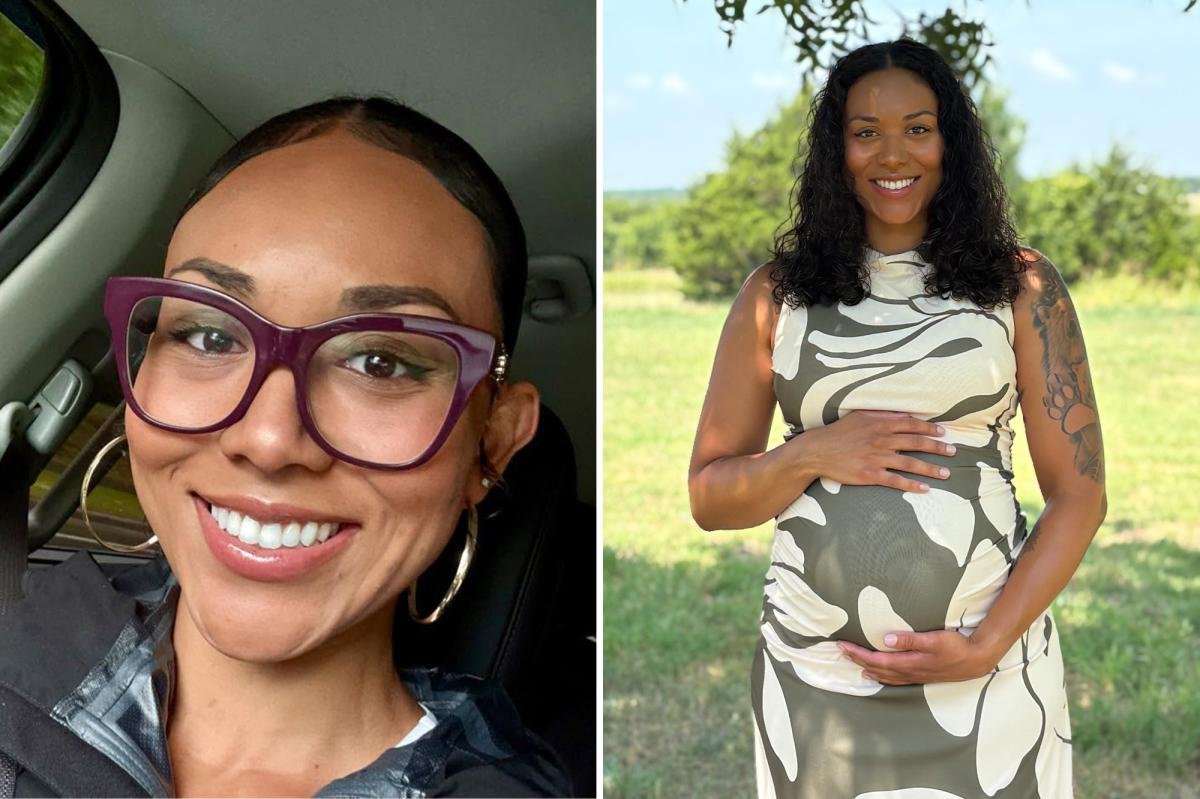
She may have kept the pregnancy — but she won’t be keeping the baby.
The surrogate who crossed state lines to give birth to a baby boy against his biological parents’ wishes that she terminate the pregnancy has virtually no legal claim to the child, a reproductive law attorney told The Post.
“I don’t see any reason why these biological parents wouldn’t still be the legal parents of this child,” Marla Neufeld, a Florida-based reproductive lawyer and host of “The Surrogacy Space” podcast, said of the newborn delivered by surrogate McKenna West in Dallas Wednesday.
Less than 24 hours after his birth, the boy — whom West named Gabriel — was placed in the custody of his biological parents, Nausheen Gilkar and Omar Ahmed.
The Los Angeles couple had asked West, an Alaskan nurse, to terminate the pregnancy after the baby was diagnosed with hypoplastic left heart syndrome (HLHS), a severe but treatable heart condition, at 20 weeks. A clause in their surrogate agreement said that if an “anomaly” were found, they could move to abort the pregnancy.
West, a single mom of two, instead bolted to Texas, where she would be recognized as the birth mother under state law.
While the terms of a surrogacy agreement would not have given Gilkar and Ahmed the power to force West to have an abortion, “that’s a totally separate issue from their parental rights,” according to Neufeld.
“At the end of the day … the surrogate has decision-making authority for her body,” Neufeld said. “There’s no judge that’s gonna make her have an abortion or stop her.”
West initially agreed to terminate the pregnancy, Gilkar and Ahmed have claimed in court papers. But she changed her mind — saying the couple tried to force her to have an abortion, which they have denied, the Texas Tribune reported.
The couple ultimately decided to see through the pregnancy to delivery — opting to name the boy Rumi and have West deliver in California, where he’d receive lifelong treatment, according to court docs reviewed by the Tribune.
Most surrogacy agreements include a court-verified “parentage order” establishing the baby’s biological parents, regardless of where the surrogate gives birth, Neufeld explained. But a California court has already ruled that Gilkar and Ahmed are, in fact, the baby’s legal parents.
“I don’t see a world where [West] has rights to the baby,” she said.
“She is not the biological parent … and under the states that are at play — between Alaska, California and Texas – I’m not aware of anything in their surrogacy provisions that would give her access to the child,” the attorney said, calling the case “an anomaly.”
“I think [West] is taking a position that is just so unfounded,” she added. “I don’t know if she bonded with the child in a way that created this type of issue, but she has no legal right to name the baby.”
Texas Attorney General Ken Paxton’s sudden involvement in the case was also “unique,” according to the attorney.
Paxton filed a last-minute petition this week urging doctors to give the baby life-saving care upon his birth — including intensive treatment and at least one surgery — and to prevent him from being taken out of the state, which a judge granted on Tuesday.
Newborns diagnosed with HLHS require surgery almost immediately after birth in order to survive beyond their first week.
As of Thursday, the baby was “receiving medical care provided by a team of pediatric experts,” his parents’ attorney, Lee Budner, told the New York Times — adding that Gilkar and Ahmed will “place their baby’s health and well-being first, following the advice of the baby’s medical team.”
While a separate court order currently bars West from seeing the baby, the mother of two is ready to fight for custody — all the way up to the Supreme Court, her attorney, Lincoln Wilson, told The Post Thursday.
“She is seeking parentage of the child because she gave birth in Texas, and in Texas, if you give birth to a child, it’s your child,” Wilson said.
What happens next in the headline-grabbing case depends partly on whether West will pursue the unlikely process of trying to gain parental rights — as well as the infant’s health, Neufeld said.
“I think a lot of the next steps really pertain to the health and safety of the child, and how the baby is gonna be doing and what medical care the baby’s gonna need and ensuring that the parents, as they should, have a say in the continued care of the child.”
“The parents, they’re going to have to bear the long-term consequences,” the expert continued. “This is something now they have to support financially and emotionally, and it is a really tough position that the parents have to handle.”
Budner said the couple was “devastated” by the public political drama surrounding the surrogacy scandal – and slammed the Lone Star State AG for making matters worse.
“As if the heartbreak of his condition were not enough, they are devastated to see their family tragedy transformed into political theater by the Texas Attorney General’s office and McKenna West,” Budner told TMZ.
Neufeld, whose twin sons were born via surrogacy, said the case has the potential to change legislation at both the state and federal levels.
“It’s possible that the legislators in Texas or other states might look at this to see what safeguards could be added to their law, because a lot of times we follow best practices, but the best practices are not always legal requirements,” she said, giving examples including mandated mental health screenings for potential surrogates and different lawyers to represent the parents and the surrogate.
“There might be additional safeguards added to certain laws or laws created – and some states don’t have surrogacy laws. So there might just be more infrastructure established just nationwide in general,” Neufeld added.
The California couple, who are suing West, are slated to appear in a Dallas County court on Aug. 25.
Read the full article here