






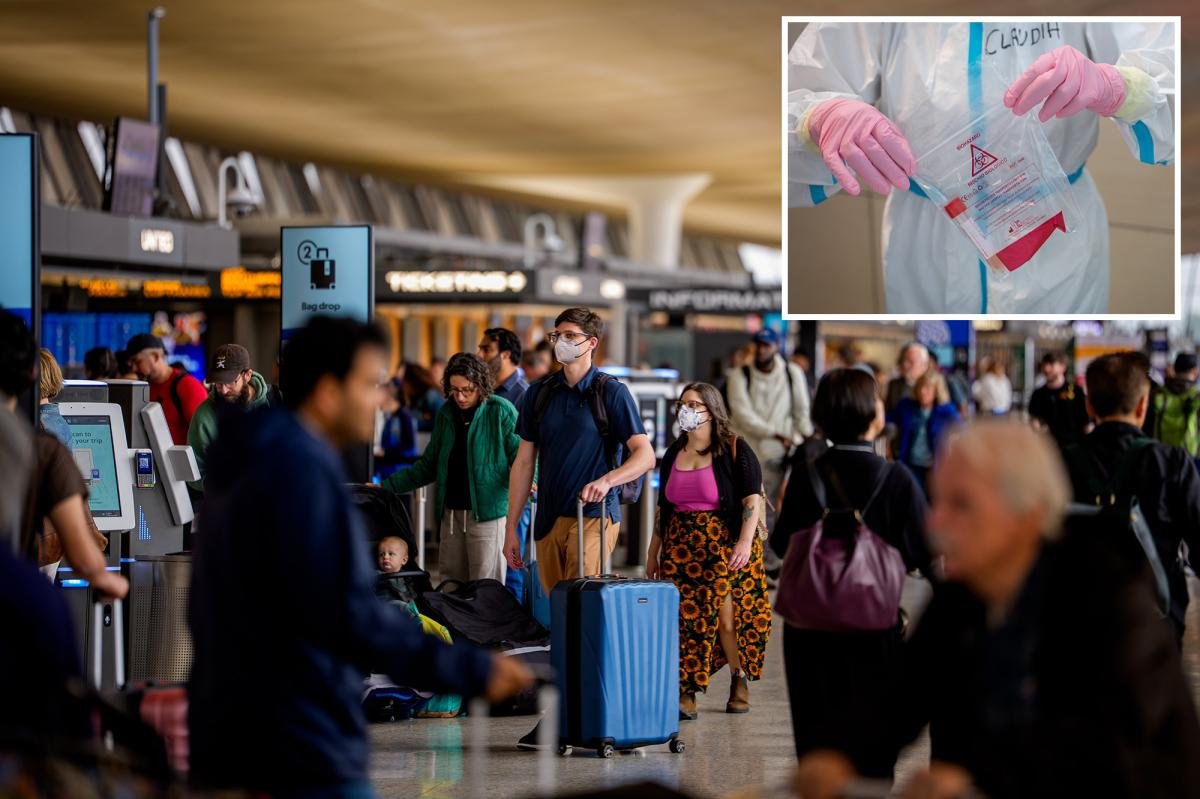
The deadly Ebola outbreak in Africa has prompted New York City health officials to start screening airline passengers arriving to John F. Kennedy airport, the CDC announced.
JFK became the fourth major transport hub on Friday — joining Washington Dulles International Airport, Hartsfield-Jackson Atlanta International Airport and George Bush Intercontinental Airport in Houston — to begin the health assessments.
The World Health Organization declared the current Bundibugyo strain outbreak in the Democratic Republic of Congo a Public Health Emergency of International Concern on May 15.
The outbreak began in the northeastern Ituri province and spread to neighboring Uganda, and as of May 30, there are 906 suspected cases and 223 suspected deaths, according to data from the WHO.
For the past week, the US has been rerouting travelers from the Congo, South Sudan and Uganda to select airports to receive enhanced public health screenings in an effort to identify people who may have been exposed.
The revised rule now applies the ability to suspend introduction into the US to lawful permanent residents (green card holders) who have been in the Democratic Republic of Congo (DRC), Uganda or South Sudan within the last 21 days are prevented from entering the US.
“Public health entry screening serves as one component of CDC’s layered public health approach,” the CDC said in the May 29 announcement.
“These actions are based on current epidemiological evidence, ongoing risk assessments, and the highly serious nature of BVD (Bundibugyo). This order will be in effect for 30 days, effective immediately.”
If a passenger is chosen to be part of a screening, they will:
- Be escorted to a designated screening area
- Complete a brief questionnaire about travel history and symptoms
- Have their temperature checked using non-contact thermometers
- Be observed for signs of illness by CDC staff
CDC currently assesses the immediate risk to the general US public as “low,” but promises to continue to evaluate the situation as it unfolds and make necessary adjustments to their policies.
In the meantime, the agency recommends that anyone who is planning to travel to the US from any one of the affected countries should monitor for Ebola symptoms for 21 days after leaving affected countries.
Symptoms of the Bundibugyo strain of Ebola — which has a 30% to 50% mortality rate — include fever, headache, muscle pain, weakness, diarrhea, vomiting, stomach pain and unexplained bleeding or bruising (a late stage of the illness).
Anyone who develops symptoms should avoid travel and contact public health authorities immediately.
Read the full article here