






Published on •Updated
A strong earthquake tremor was felt across much of southern Italy shortly after midnight on 2 June.
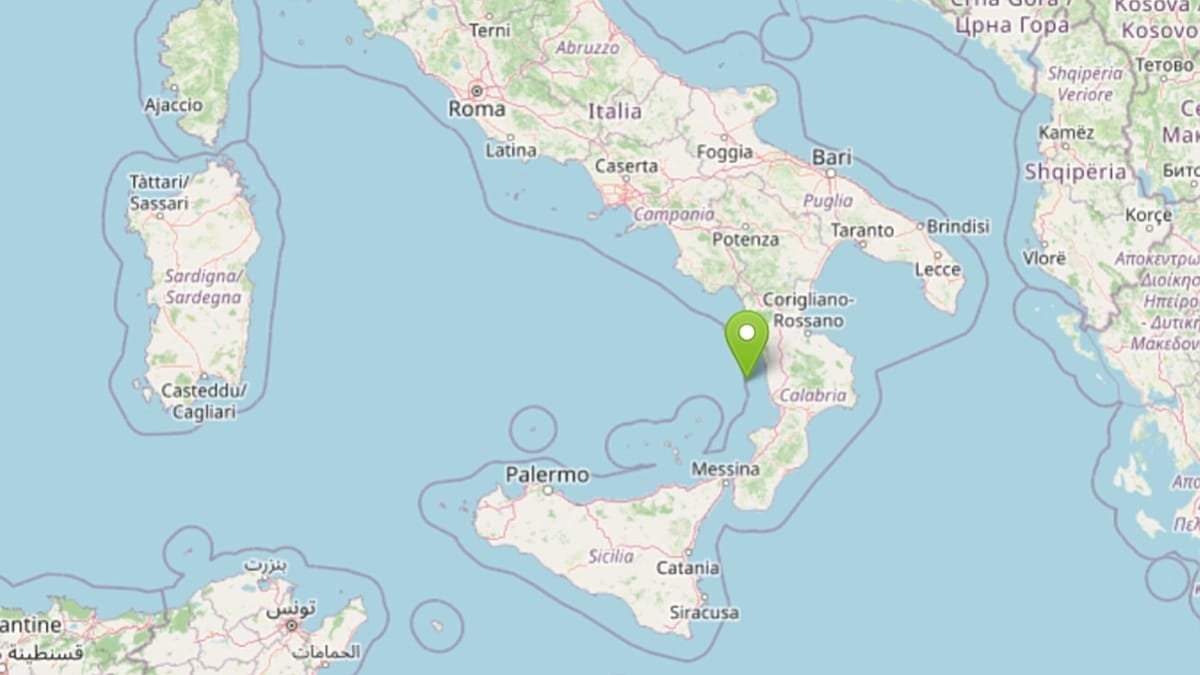
The National Institute of Geophysics and Volcanology (INGV) recorded a magnitude 6.2 earthquake with its epicentre out at sea off Calabria’s Tyrrhenian coast, near Belmonte Calabro, in the province of Cosenza. The quake struck at a depth of 250 kilometres.
The tremor was strongly felt along the Tyrrhenian coast, but no damage has been reported so far. The earthquake was also felt in Naples and the Vesuvius area, as well as in several parts of Calabria, Basilicata, Puglia and Sicily.
Following the quake, the regional Civil Protection authority contacted the municipalities closest to the epicentre, including Amantea, Cetraro and Lamezia Terme, without receiving any reports of damage. The mayor of Cosenza, Franz Caruso, also said that the situation is under control. Firefighters carried out checks along the Tyrrhenian coast of the Cosenza area to identify any potential problems.
How did a magnitude 6.2 earthquake manage not cause any damage?
Despite its magnitude, the earthquake did not cause damage because the depth of the quake played a decisive role. The event occurred about 250 kilometres beneath the surface, an unusually great depth that reduced the intensity of the shaking at ground level. Although it was felt across a wide area of southern Italy, much of its energy dissipated before reaching the surface, thereby limiting the risk of damage to buildings and infrastructure.
According to INGV, the earthquake is linked to the subduction of the Ionian lithosphere beneath Calabria, a geological process typical of the southern Tyrrhenian Sea. The area is characterised by frequent deep seismic activity and has previously recorded earthquakes of magnitude greater than 5, with hypocentres similar to that of the quake in the night of 2 June.
Read the full article here